

A 3.0 ton AC unit cools with 36,000 BTUs each hour, indicating how much heat it removes in that time. Choosing the right size for your AC is crucial; a small unit will struggle to cool your home effectively, while a larger unit may waste energy and lead to uneven cooling. The correct size ensures comfort, energy savings, and reduced bills. Consulting with an HVAC expert can assist you in selecting the best 3.0 ton AC unit for your needs.
What Size Air Conditioner Do I Need for My Home?
Picking the right air conditioner size is very important. It helps keep your home comfy and saves energy. The right size cools well without wasting power or overworking. Let’s look at what affects AC size, how home size matters, and other tips to help you choose.
Factors That Determine AC Sizing
Many things decide the best HVAC size for your home. These include:
Insulation Quality: Good insulation keeps cool air inside better. This lowers the cooling needed.
Window Characteristics: Big or south-facing windows let in more heat. This might mean you need a bigger AC.
Ceiling Height: Tall ceilings mean more air to cool. This adds to the cooling load.
Local Climate: Hot places need stronger ACs to handle high temperatures.
Home Orientation and Shade: Shaded homes or those facing north may need less cooling.
Knowing these helps you pick the right AC. An HVAC expert can calculate what your home needs.
Square Footage and Cooling Capacity Guide
The size of your home affects how much cooling you need. A simple rule is one ton of AC cools about 1,000 square feet. But this can change with insulation, weather, and other factors.
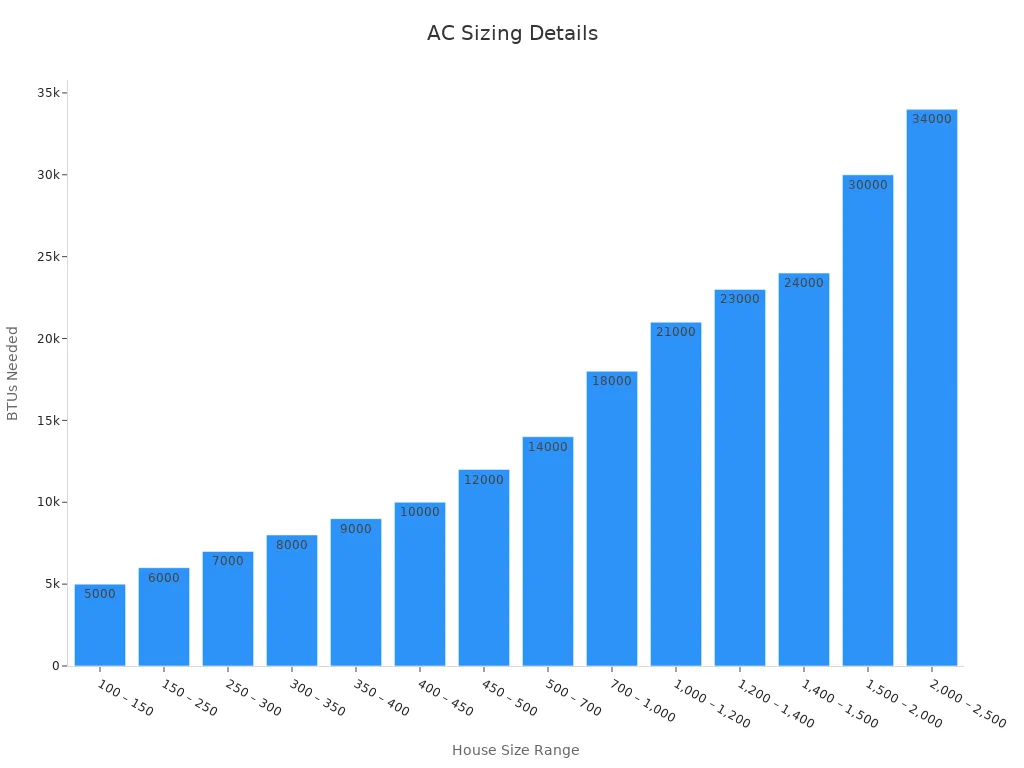
Here’s a table to estimate BTUs (cooling power) for different home sizes:
House Square Footage | |
|---|---|
100 – 150 | 5,000 |
150 – 250 | 6,000 |
250 – 300 | 7,000 |
300 – 350 | 8,000 |
350 – 400 | 9,000 |
400 – 450 | 10,000 |
450 – 500 | 12,000 |
500 – 700 | 14,000 |
700 – 1,000 | 18,000 |
1,000 – 1,200 | 21,000 |
1,200 – 1,400 | 23,000 |
1,400 – 1,500 | 24,000 |
1,500 – 2,000 | 30,000 |
2,000 – 2,500 | 34,000 |
For bigger homes, a 3.0-ton AC (36,000 BTUs) might work. It’s good for spaces between 1,500 and 2,000 square feet, depending on insulation and ceiling height.
Climate, Insulation, and Other Considerations
Besides size, where you live and your home’s build matter too. Hot, humid areas need stronger ACs than cooler places. Homes with good insulation and energy-saving windows need less cooling.
Other things to think about:
Fenestration Percentage: Big windows or glass doors let in more heat. This may need a bigger AC.
Equipment Loads: Devices like TVs and computers make heat. This raises cooling needs.
Building Type: Homes usually have fewer heat-making devices than offices.
Building Type | Description | Cooling Load Considerations |
|---|---|---|
Residential | Includes small homes, big homes, and apartments. | Fewer heat-making devices like TVs and computers. |
Large Homes | Homes with many windows or glass doors. | Need bigger ACs and more airflow. |
When asking, “What size air conditioner do I need?” think about all these things. An HVAC expert can give exact numbers so your AC works well.
When to Pick a 3-Ton Air Conditioner
Picking a 3-ton air conditioner depends on many things. This size works well for medium homes or spaces it can cool. A 3-ton unit gives 36,000 BTUs of cooling each hour. It’s good for homes between 1,500 and 2,000 square feet. But, how it works can change based on real conditions.
Tip: Think about your home’s special needs before picking an AC. Ask an HVAC expert to help you choose the right size.
When Is a 3-Ton Unit a Good Choice?
Here are times when a 3-ton air conditioner might be best:
Medium-Sized Homes: If your home is 1,500 to 2,000 square feet, this size fits. Good insulation and energy-saving windows make it work even better.
Hot and Humid Areas: In places with lots of heat or humidity, a 3-ton unit cools well.
Homes with Tall Ceilings: Rooms with high ceilings need more cooling. A 3-ton unit handles this extra air easily.
Many People or Heat-Making Devices: If your home has many people or heat-making items, this size keeps it comfy.
Things That Affect Cooling Power
A 3-ton air conditioner cools 36,000 BTUs per hour. But, its real cooling depends on these things:
Weather Conditions: Cooling power changes with indoor and outdoor temperatures. AHRI ratings use set conditions that may not match your area.
Humidity Levels: High humidity lowers how well the unit cools. A 3-ton system works better in humid, medium-sized spaces.
Hot Weather: Very hot days can make cooling harder. Picking the right size is even more important.
Why Size Matters
Getting the right AC size keeps your home comfy and saves energy. A small unit struggles to cool, raising bills and wearing out faster. A big unit cools too fast, causing uneven temps and more humidity. A 3-ton unit is just right for medium homes, giving steady cooling without wasting energy.
Note: Still unsure about AC size? Think about insulation, weather, and ceiling height. An HVAC expert can figure out the exact cooling needs for your home.
By knowing when to pick a 3-ton air conditioner, you can choose wisely. This keeps your home cool and energy-efficient.
Key Features of a 3.0 Ton AC Unit

Cooling Efficiency and SEER Ratings
A 3.0 ton AC unit cools with 36,000 BTUs each hour. This makes it great for medium-sized homes. To check energy use, look at the SEER rating. SEER means Seasonal Energy Efficiency Ratio. It shows how much cooling you get for the energy used. Higher SEER ratings mean better efficiency and lower power bills.
Most modern 3-ton units have SEER ratings of 14 or more. These meet energy-saving rules and cool steadily. Always check the SEER rating before buying. It helps you see how well the unit uses energy while cooling.
Energy Savings and Environmental Impact
A 3.0 ton AC unit cools your home and saves energy too. High SEER ratings mean less electricity use and lower bills. This also reduces your carbon footprint, helping the environment.
Many new HVAC systems use eco-friendly refrigerants. These are better for the planet. Choosing a 3-ton unit with advanced features supports a greener Earth. Energy-efficient systems also ease power grid strain during hot summers.
Ideal Applications for a 3-Ton AC Unit
A 3-ton AC works well in homes sized 1,500 to 2,000 square feet. It’s best for spaces with good insulation and energy-saving windows. In hot or humid areas, it keeps your home cool and comfy.
This size is also good for homes with tall ceilings or open layouts. It cools large air volumes easily. If you have many heat-making devices or a big family, this unit provides steady cooling all day.
Tip: Ask an HVAC expert if a 3-ton AC fits your home. They can check insulation, weather, and room design to guide your choice.
Noise Levels and Comfort Enhancements
When picking a 3-ton AC unit, think about noise levels. A loud AC can disturb quiet places like bedrooms or offices. Newer AC models are quieter and still cool well.
Air conditioners, including 3-ton models, measure noise in decibels (dBA). Here’s how they compare:
Quiet ones are about 55 dBA, like soft talking.
Standard ones are 65-75 dBA, like background music.
These numbers show many 3-ton AC units cool well without being too loud. Look for features like insulated parts, variable-speed fans, or designs that reduce shaking.
Quieter ACs help you sleep better and stay comfy. They keep your home cool without annoying sounds. If you want a calm space, pick one near 55 dBA.
Tip: Always check noise levels before buying a 3-ton AC unit. This helps you find one that’s quiet and cools efficiently.
Choosing a quiet AC gives you comfort and peace at home.
Costs of a 3-Ton AC Unit and Installation
Average Price Range for a 3-Ton AC Unit
Buying a 3-ton air conditioner costs between $3,300 and $8,000. This price includes the unit and installation. The cost depends on the brand, model, and features. Units with high SEER ratings or advanced tech cost more. However, they save money later with better energy use.
Brands like Newex HVAC offer good quality at fair prices. They are a smart choice for homeowners. Compare prices and features to find what works best for you.
Factors That Influence Installation Costs
Installation costs depend on many things. If your home needs new ducts or wiring, costs go up. Hard-to-reach places for outdoor units also add to the price.
The size and shape of your home matter too. Bigger homes or unusual layouts need more work. Local labor rates also affect the price. Areas with high living costs often charge more for installation.
To save money, hire skilled HVAC experts like Newex HVAC. They check your home and give clear cost estimates. Trusted companies ensure quality work without surprise fees.
Long-Term Savings from Energy Efficiency
A 3-ton AC unit with high energy efficiency saves money over time. Units with high SEER ratings use less power, lowering bills. They may cost more upfront but save more in the long run.
Energy-efficient systems last longer and need fewer repairs. Many also use eco-friendly refrigerants, which help the planet. Choosing an efficient unit keeps your home comfy and supports the environment.
Brands like Newex HVAC offer systems that balance energy savings and performance. They are a great pick for homeowners.
Tip: Keep your AC efficient with regular maintenance. Clean filters and schedule check-ups to save money and extend its life.
Comparing Brands Like Newex HVAC
When picking a 3.0-ton AC unit, comparing brands is smart. Each brand has different features, but not all are equal in quality, efficiency, or support. Let’s see why Newex HVAC stands out.
1. Energy Efficiency and SEER Ratings
Energy efficiency matters when buying an AC. Newex HVAC units have high SEER ratings, using less energy while cooling well. Other brands also offer efficient models, but Newex HVAC adds advanced energy-saving tech. This lowers your bills and helps the planet.
Tip: Check the SEER rating before buying. Higher ratings save energy and money.
2. Product Range and Customization
Newex HVAC offers many products like RAC, LCAC, and VRF systems. This variety helps you find the perfect fit for your needs. Some brands have fewer options, but Newex HVAC provides custom solutions for homes and businesses.
Feature | Newex HVAC | Other Brands |
|---|---|---|
Product Variety | Wide (RAC, LCAC, VRF) | Limited in some cases |
Customization Options | High | Moderate |
Focus on Energy Management | Yes | Varies |
3. Cost-Effectiveness
Newex HVAC uses the Chinese supply chain to keep prices low. You get great quality without overspending. Some brands charge more for similar features, but Newex HVAC balances cost and technology.
Note: Choosing a brand like Newex HVAC saves money now and later with lower running costs.
4. Durability and Reliability
A strong AC lasts longer. Newex HVAC units are tough and work well in different climates. While other brands may also be durable, Newex HVAC’s strict quality checks ensure steady performance. This makes it a trusted choice worldwide.
5. Customer Support and Expertise
Newex HVAC offers excellent customer service. Their team helps from choosing to installing your AC. Other brands may have good support, but Newex HVAC focuses on your specific needs, making them stand out.
Callout: Need advice? Newex HVAC’s experts can guide you to the right AC.
6. Global Reach and Reputation
Newex HVAC operates in over 100 countries, proving its global trust and quality. Few brands match this level of recognition. Choosing Newex HVAC means joining a worldwide group of happy customers.
Why Choose Newex HVAC?
Newex HVAC combines efficiency, variety, affordability, and reliability. These features make it a top pick for 3.0-ton AC units. While some brands excel in one area, Newex HVAC offers a balanced solution for many needs.
Final Tip: Compare features, prices, and reviews before deciding. Newex HVAC’s mix of quality and value makes it a great choice.
Maintenance Tips for a 3-Ton AC Unit

Regular Filter Changes and Cleaning
Clean filters help your AC work better. Dirty filters block airflow and make your AC use more energy. Check filters every month, especially in hot seasons. Replace them if they look dirty or clogged. If filters can be reused, wash them with soap and water. Let them dry fully before putting them back.
Tip: Set reminders to check filters often. Clean filters save energy, improve airflow, and make your AC last longer.
Dust can build up on coils and fins too. Use a soft brush or vacuum to clean these parts gently. This keeps your AC cooling well.
Scheduling Professional Inspections
Experts can check your AC to keep it running smoothly. HVAC technicians follow steps to inspect your system carefully. They check cooling equipment, air systems, and energy sources. But they don’t look at portable units or electric air cleaners.
Responsibility | Description |
|---|---|
Inspect | Central cooling equipment and air systems |
Describe | Energy sources and cooling systems |
Not Required | Check portable units or electric air cleaners |
Get inspections twice a year. Technicians find problems early, saving you money on repairs. They also make sure your AC works efficiently to keep your home comfy.
Energy-Saving Tips for Daily Use
Smart habits can lower your energy bills. Set your thermostat to 78°F when home. Raise it a few degrees when away to save power. Use ceiling fans to spread cool air, so your AC works less.
Note: Close blinds or curtains during the day to block sunlight. This helps your AC cool your home easier.
Seal gaps around windows and doors to keep cool air inside. Good maintenance and smart habits keep your AC working well and save money.
Signs of Wear and When to Replace
Your 3.0-ton AC unit works hard to cool your home. Over time, it may show signs of wear. Spotting these signs early can prevent big problems. Here are some clues your AC might need fixing or replacing:
Uneven Cooling: Some rooms may feel hot while others are cold. This could mean your AC is old or has issues.
Too Many Repairs: If repair costs keep rising, a new unit might save money.
Strange Sounds: Noises like banging or squealing mean parts may be breaking.
Higher Bills: A sudden rise in energy bills shows your AC is working harder. Older units lose efficiency.
Sticky Air: If your home feels damp, your AC may not remove moisture well. This shows it’s not working properly.
Tip: Know your AC’s age. Most last 10–15 years. If yours is older, think about upgrading to a better model.
When to Replace Your AC
Sometimes fixing your AC isn’t enough. Here’s when getting a new one makes sense:
Old Unit: If your AC is over 15 years old, newer models save energy and money.
Frequent Issues: Constant breakdowns cost more and disrupt comfort.
Outdated Features: New systems use eco-friendly refrigerants and work more efficiently.
Callout: Ask an HVAC expert like Newex HVAC to check your system. They can help you decide if repair or replacement is better.
By watching for these signs, you can keep your home cool without surprises.
Picking the right AC size keeps your home comfy and saves power. The correct size avoids problems like high bills or uneven cooling.
Big units waste power and don’t remove moisture well.
Small units work too hard and use more energy.
A properly sized unit, like a 3-ton AC, cools well and saves energy.
A 3-ton AC is great for medium homes. It works efficiently and cools reliably. Ask HVAC experts like Newex HVAC to help you choose the best option for your home.
FAQ
What does a 3-ton AC unit mean?
A 3-ton AC shows its cooling power. It removes 36,000 BTUs of heat every hour. This makes it good for medium homes, usually 1,500 to 2,000 square feet. Insulation and climate can affect this range.
How do I know if a 3-ton AC is right for my home?
Think about your home’s size, insulation, and weather. A 3-ton AC fits homes between 1,500 and 2,000 square feet. Ask an HVAC expert to figure out your home’s cooling needs.
Tip: Use a cooling guide to help pick the right size.
How much does it cost to install a 3-ton AC unit?
Installing a 3-ton AC costs $3,300 to $8,000. This includes the unit and setup. Costs depend on ductwork, labor, and features. High-efficiency models cost more but save money on energy later.
How often should I maintain my 3-ton AC unit?
Clean or change filters every month. Get professional check-ups twice a year. Regular care keeps your AC working well, saves energy, and lasts longer.
Note: Skipping maintenance can cause higher bills and repairs.
Can a 3-ton AC unit handle high humidity?
Yes, a 3-ton AC can handle humidity in medium homes. Its performance depends on insulation and local weather. In very humid places, you might need a dehumidifier for extra comfort.
Callout: Ask an HVAC expert if your home needs more humidity control.