

Choosing the right chiller plant is important for saving energy and money. Air-cooled chillers are simple and work well in small spaces, and they also need less upkeep. Water-cooled chillers save more energy by using cool water to remove heat, which lowers the power needed for cooling. In 2024, water-cooled chillers made up about 60% of the market. Air-cooled chillers are becoming more popular as demand grows worldwide. Knowing these differences in chiller plants can help you pick the best option for your needs.
Overview of Air-Cooled Chillers
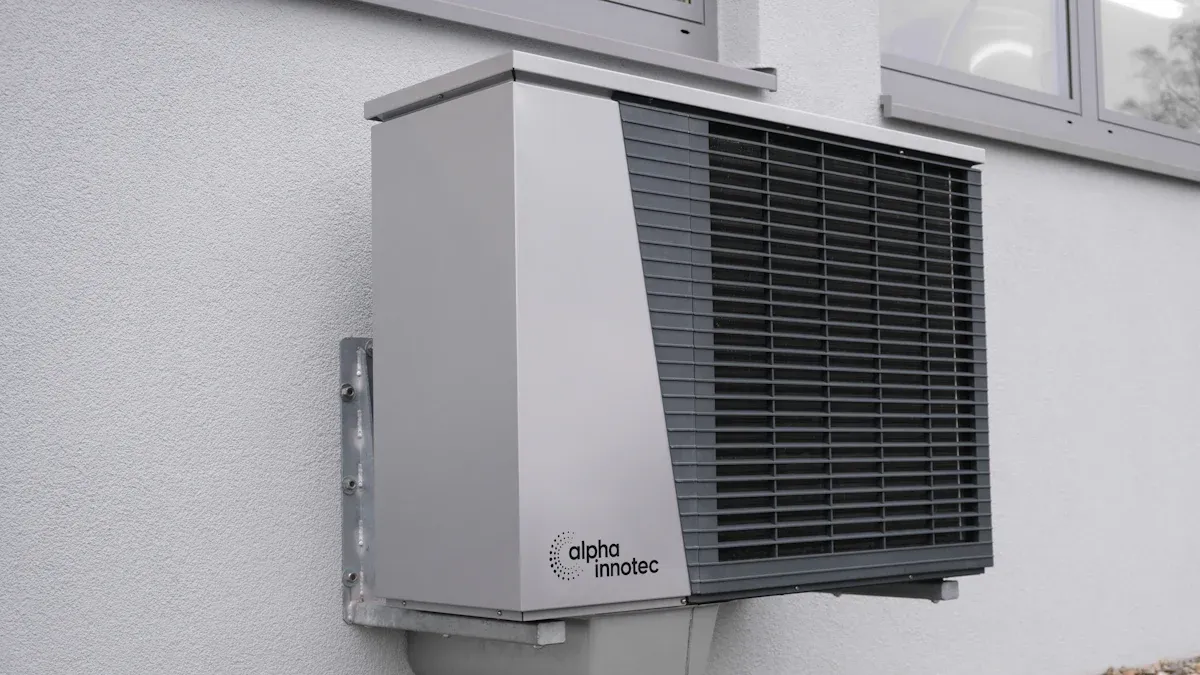
How Air-Cooled Chillers Work
Air-cooled chillers use air to cool the refrigerant and remove heat. Fans blow air over condenser coils, helping the refrigerant release heat. This skips water-based cooling systems, making them easier to set up. Compressors, like scroll or screw types, move the refrigerant efficiently. These chillers work well in places with little water or where water systems aren’t practical.
Advantages of Air-Cooled Chillers
Air-cooled chillers have many benefits:
Ease of Installation: No need for cooling towers or water pumps, making setup simple.
Low Maintenance: Fewer parts mean cleaning and repairs are easier.
Space Efficiency: Small designs fit well in tight spaces.
Versatility: They work in different climates, especially dry areas.
Sustainability: Many models use eco-friendly refrigerants, like Low-GWP R-454B and R-513A, which are better for the planet.
Disadvantages of Air-Cooled Chillers
Air-cooled chillers also have some downsides:
Lower Energy Efficiency: They use more energy than water-cooled chillers, especially in hot weather.
Noise Levels: Fans and compressors can be loud and disturb nearby areas.
Capacity Constraints: They handle smaller cooling jobs, so they’re not ideal for big projects.
Performance Variability: Their efficiency drops in very hot weather since they depend on air for cooling.
Technical Specifications
Here’s a look at popular air-cooled chiller models:
Model | Capacity Range (Tons) | Refrigerant | Compressor Type | Energy Efficiency Rating (EER) |
|---|---|---|---|---|
Carrier Air-Cooled Chillers | 10 – 500 | Various | Screw/Scroll | N/A |
Ascend® Air-Cooled Chiller | 140 – 230 | Low-GWP R-454B | Scroll | IPLV: 15.8-16.5 |
Ascend® Air-Cooled Chiller with Integrated Free Cooling | 150 – 550 | Low-GWP R-513A | Helical rotary screw | IPLV: 19.7-21.6 |
AquaSnap® Air-Cooled Liquid Chiller | 60 – 300 | R-410A | Scroll | N/A |
AquaForce® Air-Cooled Screw Chiller | 80 – 500 | R-134a | Screw | N/A |
AquaForce® Variable Speed Air-Cooled Screw Chiller | 140 – 500 | R-513A | Screw | N/A |
These models show how flexible air-cooled chillers are, with capacities from 10 to 550 tons and eco-friendly refrigerant options.
Common Uses of Air-Cooled Chillers
Air-cooled chillers are useful in many places. Their small size and easy setup make them great for medium or small buildings. You can find them in schools, offices, and hospitals where cooling needs are not too high. They also work well in areas with little water or where water systems are hard to use.
In schools, these chillers keep classrooms cool and comfortable. For instance, a university used three chillers, including one 1800-ton and two 800-ton units. This setup saved $27,000 yearly by improving how the system runs. This shows how air-cooled chillers can save money in schools.
Offices also use air-cooled chillers for cooling workspaces. They help workers stay comfortable and focused. In hot places like Ghana, these chillers are helpful because water systems may not work well due to high humidity and less water.
Hospitals and clinics also depend on air-cooled chillers. They keep rooms and medical tools at the right temperature. Since they don’t need water, they are good for places with strict water rules.
Air-cooled chillers are a smart choice for many industries. They are flexible and work well for buildings with medium cooling needs and small spaces.
Overview of Water-Cooled Chillers
How Water-Cooled Chillers Work
Water-cooled chillers use water to take away heat. First, water absorbs heat from the building’s returning chilled water. This heat moves to the refrigerant inside the chiller, which changes form to help remove heat. The condenser then passes this heat to the water loop connected to a cooling tower. The cooling tower releases the heat into the air by evaporation.
These chillers use parts like condensers, refrigerants, and cooling towers to work well. They can handle more heat, making them great for big cooling jobs. The system works best when the temperature difference (Delta-T) between supply and return water is just right.
Component | Job |
|---|---|
Water | Takes heat from the process and brings it back to the chiller. |
Refrigerant | Takes heat from water and changes form to remove heat. |
Condenser | Moves heat from the refrigerant to the water loop linked to the cooling tower. |
Cooling Tower | Gets rid of heat into the air through evaporation. |
Advantages of Water-Cooled Chillers
Water-cooled chillers have many good points:
Energy Efficiency: They use less energy, about 0.6 to 0.85 kW/ton.
Adaptability: They work well with changing cooling needs, saving up to 25% energy during low demand.
High Capacity: These chillers handle big cooling jobs, perfect for factories and offices.
Quiet Operation: They are quieter than air-cooled chillers, making less noise.
Compliance with Energy Codes: They meet rules like ASHRAE 90.1, which require smart energy controls.
Disadvantages of Water-Cooled Chillers
Water-cooled chillers also have some downsides:
Higher Upfront Costs: They need cooling towers, pumps, and other equipment, which cost more to install.
Complex Maintenance: Cooling towers and water systems need regular care to avoid damage.
Space Requirements: They need more room for cooling towers and other parts.
Water Dependency: They need a lot of water, which can be hard in dry areas or places with strict water rules.
Water-cooled chillers are great for saving energy and cooling large spaces. But they need more money, care, and space to work well.
Common Uses of Water-Cooled Chillers
Water-cooled chillers are great for cooling big spaces. They help keep areas comfortable and save energy. These systems work well in places needing strong and reliable cooling.
Universities often use water-cooled chillers. They cool many campus buildings, keeping students and staff comfortable. Hospitals depend on these chillers to keep patient areas at safe temperatures.
Airports use large chiller systems to cool terminals for travelers. Office buildings rely on them to cool tall buildings during hot months. Convention centers use these chillers to keep events comfortable for guests.
Data centers also need water-cooled chillers. They use chilled water to stop servers from overheating. Without cooling, servers could break or stop working, causing big problems.
Here’s how water-cooled chillers are used in different places:
Place | How They Are Used |
|---|---|
Universities | Cool multiple campus buildings for comfort. |
Hospitals | Keep patient care areas at safe temperatures. |
Airports | Cool terminals to make them pleasant for travelers. |
Office Buildings | Provide cooling for tall buildings in hot weather. |
Convention Centers | Manage temperatures during big events. |
Data Centers | Keep servers and equipment from overheating. |
Water-cooled chillers are perfect for places needing strong cooling. They are reliable and work efficiently for large cooling jobs.
Air-Cooled vs Water-Cooled Chiller Plant: A Simple Comparison
Efficiency Comparison
Water-cooled chillers are usually more efficient than air-cooled ones. They use water to move heat, which works better than air. This helps them save energy, using only 0.6 to 0.85 kW per ton of cooling. Air-cooled chillers use fans to cool, which needs more energy, especially in hot weather.
Water-cooled chillers adjust well to changing cooling needs. They can save up to 25% energy during low demand, making them great for big projects. Air-cooled chillers lose efficiency in hot weather because they depend on air temperature.
If saving energy is your goal, water-cooled chillers are the best. But air-cooled chillers work well for smaller spaces or places with little water.
Cost Analysis (Upfront, Operational, and Long-Term Costs)
The costs of these chillers depend on setup, running, and upkeep.
Upfront Costs: Air-cooled chillers cost more at first due to fans and ducts. But they are easier to install, making them good for small businesses. Water-cooled chillers need towers, pumps, and more, so they cost more to set up.
Operational Costs: Air-cooled chillers use more energy for fans, raising costs. Water-cooled chillers save energy but need money for tower operation and water care.
Long-Term Costs: Over time, water-cooled chillers save money because they last longer and work better. Air-cooled chillers are cheaper to maintain, so they’re good for tight budgets.
Category | Air-Cooled Chillers | Water-Cooled Chillers |
|---|---|---|
Initial Costs | Higher due to fans and ducts | Higher due to towers and pumps |
Operating Costs | Higher energy use for fans | Lower, but includes tower and water costs |
Maintenance Costs | Lower maintenance needs | Higher due to water care and tower upkeep |
Capacity Range | 7.5 – 500 tons | 10 – 4,000 tons |
Location Suitability | Needs good airflow | Works in less ventilated areas |
Performance in Heat | Less efficient in hot weather | Better for high heat areas |
Water Supply Needs | Best for places with little water | Not ideal for dry areas |
Environmental Impact | No wastewater issues | Needs treated water before disposal |
Maintenance Requirements
Taking care of chillers keeps them working well for a long time. Air-cooled chillers are easier to maintain because they have fewer parts. Cleaning the coils and checking the fans is usually enough.
Water-cooled chillers need more care. Cooling towers must be checked often, and water needs treatment to stop damage. Watching water quality is key to keeping the system in good shape. A regular maintenance plan is important for these chillers.
Main tasks for both systems include:
Checking temperatures and pressures for smooth operation.
Keeping records of maintenance to fix problems early.
For water-cooled chillers, also:
Check compressor run times and vibrations for issues.
Treat water to keep the system healthy.
Track reliability data to plan future maintenance.
Air-cooled chillers need less care, but water-cooled chillers last longer with proper upkeep. Their extra maintenance often leads to better performance and durability.
Environmental Impact
When picking between air-cooled and water-cooled chillers, think about how they affect the environment. Each type impacts nature differently based on water use, energy needs, and refrigerants.
Air-cooled chillers use less water, which is good for dry areas. They don’t need water to cool, making them great where water is scarce. But they use more electricity, especially in hot weather. This can lead to more pollution if the electricity comes from non-renewable sources.
Water-cooled chillers save energy by using less electricity per cooling ton. This helps lower carbon emissions over time. However, they need a lot of water to work. Cooling towers lose water through evaporation and other processes, which can stress local water supplies. The water also needs chemical treatment to stop damage, which can harm the environment if not handled carefully.
Refrigerants are also important for the environment. Many new chillers use eco-friendly refrigerants like R-513A or R-454B. These help protect the ozone layer and fight climate change. Choosing chillers with these refrigerants supports sustainability efforts.
Key Things to Think About When Picking a Chiller Plant
Cooling Needs
To pick the right chiller, know your cooling needs. Figure out how much heat must be removed from your space. This is called the cooling load. It depends on building size, equipment heat, and weather.
Factories need chillers to stop machines from overheating. If the chiller is too small, it can’t cool enough. This may cause machines to break or stop working. A chiller that’s too big wastes energy and costs more to run.
Checking your current equipment, like pumps and towers, helps you choose better. Compare at least three brands for each part to find the best fit. Focus on size and energy use to save money and improve performance.
Site and Space
Where you put the chiller matters a lot. Air-cooled chillers are good for places with little water. They need airflow, so they work well outside or in open spaces.
Water-cooled chillers need more room for towers, pumps, and pipes. If you have space and water, they save more energy. But they’re harder to use in dry areas or places with water rules.
Adiabatic systems are a smart choice if water is limited. They use 90% less water than regular cooling towers. Factories like these systems because they cool well without wasting water.
Think about space, water, and airflow when choosing. Match the chiller to your site for smooth and reliable cooling.
Costs Over Time
The price of a chiller isn’t just the upfront cost. You also need to think about running and fixing it over time. Air-cooled chillers cost less to buy and are easier to maintain. They’re great for smaller jobs.
Water-cooled chillers cost more to set up but save energy later. They lower electricity bills for big cooling needs. But they need regular care, like cleaning towers and treating water, which adds to costs.
Energy use affects savings. Water-cooled chillers use less power per cooling ton. This makes them good for eco-friendly projects. Pick a system that balances cost and performance for the best results.
To choose wisely, think about your budget, energy goals, and upkeep needs. This helps you find the best cooling solution for your situation.
Environmental and Regulatory Factors
When picking a chiller, think about the environment and rules. These factors matter if you care about being eco-friendly and following laws.
Environmental Considerations
Air-cooled and water-cooled chillers affect nature in different ways. Knowing these effects helps you choose wisely.
Water Usage:
Water-cooled chillers need a lot of water to work. Cooling towers lose water through evaporation and other processes. This can be a problem in areas with little water. Air-cooled chillers don’t use water, so they’re better for dry places or where water is limited.Energy Consumption:
Water-cooled chillers use less energy for cooling. This lowers pollution if your power comes from fossil fuels. Air-cooled chillers need more energy, especially in hot weather, which can increase pollution.Refrigerants:
New chillers use eco-friendly refrigerants like R-513A and R-454B. These have low global warming potential (GWP) and protect the ozone layer. Choosing these refrigerants helps the planet.
Tip: To help the environment, pick chillers with high energy ratings and Low-GWP refrigerants.
Regulatory Compliance
Rules are important when choosing a chiller. Make sure your system follows local laws.
Energy Efficiency Standards:
Many places have energy rules like ASHRAE 90.1. These require chillers to save energy and have smart controls. Water-cooled chillers often meet these rules more easily.Water Management Rules:
Water-cooled chillers must follow rules for treating and disposing of water. Untreated water can harm nature, so proper systems are needed. Air-cooled chillers avoid this since they don’t use water.Noise Regulations:
Air-cooled chillers can be noisy because of fans and compressors. If your site is near homes, you might need soundproofing. Water-cooled chillers are quieter, making them better for quiet areas.
Factor | Air-Cooled Chillers | Water-Cooled Chillers |
|---|---|---|
Water Usage | Doesn’t need water | Needs a lot of water |
Energy Efficiency | Less efficient in hot weather | More efficient overall |
Noise Levels | Can be loud | Quieter operation |
Regulatory Challenges | Fewer water-related rules | Needs water treatment systems |
Making an Informed Choice
Think about your site’s needs and rules before deciding. If water is scarce or rules are strict, air-cooled chillers may work better. If saving energy and quiet operation matter more, water-cooled chillers could be the right choice.
Note: Always check local laws and environmental rules before installing a chiller. This avoids problems and ensures you follow the rules.
By thinking about the environment and regulations, you can pick a chiller that fits your goals and follows the law. 🌱
Deciding between air-cooled and water-cooled chillers depends on your needs. Air-cooled chillers are great for small spaces and need less care. They are also good for places with little water. Water-cooled chillers save more energy and handle big cooling jobs well. They are perfect for factories and large buildings because they use energy wisely.
Studies show both types help save energy and protect the environment. Air-cooled chillers are simple and flexible, while water-cooled chillers work better for heavy cooling needs.
To choose the right one, think about your cooling needs, budget, location, and eco-friendly goals. Checking these things will help you pick the best chiller for your situation.
FAQ
What’s the key difference between air-cooled and water-cooled chillers?
Air-cooled chillers use air to cool, while water-cooled ones use water and cooling towers. Air-cooled systems are simpler and fit small spaces. Water-cooled systems save more energy and work for big cooling jobs.
Which chiller is best for places with little water?
Air-cooled chillers are best for areas with little water. They don’t need water to cool, making them great for dry places or areas with strict water rules.
How do you take care of a water-cooled chiller?
Clean the cooling tower and treat the water to stop scaling. Check the system often to keep it running well. Good care helps it last longer and work better.
Are air-cooled chillers loud?
Yes, air-cooled chillers can be loud because of their fans and compressors. To reduce noise, place them away from quiet spots or add soundproofing.
Can a chiller plant help save on energy bills?
Yes, the right chiller plant can cut energy costs. Water-cooled chillers save more energy for big jobs. Air-cooled chillers are cheaper to run for smaller spaces.