

You want the best hvac condenser for your home. The right choice depends on your home’s size. It also depends on local weather. How much you plan to spend matters too. SEER ratings help you compare energy efficiency. Local reviews show how brands work in your area. If you wonder about repair or replacement, use the ‘Rule of 5000.’ Multiply the unit’s age by the repair cost. If the total is over $5,000, replacement usually makes more sense.
Types of Home Air Conditioning Systems

When you look for the best way to cool your home, you will find several types of air conditioning units. Each type works best for different needs and spaces.
Central AC Condenser Units
Central AC condenser units remain the most common choice for homes in the United States. About 75% of homes with air conditioning use central systems. These units cool your entire home through a network of ducts. You get even cooling in every room. Central AC systems often last longer than other types, making them a solid investment for many families.
Heat Pump Condenser Units
Heat pump condenser units give you both heating and cooling in one system. You can use them all year. Heat pumps move heat in or out of your home, depending on the season. They use less energy than traditional AC units because they transfer heat instead of creating it. You do not need a separate furnace or heater. This makes heat pumps a smart choice for energy savings and comfort.
Tip: Heat pumps work well in mild climates where winters are not too cold.
Ductless Mini-Split Units
Ductless mini-split units offer flexible cooling for homes without ductwork. You can install them in one room or several rooms. These units use less electricity than central AC systems. Most ductless mini-splits have a SEER rating of 20 or higher. Central AC systems usually rate between 15 and 18. You may save up to 40% on cooling bills by switching to ductless mini-splits.
Window and Portable Units
Window and portable air conditioning units cool single rooms or small spaces. You can move portable units from room to room. Window units fit into a window frame. These options cost less up front but do not last as long as central systems. Here is a quick look at their average lifespans:
Type of AC Unit | Average Lifespan |
|---|---|
Window AC Units | 8 to 12 years |
Portable AC Units | 5 to 10 years |
Central AC Systems | Longer than both |
You might choose these units for apartments, dorms, or small offices.
Key Differences Between HVAC Condenser Units
When you pick an HVAC condenser unit, you should know how each type is different. These differences change how well the system cools your home. They also change how much energy it uses. Some units are easier to install than others. Some last longer too. Picking the right unit can help you save money. It can also keep your home comfy for a long time.
Performance and Efficiency (SEER Ratings)
Performance and efficiency are very important. SEER means Seasonal Energy Efficiency Ratio. This rating shows how much cooling you get for each bit of energy used. If the SEER rating is higher, the unit works better. You pay less for energy bills.
SEER Rating Range | Efficiency Level | Description |
|---|---|---|
13-14 | Standard | Meets basic rules; not very efficient. |
15-16 | Mid-range | Saves some energy; good for many places. |
17-19 | High-efficiency | Saves lots of money; runs quieter. |
20+ | Ultra high-efficiency | Saves the most energy; great for green homes. |
Most new air conditioners have SEER ratings between 13 and 21. Since 2006, new AC units must have at least SEER 13. ENERGY STAR units start at SEER 14.
A SEER-10 unit can cost about $2,400 each year.
A SEER-20 unit can cost about $1,200 each year.
Over ten years, a SEER-20 unit can save you $12,000 compared to SEER-10.
Tip: Higher SEER ratings mean you use less energy and pay less for cooling.
Installation and Cost
How you install the unit and what it costs can be very different. You should think about your home’s size and shape. You should also think about if you have ducts already.
System Type | Energy Efficiency | System Configuration Options | |
|---|---|---|---|
Central AC | Medium | High | Ducted |
Heat Pump | Medium | High | Ducted or Ductless |
Ductless Mini-Split | High | Very High | Ductless |
Window Units | Low | Medium | Single Room |
AC Type | Suitable For | |
|---|---|---|
Central AC | Needs ducts; best for big homes. | Big or complex homes |
Ductless Mini-Split | No ducts needed; mounts on walls. | Extra cooling, new rooms |
Window Units | Easy to install; you can do it yourself. | Small spaces, single rooms |
Central AC and heat pumps work best if your home has ducts. Ductless mini-splits are good for homes without ducts or rooms that need more cooling. Window units are easy to put in and cost less, but they only cool one room.
Note: Always ask local HVAC experts for prices. Local reviews can help you pick good brands for your area.
Maintenance and Longevity
Taking care of your HVAC condenser helps it work well and last longer. Each type needs different care.
Keep leaves and trash away from the unit.
Fix bent coil fins so air can move well.
Clean drains to stop clogs and water problems.
Type of AC Unit | |
|---|---|
Central Air Conditioners | 15 to 20 years |
Ductless Mini-Splits | 15 to 20 years |
Heat Pumps | About 15 years |
Window Units | 5 to 8 years |
Central AC, heat pumps, and ductless mini-splits last much longer than window units. Doing regular care helps you avoid big repairs and keeps your system working well.
Remember: The main differences are how efficient, easy to install, and long-lasting each unit is. Think about what matters most for your home before you choose.
Choosing the Right HVAC Condenser for Your Home
Matching Units to Home Size and Layout
You want your home air conditioning to fit your space. The size of your home matters most when you choose cooling units. If you pick a unit that is too small, your home will not stay cool. If you pick a unit that is too big, you waste energy and money. You should match the BTUs (British Thermal Units) to your home’s square footage. Use this table to help you find the right size:
House Square Footage | BTUs Needed |
|---|---|
100 – 150 | 5,000 |
150 – 250 | 6,000 |
250 – 300 | 7,000 |
300 – 350 | 8,000 |
350 – 400 | 9,000 |
400 – 450 | 10,000 |
450 – 500 | 12,000 |
500 – 700 | 14,000 |
700 – 1,000 | 18,000 |
1,000 – 1,200 | 21,000 |
1,200 – 1,400 | 23,000 |
1,400 – 1,500 | 24,000 |
1,500 – 2,000 | 30,000 |
2,000 – 2,500 | 34,000 |
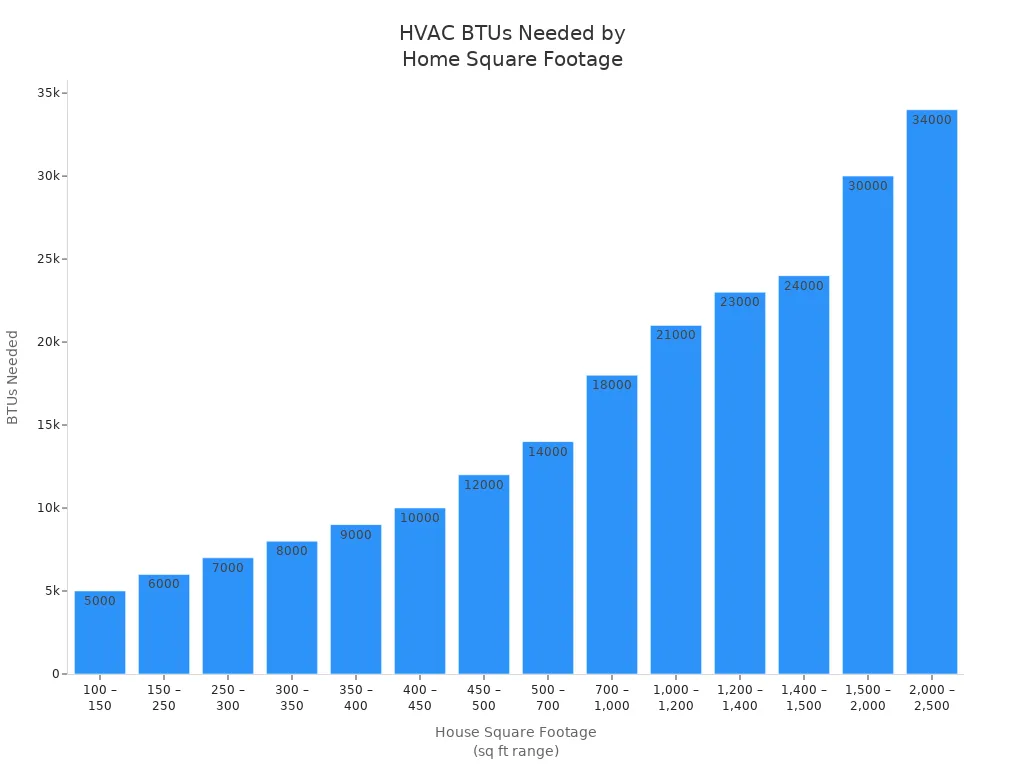
You should also think about your climate zone. Hot climates need more cooling power. If your ceilings are higher than eight feet, you need extra BTUs. The number of windows, insulation, and people in your home also change your cooling needs.
If you install the wrong size unit, you may face problems:
Reduced efficiency and higher bills
More repairs from wear and tear
Shorter lifespan for your unit
Humidity problems and possible mold
Uneven cooling with hot or cold spots
For small apartments or single rooms, a ductless mini-split or window unit works well. Large homes need central air or a multi-zone mini-split system. If you want comfort in every room, choose a system that matches your home’s layout.
Considering Ductwork and Renovations
Your home’s ductwork affects your choice of cooling units. If your home has ducts, you can use central air or a ducted heat pump. These systems send cool air to every room. If your ducts are old or leaky, you lose energy and comfort. You should check your ducts before you install a new unit.
If your home does not have ducts, you should look at ductless mini-split air conditioning. These units are easy to install. You can put them in bedrooms, offices, or new additions. Ductless mini-split systems give you control over each room’s temperature. You save energy because you only cool the rooms you use.
If you plan a big renovation, you have more choices. You can upgrade to a condensing furnace for better heating. You can add a 4-ton AC unit with a gas furnace for strong cooling. A 3-ton furnace with a high SEER rating also helps you save energy. Ductless mini-split air conditioning works well for new rooms or spaces where ducts are hard to install.
Tip: Use the ‘Rule of 5000’ to decide if you should repair or replace your unit. Multiply the age of your unit by the repair cost. If the total is more than $5,000, replacement is usually the best choice.
Climate and Regional Factors
Your local climate changes what cooling units work best in your home. Hot and humid areas need units with strong dehumidification. Hot and dry places focus on temperature control. Temperate regions need less cooling and less humidity control.
Some units work better in certain climates. Here are top choices for different regions:
Model | Compressor Type | SEER2 | Humidity Features | Best For |
|---|---|---|---|---|
Trane XV18 TruComfort™ | Variable-speed | Up to 18 | Maintains RH levels down to 45% | Coastal or subtropical regions |
Carrier Infinity® 26 | Variable-speed | Up to 24 | Precision dehumidification and airflow control | Southeast, Gulf Coast, and humid Mid-Atlantic regions |
Lennox SL28XCV | Variable-speed | Up to 28.2 | Advanced humidity sensors | Energy-conscious homes in the Deep South |
Rheem Endeavor™ Series RA20 | Scroll variable-speed | Up to 20.5 | EcoNet-enabled runtime control | Homes with poor ventilation or older ductwork |
American Standard Platinum 18 | Variable-speed | Up to 18 | Excellent latent heat removal | Long runtimes + consistent moisture control |
Local rules may limit which refrigerants you can use. Some states offer rebates for high-efficiency units. You should check local energy standards before you buy a new system.
Ductless mini-split air conditioning works well in many climates. You get comfort in each room. You save energy in mild regions. In hot and humid places, choose a unit with strong moisture control. Mini-split systems help you keep your home cool and comfortable all year.
Note: Always match your cooling system to your home’s size, ductwork, and climate. This helps you get the best comfort and savings.
Decision Guide for Homeowners
Quick Checklist for Selection
You want the best hvac units for your house. Use this checklist to help you pick the right conditioner for your needs. First, look at coil materials. Copper coils help save energy and are easier to clean. Aluminum coils cost less but need more care. Next, check how efficient the unit is. High SEER or SEER2 ratings mean the conditioner uses less energy and saves you money. Make sure your new units work with your current central air system. If they match, you will not have extra costs and your cooling will work well.
Here is a simple checklist to help you choose:
Look at coil materials for strength and easy cleaning.
Compare SEER ratings to save energy.
Make sure your system matches your central units.
Measure your home to find the right cooling size.
Ask about noise levels for comfort inside.
Read local reviews to find good brands.
Get price quotes from local hvac experts.
Plan to clean and check outdoor units often.
Think about your climate and what your home needs.
Decide if portable or window ac units fit your rooms.
Tip: Always keep the space around your outdoor conditioner open. This helps air move and makes your unit work better.
Common Mistakes to Avoid
Many people make mistakes when picking hvac units for their homes. You might choose a conditioner that is too small or too big. This can cause bad cooling and higher bills. Some forget to check how loud the unit is. Loud units can make your home less comfortable. Others pick portable units without thinking about future costs. You should not use refrigerant additives because they can hurt your conditioner.
Do not forget how important size is for central units.
Stay away from loud conditioners that bother your home.
Make sure portable units fit your cooling needs.
Keep outdoor units clear of things that block them.
Do not use refrigerant additives in your conditioner.
Picking the right central or portable units helps you stay comfortable and save energy. You protect your home and save money when you avoid these mistakes.
You pick the best unit when you know the main differences between each hvac condenser and air conditioner. Use the checklist to compare your choices. Always look at SEER ratings to see which ones use less energy. Ask local experts to help you find the right hvac condenser for your house. Taking care of your air conditioner helps it last longer and stops big repair bills. Getting a high-efficiency hvac condenser can help you save money and feel more comfortable at home. The right air conditioner gives you cleaner air and lower bills.
If you choose the right hvac condenser and air conditioner, your home will stay comfy for many years.
Set up regular checkups for your air conditioner.
Think about how old your hvac condenser is before you get a new one.
Look for more tips to help you pick an air conditioner.