

Your outdoor AC unit is essential for keeping your home cool and comfortable. It consists of several key components that work together to regulate temperature. These components include the compressor, condenser coil, fan, refrigerant lines, and wires. Each part plays a specific role in removing heat from your home. Understanding how this AC outdoor unit operates highlights its significance and aids in its maintenance for optimal performance.
Key Parts of an Outdoor AC Unit
Compressor
The compressor is like the engine of your outdoor AC. It helps cool your home by raising the refrigerant’s pressure. This change turns the refrigerant from gas to liquid. The liquid refrigerant moves through the system, taking in and releasing heat. Without the compressor, the cooling process would stop completely.
Modern compressors have smart systems to check temperature and pressure. These systems find problems early to keep the AC working well. For example, brands like Daikin and Mitsubishi use sensors to warn about maintenance needs. This feature prevents issues like capacitor failures that can stop the cooling process.
Condenser Coil
The condenser coil is another important part of the outdoor AC. It removes heat that the refrigerant collects from inside your house. The coil is made of materials like copper or aluminum, which transfer heat well.
Research shows that changes to condenser coils can improve cooling. For example, bent tubes make the refrigerant cooler, boosting efficiency. Adding electric charge also helps by giving the refrigerant more energy. These upgrades show why keeping the condenser coil clean is so important for your AC to work properly.
Change Type | Effect on Refrigerant Temperature | Effect on Performance |
|---|---|---|
Modified Tube | Strong effect | Big improvement |
Bent Tube | Biggest effect | Major boost |
Electric Charging | Improves performance | Adds energy to refrigerant |
Fan
The fan in the outdoor unit works with the condenser coil to cool your home. It blows air over the coils, helping to release heat outside. This keeps the refrigerant cool and the AC running well, even on hot days.
A working fan is key to keeping your AC efficient. If the fan breaks, cooling slows down, and energy use goes up. Cleaning the fan blades and checking for damage can stop these problems. Regular care helps your outdoor AC last longer.
Part | Role |
|---|---|
Removes heat from inside your home to the outdoors, vital for cooling. | |
Condenser Coils | Releases heat collected by the refrigerant, made of heat-conducting materials. |
Condenser Fan | Blows air over coils to improve cooling and heat removal. |
Compressor | Raises refrigerant pressure, turning it into liquid for heat movement. |
Refrigerant Lines
Refrigerant lines are crucial for cooling in your outdoor AC. These pipes move refrigerant between the outdoor unit and indoor coil. The refrigerant takes heat from your home and releases it outside. This process keeps your home cool and comfortable. Without these lines, your AC wouldn’t work properly.
There are two main refrigerant pipes: the suction line and the liquid line. The suction line carries gas refrigerant back to the compressor. The liquid line moves liquid refrigerant to the evaporator coil. Both pipes have insulation to save energy and stay efficient.
Over time, refrigerant lines can start leaking. Leaks are a common problem for many homeowners. They can make your AC less effective and raise energy bills. Checking for leaks regularly can help you fix them early and avoid big repairs.
Tip: If your AC isn’t cooling well or you hear hissing sounds near the outdoor unit, it could mean a refrigerant leak. Call a professional to fix it quickly.
Common refrigerant line problems include:
Leaks in the refrigerant lines
Frozen evaporator coils
Dirty condenser coils
Taking care of refrigerant lines helps your AC work better and last longer.
Electrical Connections
Electrical connections power your outdoor AC unit. They run the compressor, fan, and other parts. If the connections fail, the cooling process stops, or the system shuts down.
Power surges and tripped breakers are common electrical problems. If the outdoor unit’s breaker trips, the indoor unit may still run but won’t cool. Sometimes, both breakers trip, stopping the whole system. Checking breakers often can prevent sudden issues.
Other problems include bad capacitors and loose wires. Capacitors store energy to start the fan and compressor motors. If they break, the outdoor unit might not turn on. Loose or rusty wires can also cause poor performance or system failure.
Note: To avoid electrical problems, schedule regular maintenance. A technician can check wires, capacitors, and other parts to ensure they work well.
Fixing electrical issues quickly keeps your outdoor AC efficient and avoids expensive repairs.
How the Parts Work Together to Cool Your Home
The Cooling Cycle Explained
Your outdoor AC system cools your home in a repeating cycle. It starts when the compressor squeezes the refrigerant, making it a hot gas. This gas moves to the condenser coil, where it loses heat to the outside air. As it cools, the refrigerant turns into a liquid and flows to the evaporator coil inside.
At the evaporator, the refrigerant takes heat from the indoor air. This cools your home while the indoor fan spreads the cool air around. The refrigerant, now a gas again, goes back to the compressor to restart the process. This cycle keeps your home cool, even on very hot days.
Role of Refrigerant in Heat Exchange
Refrigerant is key to moving heat in and out of your home. It absorbs heat inside and releases it outside. Its ability to switch between gas and liquid at certain temperatures makes this possible.
The table below shows how refrigerants help with cooling:
Metric | Value |
|---|---|
Cooling Power | 12,500 W |
Energy Efficiency (COP) | 3.0 |
Energy Savings Potential | 34.1% |
Solar Energy Use | 98.4% |
These numbers show how refrigerants save energy and cool well. For example, a higher COP means better energy use, and strong cooling power means it absorbs heat effectively.
How the Parts Work Together
All parts of your outdoor AC unit work as a team to cool your home. The compressor powers the system by pressurizing the refrigerant. The condenser coil gets rid of heat, helped by the fan, which improves airflow. Refrigerant lines move the refrigerant between the outdoor and indoor units. The evaporator absorbs heat from inside your home.
Each part has a job, but they must work together to perform well. For example, if the fan breaks, the condenser coil can’t release heat, and the system may overheat. Cleaning the condenser and checking refrigerant lines regularly keeps everything working smoothly.
Knowing how these parts work together helps you care for your AC and make it last longer.
Maintenance Tips for Your Outdoor AC Unit
Cleaning the Unit and Removing Debris
Keeping your outdoor AC clean helps it work better. Dirt and leaves can block airflow, making the system work harder. This lowers cooling and uses more energy. Clean your unit once a year, especially in spring, to get it ready for summer.
First, turn off the power to the unit. Remove any debris around it and gently clean the fins with a soft brush. Be careful not to bend the fins, as this blocks airflow. Use a garden hose to rinse the coils, but don’t use high-pressure water, which can damage them. Clearing the area around the unit also improves airflow.
Tip: Trim plants or grass near the unit. Keep at least two feet of space around it. This stops debris from building up and helps the blower work well.
Checking for Refrigerant Leaks
Refrigerant leaks are a common problem that hurt your AC’s performance. Leaks lower refrigerant levels, making it harder to cool your home. This raises energy bills and can even cause the system to fail.
Signs of a leak include less cooling, hissing sounds, or frozen coils. Annual maintenance can catch leaks early. Studies show leaks can cause a 3% to 10% loss each year, increasing costs. Fixing leaks quickly improves efficiency and helps your AC last longer.
Note: If you think there’s a refrigerant leak, call a professional to check and fix it.
Inspecting Electrical Connections
Electrical connections are important for running your outdoor AC. Loose or rusty wires can make the system stop working or blow warm air instead of cool. Regular checks keep it safe and avoid expensive repairs.
Look for loose wires, rust, or damaged insulation during inspections. Technicians also check voltage and amps to ensure the motor and capacitor work properly. Strange noises or failure to start may mean electrical problems that need fixing right away.
Tip: Get a professional inspection every year to find and fix problems early. This keeps your AC working safely and efficiently.
Scheduling Regular Professional Maintenance
Getting regular professional maintenance for your outdoor AC unit keeps it working well and lasting longer. Experts can find problems early, stopping them from turning into expensive repairs. Routine check-ups help your cooling system stay reliable and lower your energy bills.
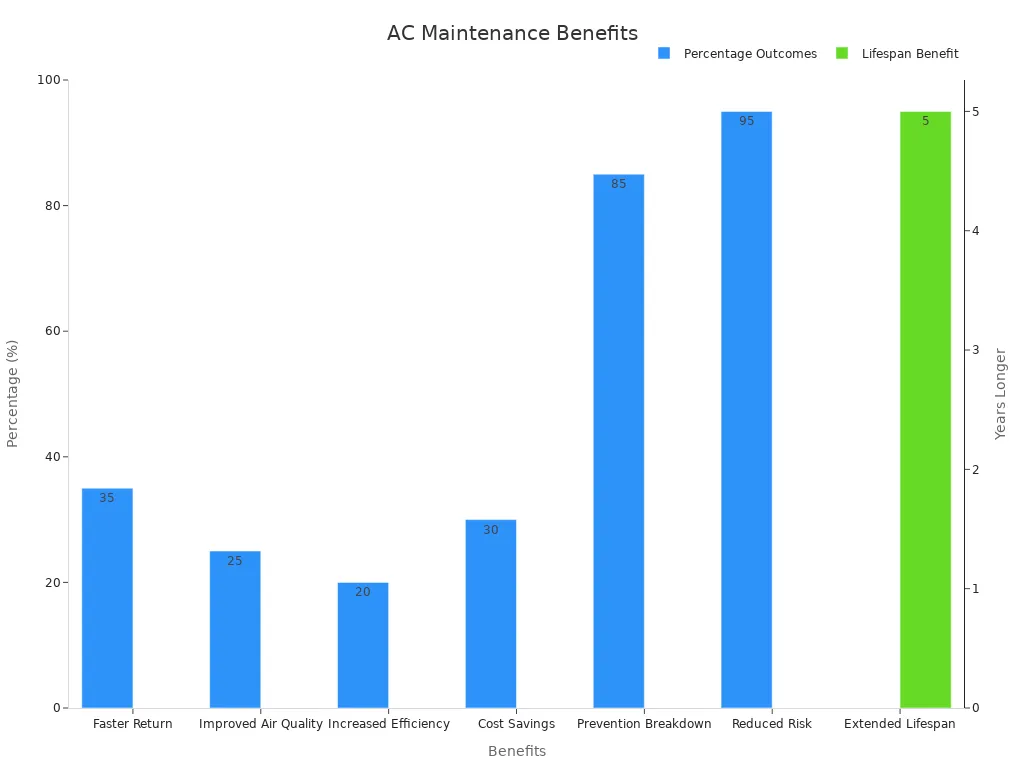
Taking care of your AC unit has clear benefits. Maintained systems use up to 20% less electricity. This saves money on energy and helps the environment. Plus, a well-kept unit can work efficiently for five extra years, avoiding early replacements.
Benefit | Result |
|---|---|
Better Efficiency | Uses up to 20% less electricity |
Longer Lifespan | Works well for five more years |
Lower Repair Costs | |
Cleaner Air | Improves air quality by up to 25% |
Regular maintenance also stops breakdowns. Studies show 85% of AC repairs happen because of poor care. Servicing your unit can cut the chance of big problems by 95%. This means fewer interruptions and lower repair costs. Professional fixes also restore comfort 35% faster than DIY attempts.
During a service visit, technicians clean the unit, check refrigerant levels, inspect wires, and test how well the system works. These steps keep your AC unit running smoothly all season long.
Tip: Book maintenance once a year, ideally in spring, to get your AC unit ready for summer. Regular check-ups improve performance and give you peace of mind.
By choosing professional maintenance, you can make your outdoor AC unit last longer, work better, and keep your home comfortable year-round.
Troubleshooting Common Issues
Identifying Compressor Problems
The compressor is the main part of your outdoor AC unit. If it breaks, your AC won’t cool well. Signs of trouble include weak airflow, strange noises, or tripped breakers. These problems may mean the compressor is overheating or has electrical issues. Leaks near the unit, like oil or puddles, can show a bad seal.
To check for problems, listen for odd sounds like humming or rattling. Look for leaks or signs of overheating around the compressor. A sudden rise in energy bills might mean the compressor is working too hard. Fixing these issues early can save money and keep your AC running longer.
Tip: Get regular maintenance to spot compressor problems early.
Addressing Fan Malfunctions
A broken fan makes it harder for your AC to cool. Common problems include bad capacitors, motor issues, or worn-out parts. You might hear humming or see the fan spinning slowly. Modern systems have sensors that stop the unit if the fan isn’t working right.
Problem Type | What Happens |
|---|---|
Airflow Sensors | Sensors check airflow and stop the unit if needed. |
Faulty Capacitor | A bad capacitor can cause humming or slow fan spinning. |
Motor Issues | Worn bearings or burnt motors can stop the fan from working. |
To fix fan problems, check the blades for damage and make sure the motor works. If the fan doesn’t spin, the capacitor might need replacing. Cleaning and oiling the fan regularly can stop wear and tear.
Detecting and Fixing Refrigerant Line Leaks
Leaks in refrigerant lines are common and hurt cooling performance. About 6% of systems have leaks each year, often from bad installation or wear. Signs of leaks include less cooling, hissing sounds, or frozen coils.
Source | Key Findings |
|---|---|
Mass Save Study | Found leaks in 6% of systems, showing how common they are. |
Report to Mass Save | Highlighted poor installation as a major cause of refrigerant leaks. |
General Observation | Many leaks go unnoticed until cooling performance drops a lot. |
To fix leaks, look for damage or oil stains on the refrigerant lines. If you think there’s a leak, call a professional to repair it and refill the refrigerant. Regular check-ups can catch leaks early and keep your AC working well.
Fixing Electrical Problems
Electrical issues in your outdoor AC unit can stop it from cooling. These problems often come from bad capacitors, broken wires, or tripped breakers. Finding and fixing them early keeps your system working well and avoids big repair costs.
Common Electrical Problems
Capacitor Issues
Capacitors store energy to start the fan and compressor. If they break, your AC might not turn on or blow weak air. Signs of a bad capacitor include buzzing sounds or the unit not starting.Tip: Don’t try to fix capacitors yourself. Call a technician for safe repairs.
Broken Wires
Loose or rusty wires can cut power to your AC. This might make it stop working or run poorly. Check for rust, burnt spots, or broken insulation during inspections.Note: Regular maintenance can find wire problems before they get worse.
Tripped Breakers
Overheating or power surges can trip the breaker for the outdoor unit. When this happens, the indoor unit might still run but won’t cool. Resetting the breaker can help, but frequent trips mean a bigger issue.
How to Fix Electrical Problems
Check Wires: Look for loose or rusty wires. Fix or replace damaged ones quickly.
Watch Capacitors: Listen for buzzing or notice delays in starting. Replace bad capacitors to fix the problem.
Reset Breakers: Turn off the unit and reset the breaker. If it keeps tripping, call a professional for help.
Problem Type | Signs | Fix |
|---|---|---|
Bad Capacitor | Buzzing, weak airflow | Replace capacitor |
Broken Wires | Rust, burnt insulation | Fix or replace wires |
Tripped Breaker | No cooling, frequent trips | Reset or call a technician |
Fixing electrical problems fast helps your outdoor AC unit work better and last longer. Regular checks and professional care keep it reliable all year.
Your outdoor AC unit helps keep your home cool. Each part, like the compressor and refrigerant lines, has a job in cooling. Taking care of the unit improves how well it works. Cleaning the condenser coils and keeping airflow clear are important steps. Shading the unit can also help it work better. Cooler air around the unit makes it use less energy. Even lowering the air temperature by one degree boosts efficiency by 1%. Knowing how your outdoor AC works and maintaining it saves money and keeps your home comfortable for years.
FAQ
What’s the easiest way to clean an outdoor AC unit?
Turn off the power first. Clear debris around the unit. Use a soft brush to gently clean the fins. Rinse the coils with a garden hose. Don’t use high-pressure water to avoid damage. Trim nearby plants to keep airflow clear.
Tip: Clean your AC every year, ideally in spring, for better performance.
How do I know if my AC has a refrigerant leak?
Watch for signs like weaker cooling, hissing noises, or frozen coils. Look for oil stains on the refrigerant pipes. If you think there’s a leak, call a professional to check and fix it.
Note: Regular check-ups can find leaks early and save on repairs.
Why is my outdoor AC unit making weird noises?
Strange sounds could mean problems like a bad compressor, broken fan blades, or loose wires. Listen for buzzing, rattling, or humming. Fix these issues quickly to prevent bigger damage.
How often should I get professional maintenance for my AC?
Schedule maintenance once a year, preferably in spring. Experts clean the unit, check refrigerant, inspect wires, and test the system. Regular care improves efficiency and helps your AC last longer.
Can shading my outdoor AC unit make it work better?
Yes! Shade lowers the air temperature around the unit, saving energy. Even a one-degree drop improves efficiency by 1%. Make sure the shade doesn’t block airflow or trap heat.
Tip: Use trees or awnings for shade, but keep airflow open.