

You can save money on your bills and feel more comfortable in 2025 by picking a precision air conditioner. These systems use new technology like variable speed compressors and smart controls. They can lower energy use by up to 40%. Many models now use new refrigerants that are better for the environment.
Inverter air conditioners have 68.1% of the market because they work better and last longer.
Some units, like the Midea Numen, use AI to save up to 30% more energy. They also keep the temperature steady for better comfort.
Pick the right system, install it the right way, and use smart features to save the most money. If you need more help, contact newex.
Precision Air Conditioner Basics
What Is a Precision Air Conditioner
A precision air conditioner is made to keep the temperature and humidity very steady. These systems are used in places like server rooms, data centers, and labs. Small changes in temperature can cause problems in these places. Precision air conditioners have special parts and controls for exact cooling.
Here are some important features you should know:
The system has indoor units, compressors, evaporator coils, refrigerant lines, and fans.
Designers make sure the system works well and is reliable.
Experts use Testing, Adjusting, and Balancing (TAB) to check and fix the system. This helps the air conditioner meet its design goals.
These systems try to reach at least 97% heat transfer efficiency at the design flow.
They follow strict rules, like ASHRAE Standard 111, to make sure testing and balancing are correct.
Only trained professionals should install and take care of these systems to keep them working well.
Tip: To help your precision air conditioner last longer and save energy, always get regular maintenance from a qualified technician.
Precision vs Standard Units
You may wonder how a precision air conditioner is different from a standard one. The main difference is how they control temperature and humidity. Precision units use smart sensors and advanced controls to keep things stable, usually within one or two degrees.
Design Innovation / Architecture | Cooling Medium / Heat Rejection Method | Key Features and Innovations | Typical Application Areas | |
|---|---|---|---|---|
Air-Cooled Direct Expansion | Indoor unit paired with outdoor heat rejection unit | Refrigerant cooled by outdoor air | Reliable, efficient, optional economization | Small to mid-size rooms |
Water-Cooled Direct Expansion | Indoor units connected to building water loop | Process water in building loop | Uses existing water systems, economization options | High-rise buildings, server rooms |
Glycol-Cooled Direct Expansion | Indoor units connected to outdoor fluid cooler | Glycol antifreeze solution | No water use, minimal treatment, needs roof space | Small to mid-size rooms |
Liquid Cooling | Cool liquid sent directly to IT equipment | Specialty liquid coolant | Very efficient, cools right at the source | High-performance computing |
A precision air conditioner gives better control, higher efficiency, and more reliable performance than a standard unit. It protects sensitive equipment and saves energy at the same time.
Energy Efficiency Features
Variable Speed Compressors
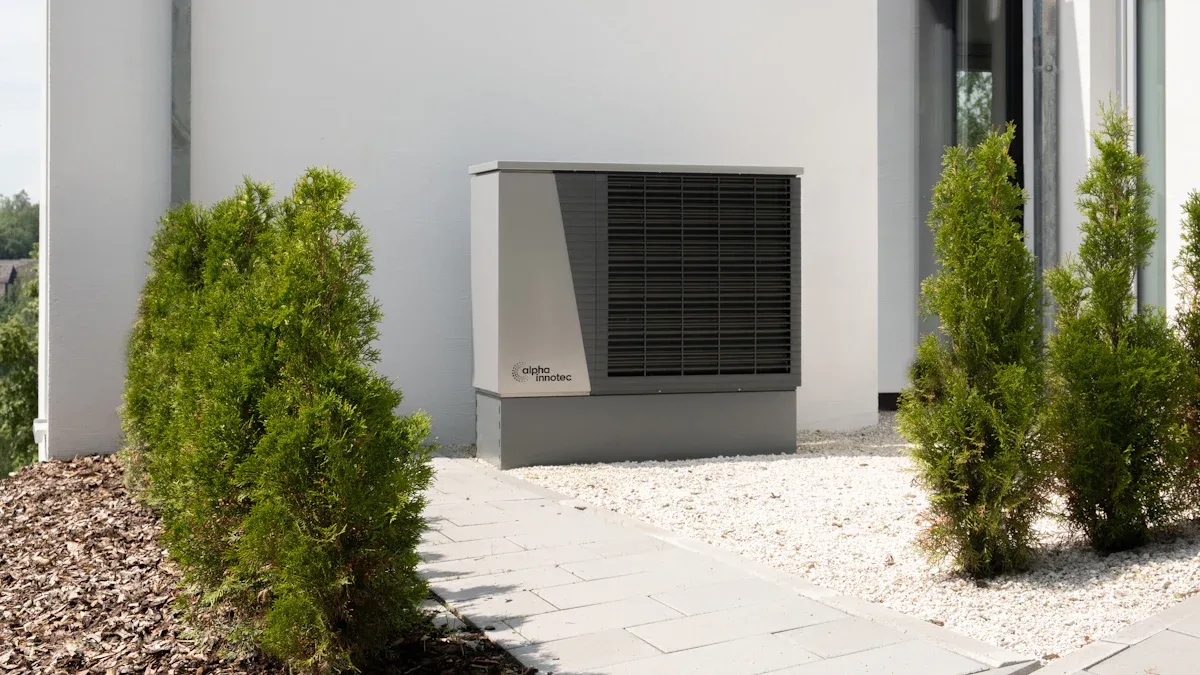
You can make your hvac system work better by picking a precision air conditioner with a variable speed compressor. This compressor changes its speed to match how much cooling you need right now. If your room does not need much cooling, the compressor slows down and uses less power. This helps you save a lot of energy and lowers your bills.
Many tests show that variable speed compressors use much less electricity. For example, some tests and computer models found that using this technology can save between 14% and 56% on power, depending on where you live and your building. One test showed a variable-speed rooftop unit cooled 31% better than a regular two-stage unit. These results show you can get high efficiency and pay less for utilities if you switch to new systems.
When you look at energy ratings like EER, SEER, and CEER, you can see how well each system works. Higher numbers mean the system is more efficient and saves more energy. Always check these ratings before you buy a new air conditioner.
Smart Sensors and Controls
Smart sensors and controls help your hvac system work in a smarter way. These sensors watch things like temperature, humidity, air quality, and if someone is in the room. The system uses this information to make quick changes and keep your space comfy and efficient.
Modern hvac systems use special control programs that learn what you like. Over time, the system gets better at guessing what you need and changes settings by itself. IoT lets your system collect and study data to work better without you doing anything. Cloud tools and machine learning help find problems early and keep your system working well.
With these smart features, you get better control, use less energy, and save money. You also get a more comfortable space and cleaner air inside.
Quiet Operation
Precision air conditioners are now much quieter than old ones. Engineers use new ways to stop loud noises like humming and compressor sounds. These changes make your home or business quieter but still keep the system efficient.
Studies show that new fan designs and changes inside the unit can make it 8-15 dB(A) quieter or even more. Some projects have cut low fan hum by up to 28 dB. These updates make your space quieter and help your hvac system use less energy. You get a quiet, comfy place and save power at the same time.
New design rules focus on saving energy and making less noise. When you pick a high-efficiency electric hvac system, you get great performance, use less energy, and enjoy a better life.
Tip: Always look at noise and energy ratings when you shop for new systems. A quiet and efficient system will make you more comfortable and help you save money over time.
Choosing the Right Precision Air Conditioner
Sizing and Installation
You want your hvac system to work well. Picking the right size is very important. If you choose the wrong size, your room will not cool right. The system may run too much or too little. This wastes energy and costs you more money. You can stop these problems by following some easy steps.
Use Manual J load calculations to match your hvac system to your home. This keeps you comfortable and saves energy.
A system that fits right will not turn on and off too much. This helps it last longer and work better.
Watch for signs like higher bills, uneven cooling, or lots of repairs. These can mean your system is not the right size or was not installed well.
Get your home ready by sealing leaks, adding insulation, and checking your ducts. This helps your hvac system work better.
Always hire a pro to install your system. Experts know where to put indoor units, about 7-8 feet up, away from heat and sun. Outdoor units should be in shade with good air flow.
Make sure your electric system can handle your new hvac system. Use special circuits and good grounding to stay safe.
Here is a simple chart to help you pick the right size for your room:
Room Size (sq ft) | Recommended BTU |
|---|---|
100–150 | 5,000 BTU |
150–250 | 6,000 BTU |
250–300 | 7,000 BTU |
300–350 | 8,000 BTU |
400–450 | 10,000 BTU |
500–600 | 12,000 BTU |
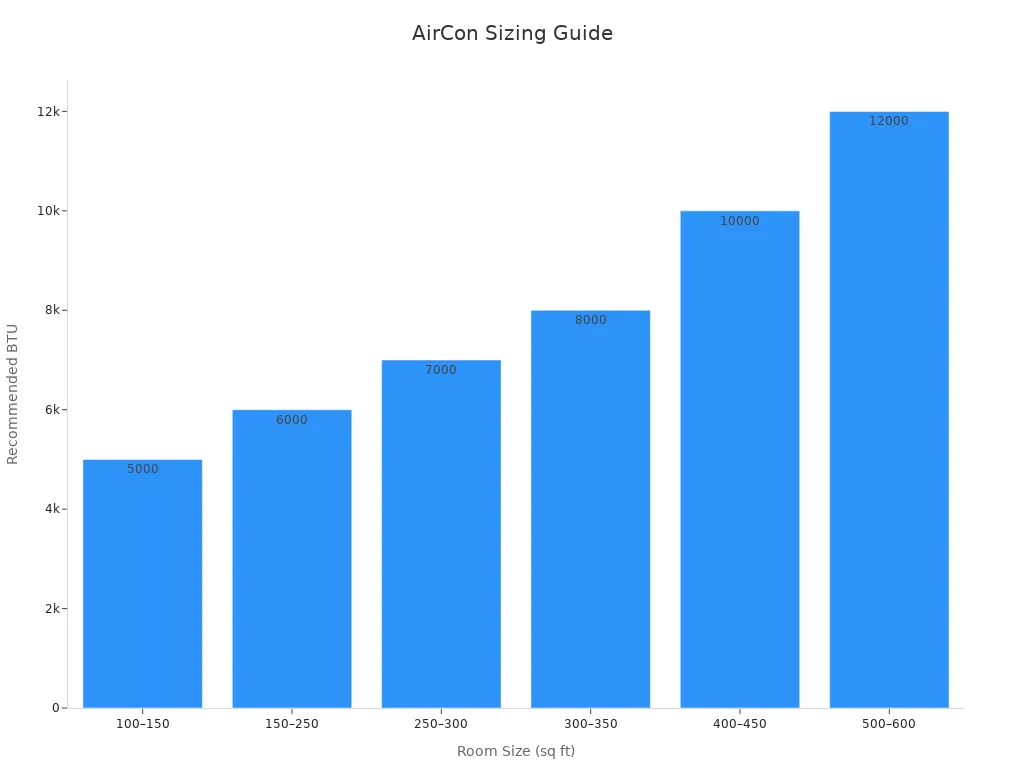
Other things matter too, like ceiling height, insulation, sunlight, and how many people are in the room. If you pick the right size and get a high SEER rating and energy star label, you save money and feel more comfortable. Cleaning filters and checking refrigerant often keeps your hvac system working well.
Tip: Let a pro install your system. You will get better results, save more energy, and your system will last longer.
Energy Star Ratings
Always look for energy star ratings when you buy a new hvac system. These ratings mean the system meets tough energy rules from the government. Energy star systems use less power and save you money over time.
Energy star hvac systems can get you tax credits if they meet the rules. Check for energy star labels and the right SEER ratings.
The 25C federal tax credit gives you up to $3,200 each year for home upgrades, like energy star air conditioners.
To get this credit, keep papers like certificates, receipts, and bills.
The tax credit lowers your federal taxes, so energy star products cost less.
This credit lasts until December 31, 2025. Act soon to save the most money.
These deals help you pick energy star hvac systems, which are good for the planet and your wallet.
Energy star ratings make it easy to compare hvac systems. You can see which ones use less energy and cost less to run. Upgrading to energy star systems means lower bills, better comfort, and less pollution.
Note: Always check for energy star labels and look for rebates or tax credits before you buy. This helps you save money and get the best system for you.
Comparing Models
There are many hvac systems to choose from. Comparing models helps you find the best one for your space and budget. Look at SEER, EER, and energy star ratings to see how much energy each system uses. Higher ratings mean lower energy use and lower bills.
A new study tested fixed and variable precision air conditioners in a lab. The study used world standards to check how well they work. It found that the Cooling Seasonal Performance Factor (FCSP) shows real efficiency better than just looking at the Energy Efficiency Ratio (EER). FCSP tells you how the system works in different weather, not just when it is very hot.
When you compare models, check these things:
SEER and EER ratings for how well it saves energy
Energy star ratings for proven savings
Features like inverter technology, which lets the compressor change speed and save more energy
Use of R-32 refrigerant, which cools faster and is better for the earth
How much care it needs and what the warranty covers
Upgrading to energy star hvac systems gives you better performance, lower energy use, and more savings over time. You also help the planet by using less power and making less pollution.
Tip: Write down what you need and compare at least three models. Look for energy star labels and high ratings to get the best deal.
HVAC Systems Optimization
System Settings
You can get the most out of your hvac by adjusting system settings for your needs. Many studies show that changing settings like refrigerant temperature and heat storage can save up to 19% on energy. Modern hvac systems use advanced controls to match cooling output to real-time demand. When you use these controls, you help your systems work smarter and last longer.
Set your hvac to run at variable speeds.
Use built-in monitoring to check performance.
Adjust fan speeds and cooling levels based on room use.
These steps help your hvac systems save energy and keep your space comfortable. You also reduce wear and tear on your systems, which means fewer repairs.
Tip: Regularly review your hvac system settings. Small changes can lead to big savings over time.
Thermostat Adjustments
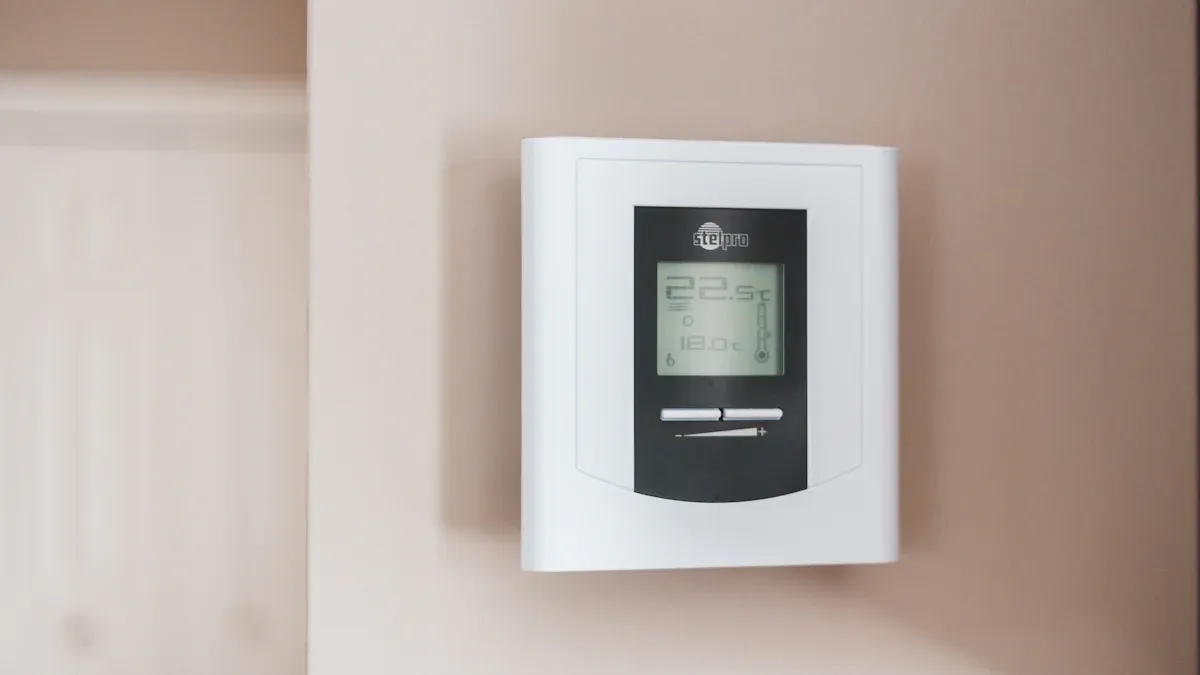
You can cut your cooling costs by making simple thermostat changes. Research shows that raising your thermostat by five degrees can lower hvac energy use by up to 40%. Many studies confirm that even a small change in setpoint can save 10% or more.
Here is a table showing real results from different places:
Location / Study | Setpoint Change | Energy Savings |
|---|---|---|
Office Building (Hoyt et al.) | +2.8°C (5°F) | 27-29% |
Madrid, Spain | +2°C (3.6°F) | 23% |
US Homes (Pang et al.) | +4°C (7.2°F) | 10-30% |
Try setting your hvac thermostat a bit higher in summer. You will still feel cool, and your systems will use less power.
Integration with Smart Home
Smart home technology makes your hvac systems even better. When you connect your hvac to smart devices, you can control settings from your phone or with your voice.
Zoning divides your home into areas, so you only cool rooms you use.
Air quality sensors help your systems keep the air clean.
Maintenance alerts tell you when your hvac needs service.
Smart hvac systems can cut your utility bills by 20-30%. They use AI to learn your habits and adjust settings for comfort and savings. You get better control, cleaner air, and lower costs. These systems also work with other smart devices, like blinds and fans, to keep your home comfortable all year.
Note: Upgrading to smart hvac systems gives you more control and helps you save money every month.
Maintenance for Cost Savings
Regular Checks
You can help your hvac system work well by checking it often. These checks let you find small issues before they get worse. When you look at your hvac system a lot, you save money and use less energy. The table below shows how regular maintenance helps you:
Benefit Category | Evidence Summary |
|---|---|
Energy Savings | Regular maintenance can reduce energy consumption by 5-30%, cutting inefficiencies by 20-30%. |
Extended Equipment Lifespan | Maintenance can add 5 to 8 years to HVAC system life, delaying costly replacements. |
Emergency Repair Cost Reduction | Emergency repairs cost 3-5 times more than scheduled maintenance, highlighting cost avoidance. |
Overall Maintenance Cost Savings | Preventative maintenance can reduce maintenance costs by 25-35%. |
Operational Efficiency | Regular checks prevent system failures, improve air quality, and avoid health code violations. |
Check the filters, coils, and refrigerant levels often. Clean or change filters every month. Make sure vents are not blocked. These steps help your hvac system use less energy and last longer.
Troubleshooting
If your hvac system is not cooling or makes odd sounds, try some easy fixes. First, look at the thermostat settings. Make sure the power is on. Check for dirty filters or blocked vents. If you see water leaks or ice, turn off the system and call a technician. Acting fast can stop bigger problems and save money.
Tip: Write down any weird noises or error codes. This helps the technician fix your hvac system faster.
Professional Service
You get the best results when a professional works on your hvac system. Trained technicians know how to set up and adjust your system. They check Freon gas, clean parts, and make sure everything is safe. Professionals help your hvac system last longer and work better.
Professionals install your hvac system safely and protect important parts.
They set Freon levels right to stop breakdowns.
Good insulation by experts keeps your hvac system working well.
Professional service lowers repair costs and keeps your system running.
Experts set up your hvac system to save the most energy.
Regular visits from professionals keep your hvac system in great shape.
Many companies give guarantees and support, so you feel safe.
Note: Get a professional to check your hvac system at least once a year. This keeps your system working well and helps you avoid big repair bills.
Real Savings and Benefits
Homeowner Examples
When you get a precision air conditioner, you can save real money. Many people say their bills go down after getting new hvac systems. Sarah lives in Texas. She got rid of her old unit and bought a high-efficiency one. Her summer cooling bill went down by 35%. John lives in Ohio. He used smart controls and kept up with maintenance. He saved more than $400 in just one year. These stories prove that energy-efficient upgrades really help. You get more comfort and keep more money.
Homeowners who choose energy-efficient upgrades often notice rooms are quieter, repairs happen less, and temperatures stay steady.
Business Case Studies
Businesses save money with precision hvac systems too. A small office in Florida put in a variable speed system. The company used 28% less energy in the first year. A bakery in California added smart sensors and better insulation. They saved $200 every month. These changes let owners put money back into their business. Many companies see big savings over time. These examples show that smart choices lower costs and improve how things work.
Business Type | Upgrade Type | Annual Savings | Energy Savings (%) |
|---|---|---|---|
Office | Variable Speed HVAC | $1,500 | 28% |
Bakery | Smart Sensors & Insulation | $2,400 | 22% |
Environmental Impact
Choosing energy-efficient hvac systems helps the earth. Studies show that better air systems cut down on pollution. In Ohio, factories made changes over 13 years. They stopped about 2.8 million metric tons of carbon dioxide from going into the air. That is like what 350,000 homes make in a year. There is a small increase in pollution when you install new systems. But the good effects last much longer. You help make the air cleaner and the planet healthier. These upgrades also give people jobs and help your community save money.
You can save more money with a precision air conditioner by using these tips:
Pick systems that have heat recovery, variable cooling, and smart controls. These features help you use less energy and are better for the earth.
Try IoT features so your system can watch itself and make changes on its own.
Choose modular systems. You can add more cooling if you need it later.
Look for government rewards when you buy energy-saving upgrades.
Experts say these ideas help you keep more money, feel more comfortable, and help the planet. Cooling will get even better in the future with smarter and greener technology.
FAQ
How often should you service your precision air conditioner?
You should have a professional check your system once a year. Regular checks help your system work better and last longer. You will also save energy. Clean or change the filters every month for the best results.
Can you install a precision air conditioner yourself?
You should let a trained technician put in your system. Professionals make sure it is safe and works well. If you try to do it yourself, you might make mistakes. This can cost more money or even break your system.
What is the difference between SEER and EER ratings?
SEER tells you how well your air conditioner works over a season. EER shows how well it works at one temperature. Higher numbers mean you save more energy. Always look at both ratings before you buy a new system.
Do smart features really help you save money?
Yes! Smart sensors and controls change cooling to fit your needs. You use less energy and pay lower bills. Many people save 20% or more with smart features.