
You want an HVAC system that balances cost and comfort. For many homeowners, a 15 seer HVAC system offers a solid choice. This system gives you reliable cooling and heating without breaking your budget. Your home may not need the highest efficiency to stay comfortable. Consider how much you use your HVAC, the size of your home, and your local climate. Every system has strengths and trade-offs. Keep reading to see if this system fits your needs.
What Is SEER?
SEER Ratings Explained
You might notice SEER on your cooling system or in HVAC books. SEER means Seasonal Energy Efficiency Ratio. This number lets you compare how much energy different air conditioners and heat pumps use. When you check SEER ratings, you see how much cooling you get for each unit of energy during a normal season.
Here is how SEER is figured out:
SEER is the total cooling output in BTUs for a season divided by the total electrical energy in watt-hours for that time.
The number comes from lab tests on the whole cooling system, like the outdoor unit, furnace, and indoor coil.
Tests A and B check how the system works at different temperatures.
Optional tests C and D help see how the system turns on and off.
The final SEER rating is a weighted average that matches real-life use.
Most modern systems have SEER ratings from 13 to 24. The U.S. government sets minimum SEER standards. These standards have gone up over time to help save energy.
Tip: A higher SEER rating means your cooling system uses less energy to keep your home cool.
Why SEER Matters
You want a cooling system that saves energy and money. SEER ratings help you pick the right one. A higher SEER rating means better energy use, so your system needs less electricity for the same cooling. This can lower your bills and help the power grid.
Systems with higher SEER ratings use less energy.
Using less energy means power plants do not work as hard.
This helps lower greenhouse gas emissions and keeps the air cleaner.
High SEER ratings also help keep the power grid steady.
Picking a system with a good SEER rating is smart for your wallet and the planet. The seasonal energy efficiency ratio lets you compare systems and choose the best one for your home.
15 SEER Overview
15 SEER Efficiency
When you look at SEER ratings, you want to know how much energy your HVAC system will use. A 15 SEER system gives you better efficiency than many older models. If you upgrade from a 13 SEER to a 15 SEER, you can cut your energy use by about 13%. This means you spend less money on your cooling bills each month. You also help the environment by using less energy.
SEER ratings show how well a cooling system turns energy into cool air. A higher SEER rating means the system uses less energy for the same amount of cooling. With a 15 SEER HVAC system, you get a good balance between cost and energy efficiency. Many homes do not need the highest SEER ratings to stay comfortable. Cooling systems with a 14 or 15 SEER rating often meet the needs of most families. You can enjoy steady comfort and lower energy bills without paying for the highest-end models.
Note: The energy efficiency of your HVAC system affects your monthly bills and your home’s carbon footprint.
15 SEER Features
A 15 SEER HVAC system comes with features that help you save energy and stay comfortable. Most 15 SEER systems use modern compressors and fans. These parts help the system run smoothly and keep your home cool. Some models offer quiet operation, so you do not hear loud noises when the system turns on.
You may find digital thermostats and smart controls with these systems. These features let you set your cooling schedule and adjust the temperature from your phone. Many 15 SEER systems use better filters, which help clean the air in your home. You also get reliable performance, even on hot days.
Here is a quick look at what you can expect from a 15 SEER system:
Feature | Benefit |
|---|---|
Modern compressor | Better efficiency, less noise |
Smart thermostat | Easy control, energy savings |
Improved air filters | Cleaner indoor air |
Reliable cooling | Comfort in every room |
A 15 SEER HVAC system gives you the right mix of efficiency, comfort, and value. You get the benefits of new technology without the high price of top-tier models.
15 SEER Pros
Lower Cost
You want a system that does not cost too much. A 15 seer hvac system usually costs less than higher-rated ones. You pay less money at first for the equipment and installation. Many people see a big price gap between a 15 seer and a higher seer system. This means you can buy a new hvac system without spending too much.
You save money when you buy it.
It costs less to install.
Repairs and parts are cheaper.
A 15 seer system works well and keeps you comfortable. You do not have to pay for extra things you may not use. This is a good choice if you want to save money and stay comfortable. Many families use the money they save for other home projects or to help pay energy bills.
Tip: If you will not live in your home for long, the lower cost of a 15 seer system helps you get your money back faster.
Energy Savings
A 15 seer hvac system uses less energy than old systems. If you upgrade from a 10 or 13 seer, your energy bills go down. The better efficiency means your cooling system does not work as hard. This saves you money over time.
You use less power each month.
Your bills are lower.
Your home is better for the planet.
The 15 seer rating means the system meets today’s energy rules. You get new technology without paying for the most expensive models. Many people save up to 13% when moving from a 13 seer to a 15 seer system. These savings add up over the years and make your purchase worth it.
Note: If you use your hvac system a lot, you save even more. Hot places or big homes can see bigger drops in energy bills.
Meets Standards
You want your new hvac system to follow all the rules. A 15 seer system is above the minimum in most places. This means you follow the latest laws and avoid problems with setup or selling your home.
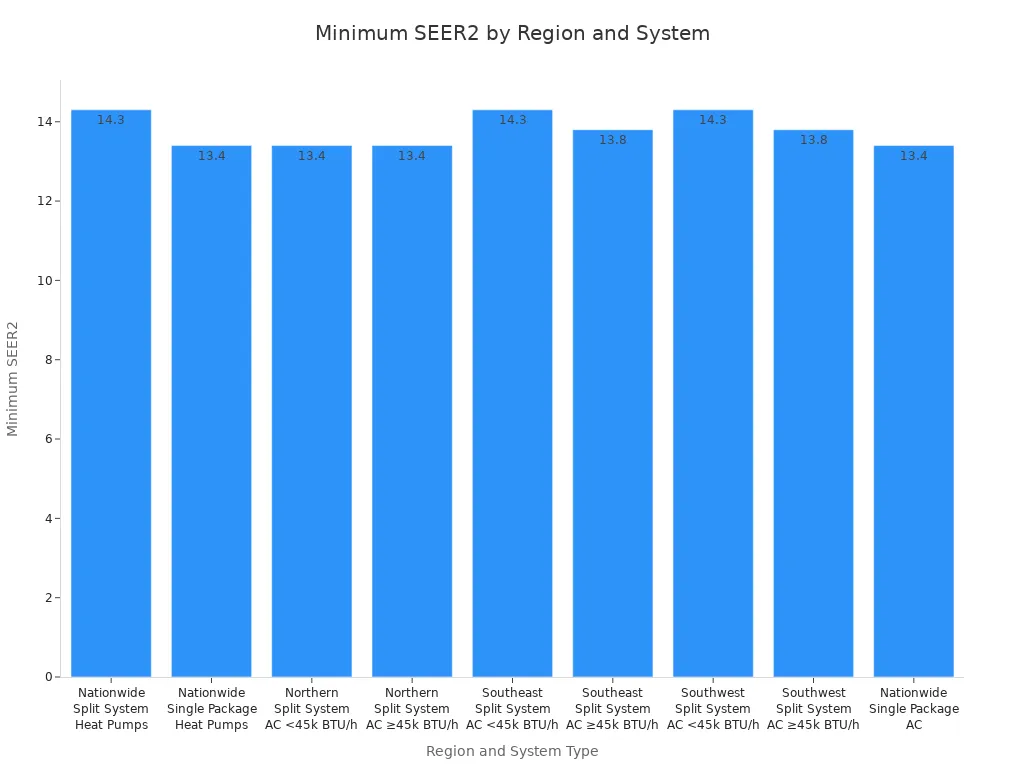
Here is a table that shows the current minimum SEER2 rules for new hvac systems in different U.S. areas:
Region | System Type | Minimum SEER2 | Notes on Compliance Deadline and Rules |
|---|---|---|---|
Nationwide | Split System Heat Pumps | 14.3 | Compliance based on date of manufacture; inventory sell-through allowed for pre-2023 units |
Southeast Region | Split System Air Conditioners <45,000 BTU/h | 14.3 | Compliance based on date of installation; stricter sell-through rules |
Southwest Region | Split System Air Conditioners <45,000 BTU/h | 14.3 | Compliance based on date of installation; no sell-through for non-compliant units post-2023 |
Northern Region | Split System Air Conditioners <45,000 BTU/h | 13.4 | Compliance based on date of manufacture; older compliant units may still be installed post-2023 |
You can see that a 15 seer system meets or beats these rules everywhere. This helps you feel safe and keeps you from making costly mistakes. The new SEER2 tests also make sure your system works well in real life.
Callout: Picking a 15 seer hvac system means you follow the newest energy rules. You protect your money and make your home better for future buyers.
A 15 seer system gives you many good things. You get a lower price, real energy savings, and you follow the latest rules. This makes it a smart pick for people who want comfort, savings, and peace of mind.
15 SEER Cons
Fewer Features
A 15 SEER HVAC system does not have as many features as higher-SEER models. High-SEER systems often have things like variable-speed compressors, smart sensors, and better humidity control. These features help you feel more comfortable and control the temperature better. Most 15 SEER systems use single-stage or two-stage compressors. These work fine, but they do not change speeds as smoothly as variable-speed ones.
You might not get the newest smart home features. Some high-SEER systems work with home automation or voice assistants. If you want the latest technology, a 15 SEER system might not be enough. You still get good heating and cooling, but you may not have as much control or convenience.
If you want the newest features and technology, you should look at higher SEER systems.
Incentive Limits
Many utility companies and government programs give rebates for energy-efficient HVAC systems. These programs usually have a minimum SEER rating you need to get the rebate. A 15 SEER system sometimes does not meet the requirement for the best rebates. In some places, rebates start at 16 SEER or higher.
This means you could miss out on extra savings if you pick a 15 SEER system. Higher-SEER systems often get more rebates, which help with the higher price. Before you choose, check local programs to see what rebates you can get for different SEER ratings.
Some rebates need a SEER rating of 16 or more.
Incentives can help lower the total cost of a new HVAC system.
If you do not get rebates, a 15 SEER system may not be as good a deal over time.
Always check local energy programs before you buy your system. Rebates can change how much you pay and what you get for your money.
Long-Term Costs
A 15 SEER HVAC system is efficient, but you might pay more in the long run than with a higher-SEER model. Over time, using more energy adds up. High-SEER systems use new technology to waste less energy and lower your bills. They also break down less, so you spend less on repairs.
Here are some important things about long-term costs:
Older systems with lower SEER ratings break down more and use more energy, so repairs and maintenance cost more.
The “50% rule” says if a repair costs more than half the price of a new system, you should get a new one. Lots of repairs can make an old or less efficient system cost more over time.
High-SEER systems (15 and above) use new parts like variable-speed compressors. These parts help save energy and lower repair needs.
Newer, high-SEER units often get energy rebates and give better comfort and air quality, which can save you money over time.
Old or low-SEER systems break down more, so you pay more for repairs and may feel less comfortable. Getting a more efficient system can help you avoid these problems.
You should also think about how long your HVAC system will last. Data from manufacturers shows that higher-SEER systems last longer than 15 SEER models. The table below shows how different things can change how long your system works:
Factor | Lifespan Impact |
|---|---|
Higher SEER/EER Ratings | |
Reputable Manufacturer | Increase by 20%–30% |
Professional Installation | Increase by 15%–25% |
Modern System | Increase by 15%–25% |
Cheaper/Lower Quality | Decrease by 20%–30% |
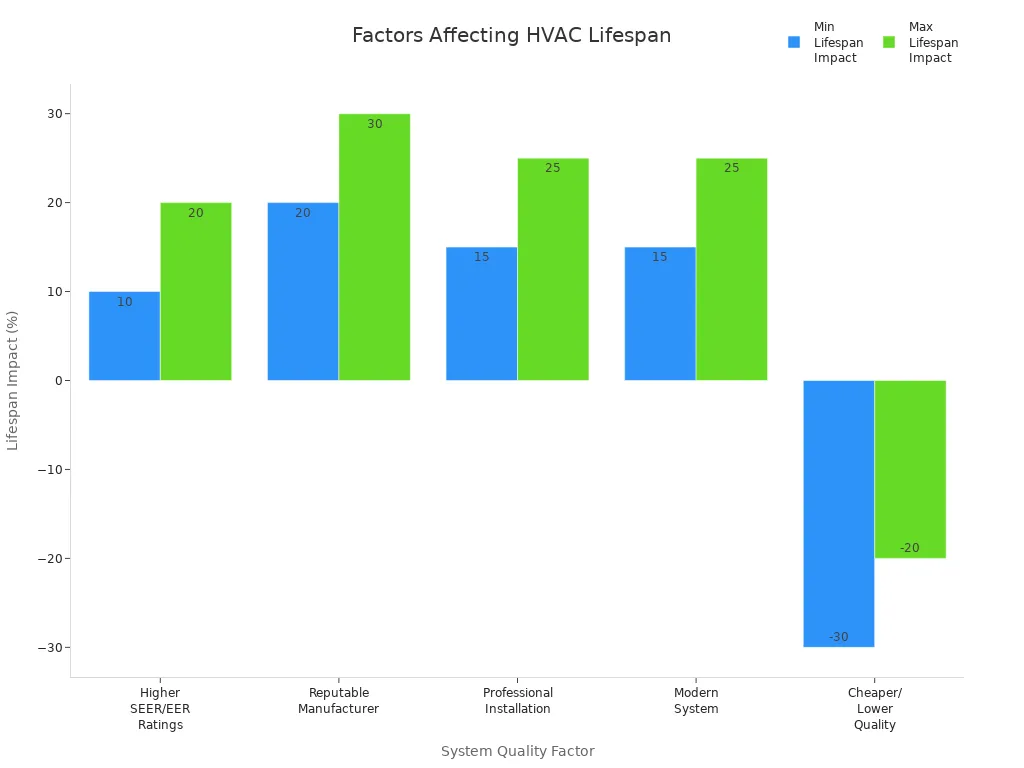
A higher SEER rating helps your system use less energy and last longer. This means you might save more money over the life of your HVAC system. While a 15 SEER system costs less at first, you should think about the total cost, including repairs, maintenance, and energy bills, over many years.
Picking a higher-SEER system can give you better efficiency, lower long-term costs, and a system that lasts longer.
15 SEER vs Higher-Rated SEER
High SEER Rating Benefits
When you look at higher SEER systems, you find many good things. These systems use new technology to work better. You get more cool air for each bit of energy. This helps lower your electric bills over time. Higher SEER ratings like 16, 18, or even 20+ save more energy each month. You also feel more comfortable because these systems often have variable-speed compressors and better humidity control.
Here are some good things about picking a high SEER rating:
Using less energy means you save money on bills.
New features let you control your comfort better.
Many high SEER systems are quieter and last longer.
Some models have smart controls and help clean the air.
Tip: If you want the newest technology and best efficiency, a higher SEER rating gives you more choices.
When to Choose Higher SEER
Think about your home and what you need before you pick a system. Higher SEER units cost more at first. The price to buy and install is higher than a 15 SEER system. But you can save more money over time, especially if you use your HVAC a lot or have a big house. The money you save on bills can make up for the higher price. Some places also give rebates or rewards for high SEER systems, which help lower the first cost.
Here is a quick chart to help you choose:
Feature | 15 SEER System | Higher-Rated SEER System (16+) |
|---|---|---|
Upfront Cost | Lower | Higher |
Energy Efficiency | Good | Best |
Long-Term Savings | Moderate | High |
Features | Basic to Moderate | Advanced |
Incentives | Limited | More Available |
If you live where it is hot, have a big home, or want to save the most money, a higher SEER rating may be best for you. Looking at different SEER ratings helps you see the good and bad of high SEER systems. You get better efficiency, more features, and can save more money. Always check for local rebates, as these can change your final cost.
Note: The best choice depends on your budget, how much you use your HVAC, and your energy goals.
Choosing the Right SEER
Key Factors
When you start choosing the right seer rating for your home, you need to look at several important things. Each home is different, so you want to make the best choice for your comfort and budget. Here are some key points to help you:
Look at the upfront cost and compare it to long-term savings. Higher SEER systems cost more at first, but they can lower your energy bills over time.
Think about how much you use your HVAC system. If you run it often, you may see bigger savings with a higher SEER.
Consider your local climate. Hotter places may benefit more from a higher SEER rating.
Check the size of your home. Bigger homes may need a more efficient system to keep every room comfortable.
Review available rebates or tax credits. Some programs offer money back when you pick a high SEER system.
Remember that choosing the right seer rating also means looking at other numbers, like EER and HSPF, for a full picture of efficiency.
Watch out for common mistakes. Many people pick the wrong size system or skip a professional load calculation. This can lead to higher bills and less comfort, even with a good SEER rating.
Tip: Always check your ductwork for leaks or poor design. Even the best SEER system cannot work well if air escapes before reaching your rooms.
Get Expert Help
Choosing the right seer rating can feel confusing. You do not have to decide alone. HVAC experts at Newex can help you find the best fit for your home. They look at your climate, home size, and how much you use your system. They also check for rebates and explain how much you can save. When you talk to a pro, you avoid mistakes and get the most out of your investment.
You want comfort, savings, and peace of mind. By choosing the right seer rating with help from Newex, you make a smart choice for your family and your wallet.
A 15 SEER HVAC system helps you save money and energy. It costs less at first and meets energy rules. But it may not have the newest features or the biggest rebates. You should think about your weather, house size, and how much you use your system. If you want help, you can talk to Newex in these ways:
Visit the Newex contact page if you have questions about getting a system, fixing it, or want advice.
Choose what is best for your comfort and wallet—talk to Newex today!
FAQ
What does SEER mean for my HVAC system?
SEER stands for Seasonal Energy Efficiency Ratio. This number shows how much cooling your system gives for each unit of energy it uses. A higher SEER means better energy savings for you.
Will a 15 SEER system keep my home comfortable?
Yes, a 15 SEER system can keep most homes cool and comfortable. You get steady temperatures and good airflow. If your home is very large or in a very hot area, you may want to look at higher SEER options.
Can I get rebates with a 15 SEER system?
Some rebates require a higher SEER rating, often 16 or above. You may find local programs that offer savings for 15 SEER systems, but always check with your utility company or installer first.
How long does a 15 SEER HVAC system last?
You can expect a 15 SEER system to last 12 to 15 years with regular care. Good maintenance helps your system run longer and better. Always schedule yearly checkups for best results.
Is a 15 SEER system noisy?
Most 15 SEER systems run quietly. Newer models use better fans and compressors. You may hear some sound when the system starts, but it should not disturb you or your family.