

You want the best air conditioning for your business. If you need to save space inside, roof air conditioning units are ideal for large buildings. These units combine all components on the roof, helping to keep noise away from work areas. Split systems are great for places that require quiet and flexible cooling. They can also be used in small offices as part of a home comfort system. The size of your building, the weather, and your daily needs will help you choose the best option.
Rooftop Units vs. Split System Overview
What Are Roof Air Conditioning Units?
Roof air conditioning units are a kind of hvac packaged unit for businesses. These systems sit on the roof, so you have more room inside. The unit has a strong cover to protect the main parts from weather. Inside, there are compressors, fans, coils, and filters. Special hoods and mesh keep out animals and dirt. Dampers help move air the right way. Filters clean the air before it goes inside. This setup makes roof air conditioning units simple to fix and tough in any weather. You get heating, cooling, and fresh air from one hvac packaged unit. This helps your building stay comfy and the air stay clean.
Tip: Roof air conditioning units make your building quieter inside. They also hide the equipment, so your building looks better.
What Is a Split System?
A split system has two main parts. One part is outside and one part is inside. The outside unit has the compressor. The inside unit moves cool or warm air around. Many split systems use compressors that save energy and are good for the planet. Some split systems can heat and cool with a heat pump. These systems are good if you cannot put in ducts. You can use a split system in small offices, stores, or places that need special cooling. Some split systems let you set different temperatures in each room. This makes them easy to use for many needs.
Split systems are quiet because the compressor is outside.
You do not need ducts, so you save money and energy.
You can add more indoor units if your business gets bigger.
Main Differences
Roof Air Conditioning Units (HVAC Packaged Unit) | Split System | |
|---|---|---|
Design | All-in-one, roof-mounted | Separate indoor and outdoor units |
Installation | On the roof, saves indoor space | Flexible, but needs space for both units |
Typical Application | Large offices, warehouses, retail spaces | Small offices, shops, zoned areas |
Cooling Approach | Centralized for large areas | Zone-specific, targeted control |
Maintenance | Easy rooftop access | Multiple units, more complex |
Noise | Kept outside, less indoor noise | Quiet indoors, compressor outside |
Scalability | Modular, can expand as needed | Add more units for growth |
Roof air conditioning units are best for big buildings that need strong, central cooling. A split system is better for small or special areas where you want to control each space. When you pick between a hvac packaged unit and a split system, think about your building size, shape, and how you will use the space.
Pros and Cons of Rooftop Units
Rooftop Unit Advantages
If you pick a rooftop unit for your business, you get many good things:
You save space inside and outside. Roof air conditioning units sit on top, so you can use the ground for cars or plants.
Rooftop units are quiet. Putting the hvac packaged unit on the roof keeps noise away from workers.
Your system is safer. Roof air conditioning units are hard for people or cars to reach.
Air moves better and cooling works well. The rooftop spot lets heat escape, so the system cools faster.
You can add more units if you need them. Rooftop units are modular, so you can grow your system.
Technicians can fix the hvac packaged unit on the roof. They do not bother your workers or customers.
Your building looks nicer. Rooftop units hide big machines, so your place looks neat.
The system stays cleaner. Roof air conditioning units miss most dirt and pollution from the ground.
Tip: Smart controls on a rooftop unit can help save energy by up to 30%. This means you can pay less for power over time.
Rooftop Unit Disadvantages
Rooftop units have some problems you should think about too:
Rooftop units get hit by bad weather. Rain, snow, wind, and hot or cold days can hurt them.
Rooftop units are heavy. Your roof must be strong enough for the hvac packaged unit and to stop leaks.
It can cost more to install. You might need special tools or a stronger roof for roof air conditioning units.
If you put the unit in a bad spot, water can pool and cause damage.
People may forget to check the rooftop unit. If you do not check it often, it may not last as long.
Animals and lightning can hurt rooftop units. Birds and storms can cause trouble, so you need to protect them.
If you skip regular checks, the rooftop unit can lose up to 30% of its energy savings in a few years. This can make your bills go up and cause breakdowns.
Note: Checking and cleaning your rooftop unit often helps it last longer and work better. Taking care of it saves money and stops big problems.
Pros and Cons of Split AC Systems
Split AC System Benefits
You get many advantages when you choose a split system for your commercial space. Split ac systems give you individualized comfort control. You can set different temperatures in each room or zone. This means you keep conference rooms cool while saving energy in empty offices. With hvac split system zoning, you only cool or heat the spaces you use. This zone-specific cooling helps lower your energy bills.
Split ac systems offer high energy efficiency. Many new models can cut cooling costs by 20% to 40% compared to older units.
You enjoy quiet operation. The noisy compressor sits outside, so your work areas stay peaceful.
Flexible installation is another benefit. You can mount the indoor unit on the wall, ceiling, or floor. This makes split systems fit almost any building layout.
Ductless mini-splits and ductless mini-split systems need only a small hole in the wall. You avoid the mess and cost of large ductwork.
Split ac systems help you save money. You can turn off units in unused areas, which reduces wear and tear and saves energy.
Individualized comfort control improves air quality. Some hvac split system models have advanced filters and humidity control.
Tip: Zoning with split ac systems lets you adjust comfort for each area. This keeps everyone happy and helps you use less energy.
Split AC System Drawbacks
You should also know the challenges of split ac systems. Installing a split system means you need both an indoor and outdoor unit. This doubles the places where problems can happen. If the installer does not connect the pipes and refrigerant lines correctly, your hvac split system may not work well.
Maintenance can be harder. You must check both the indoor and outdoor units. The outdoor compressor can get damaged by weather or animals.
If you inherit a split system from a previous owner, you might not know if it was installed right. This can lead to higher repair costs.
Using parts from different brands or replacing only one part of the hvac split system can cause trouble.
Ductless mini-splits may need regular cleaning to keep filters working well.
Individualized comfort control means more controls to manage. Some users find this confusing at first.
Note: Always hire a skilled technician to install and maintain your split ac systems. Good care helps your system last longer and work better.
Installation and Maintenance
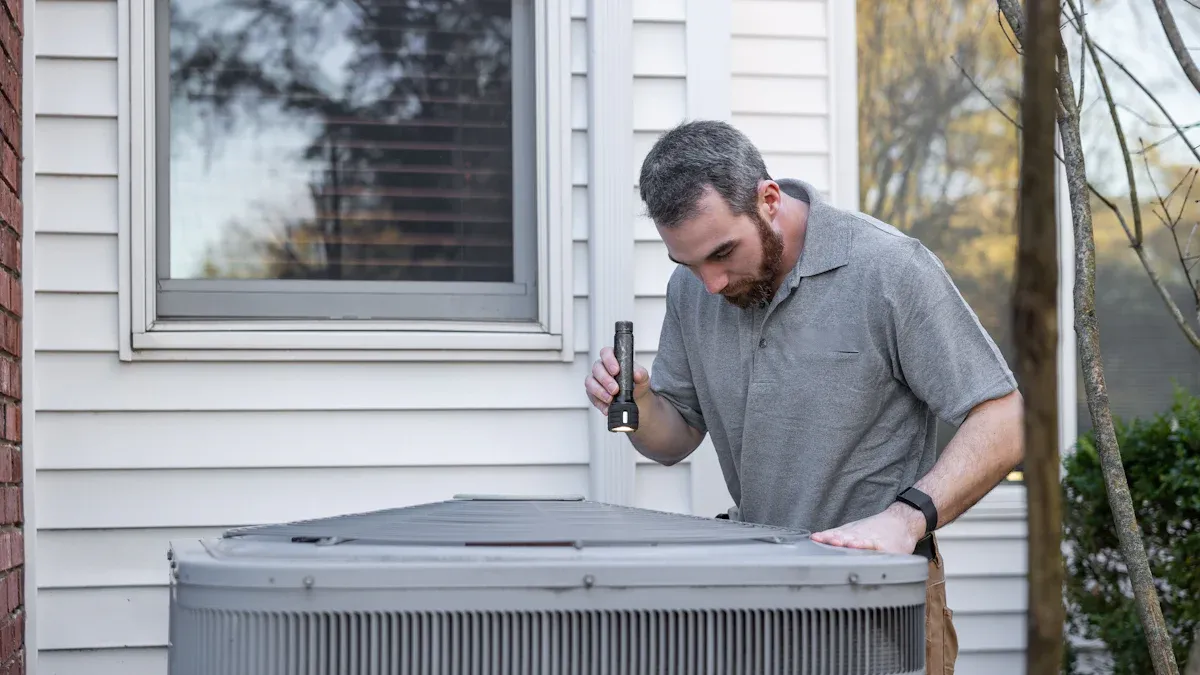
Rooftop Unit Installation
Putting in a rooftop unit is not easy. You have to lift heavy parts up high. This takes more time and careful planning. Workers need to wear safety gear because they work on the roof. It usually takes longer than putting in ground-level systems. You must check if your roof can hold the weight. Weatherproofing is important to keep out rain and wind. These steps make the job harder and can cost more money. You get more space inside, but you need safe ways to reach the unit for repairs.
Tip: Always check your building’s structure before you start. This helps you avoid big problems and extra costs.
Split System Installation
Putting in an hvac split system is faster and easier. You do not have to work on the roof, so it is safer. The steps are not as hard as with rooftop units. Most split systems only need a small hole in the wall for pipes and wires. You can put them in one room at a time. This gives you more choices for where to put them. You do not need big ducts, so you save time and money. Split systems are good for businesses that want quick upgrades.
Split systems can go in many places.
You do not have to deal with rooftop work.
The steps are easier than with rooftop units.
Maintenance Factors
It is important to reach both systems for checks. Rooftop units need regular checks because of bad weather. You should look at them every few months. As they get older, rooftop units need more repairs. They usually last 10 to 15 years. Older units break down more and cost more to fix.
An hvac split system can last 15 to 20 years if you take care of it. You must check both the inside and outside parts. This means cleaning filters, checking lines, and making sure the thermostat works. Split systems often need fewer repairs if you keep up with care. You may spend less on repairs over 10 years than with a rooftop unit.
Aspect | Rooftop Unit | HVAC Split System |
|---|---|---|
Installation Requirements | High (roof access, structure checks) | Low (small wall opening, no ducts) |
Harder (roof access needed) | Easier (ground-level access) | |
Lifespan | 15-20 years | |
Repair Frequency | Increases with age | Lower if well maintained |
Note: Checking and caring for both systems helps them last longer. Plan for regular checks to stop big problems later.
Efficiency and Cost Comparison
Energy Efficiency
You want to use less energy and save money at work. Both rooftop AC units and split systems are good at saving energy. New rooftop units have special parts like variable-speed compressors and economizers. These parts help use up to 40% less energy than old models. Split systems also save energy, especially if you only cool the rooms you use.
Here is a simple chart to compare both systems:
Equipment Type | SEER (min) | EER (min) | IEER (min) |
|---|---|---|---|
Very Small Rooftop Packaged Unit | 16.0 | 12.0 | N/A |
Very Small Split System | 16.0 | 12.5 | N/A |
Small Rooftop Packaged Unit | N/A | 12.7 | 18.0 |
Small Split System (including VRF) | N/A | 12.0 | 17.4 |
Large Rooftop Packaged Unit | N/A | 12.2 | 17.0 |
Large Split System (including VRF) | N/A | 10.9-11.3 | 16.4-16.8 |
Both systems have close energy efficiency ratings. Picking new models helps you use less energy and save more money.
Upfront and Ongoing Costs
You should think about how much it costs to buy and keep each system. Rooftop AC units cost more to put in. You might need a crane, special permits, or roof work. These things can make the price go from $10,000 to $45,000. Split systems cost less at first, from $2,000 to $20,000, and are easier to add to old buildings.
Aspect | Rooftop AC Units (RTUs) | Split Systems |
|---|---|---|
Typical Upfront Cost | $10,000 to $45,000 | $2,000 to $20,000 |
Labor Costs | Higher (crane, roof work) | Lower (interior work) |
Maintenance Access | Easier (rooftop) | More complex (indoor/outdoor) |
Ongoing Costs | Linked to energy consumption | Linked to energy consumption |
Pick a system that fits your building to save money. Both systems can help you save over time if you choose energy-saving models and take care of them.
Tip: Using less energy means you save more money in the long run.
Tax Credits and Incentives
You can pay less by using tax credits and rebates. The IRS Section 179D deduction lets you get $0.50 to $5.00 per square foot for energy-saving HVAC upgrades. The Clean Electricity Investment Credit can pay up to 30% of your costs if you use green technology. You can also write off your equipment faster with MACRS or use Section 179 to expense it right away.
Many states give rebates for rooftop unit controls, ductless heat pumps, and smart thermostats.
You might get $250 for smart controls, $300 for ductless upgrades, and up to $1,000 per ton for retrofits.
Some programs need certified contractors and meeting energy-saving rules.
These rewards help you save money and lower your costs by cutting both install prices and energy use.
Choosing the Right System
Building Size and Layout
You need to look at your building’s size and layout before you choose an air conditioning system. The total square footage, ceiling height, and number of rooms all play a big role. Large buildings with open spaces often work best with rooftop AC units. These units sit on the roof, so you save valuable floor space for your business. Rooftop units can handle big cooling loads and keep the inside quiet.
If your building has many small rooms or a unique shape, split systems offer more flexibility. You can mount indoor units on walls, ceilings, or even hide them in ductwork. This lets you cool only the areas you use most. Split systems also help you control the temperature in each zone. This is helpful if you have conference rooms, offices, or special work areas that need different settings.
Rooftop AC units suit large, open spaces and save indoor space.
Split systems fit buildings with complex layouts or many zones.
Both systems need enough space around them for airflow and maintenance.
Contractors should check your building’s size, ceiling height, and layout before you decide.
Tip: Always think about how your building’s shape and size affect cooling needs. This helps you pick the most cost-effective system for your space.
Budget and Priorities
Your budget and business goals matter when you choose between rooftop units and split systems. Rooftop AC units often cost more to install because you may need a crane or roof work. However, they can be more cost-effective for large buildings that need strong, central cooling. You also save money over time if you pick energy-efficient models and keep up with maintenance.
Split systems usually have a lower upfront cost. They are easier to install, especially in older buildings or places where you cannot add ducts. If you want to expand your business later, you can add more split units as you grow. This makes split systems a good choice for businesses with changing needs or smaller budgets.
Priority | Rooftop AC Units | Split Systems |
|---|---|---|
Upfront Cost | Higher | Lower |
Expansion | Modular, scalable | Add units as needed |
Maintenance | Easier rooftop access | Both indoor and outdoor care |
Cost-Effectiveness | Best for large spaces | Best for small/medium spaces |
Think about what matters most to you. If you want to save space and cool a large area, a rooftop unit may be the best fit. If you need flexibility and want to control costs, split systems offer a smart solution.
Note: Always balance your budget with your long-term goals. The most cost-effective system is the one that meets your needs now and in the future.
Climate and Location
Your local climate affects how well each system works. Rooftop AC units perform best in dry or mild climates. They provide strong, central cooling and are easy to maintain. If you live in a place with lots of rain, snow, or salty air, you need to protect rooftop units from weather and corrosion.
Split systems work well in almost any climate. They are a good choice for humid areas because many models have built-in dehumidifiers. This helps keep the air comfortable and stops mold growth. If you live near the coast, look for split systems with corrosion-resistant parts.
Air conditioners have climate ratings. These ratings show the temperature range each unit can handle. Picking a system with the right rating for your area helps it last longer and work better. If you choose a unit that does not match your climate, it may use more energy and wear out faster.
Rooftop units suit dry or temperate climates.
Split systems work in all climates and help control humidity.
Always match the system’s features to your local weather.
Tip: Check your local climate before you buy. The right system will keep your building comfortable and save you money over time. If you have special home comfort needs, talk to an HVAC expert for advice.
When to Consult a Professional
Expert Assessment
You may feel unsure about which AC system fits your building. An HVAC professional can help you make the right choice. You should reach out to an expert in several situations:
You need to measure your building’s size and layout. This includes checking square footage, ceiling height, insulation, and how much sun your building gets.
You want to know the exact cooling or heating power your space needs. Professionals use special tools to calculate the right BTUs for your building.
You must follow local rules and energy codes. Experts know about SEER ratings and government requirements.
You have a building with many rooms or zones. Professionals can help you plan for different temperature needs in each area.
You want to improve indoor air quality. Experts can suggest ways to control humidity, add ventilation, and use better filters.
You need to pick the best system type. Professionals compare split, ductless, and packaged units for your building’s needs.
You want to save money on energy bills. Experts can show you how to choose efficient systems and plan for future savings.
Tip: An expert can spot problems you might miss. This helps you avoid costly mistakes and keeps your building comfortable.
Custom Solutions
Every commercial space is unique. You might have specialized requirements that require a custom approach.An HVAC professional can design a system just for you. They look at how many people use the space, how often doors open, and what equipment you use. They also check your climate and local weather patterns.
A professional can help you:
Plan for future growth by choosing systems that are easy to expand.
Address tricky layouts or buildings with many zones.
Set up maintenance plans to keep your system running well.
Make sure your system meets all safety and warranty rules.
Note: Custom solutions help you get the most from your investment. You enjoy better comfort, lower costs, and peace of mind knowing your system fits your business perfectly.
Picking between rooftop AC units and split systems depends on what your building needs. You also need to think about how big your building is and what you might want later. Here are the main ways they are different:
Factor | Rooftop AC Units | Split-System Units |
|---|---|---|
Space Use | Saves indoor space | Needs indoor and outdoor space |
Modularity | Easy to expand | Less flexible |
Energy Efficiency | Lower | Higher |
Lifespan | Shorter | Longer |
To get the best system, you should do a few things. First, pick a contractor who has good reviews and is trusted. Next, choose a system that fits your building’s size and shape. Also, sign up for regular check-ups to keep your system working well.
If you want advice just for your building, talk to an HVAC professional. They can look at your space and help you pick the best system.
FAQ
What is the main difference between a rooftop AC unit and a split system?
A rooftop AC unit sits on your building’s roof and combines all parts in one box. A split system has one part inside and one part outside. You choose based on your building’s size and needs.
Can you install a split system in an older building?
Yes, you can install a split system in most older buildings. You do not need big ducts. You only need a small hole for pipes and wires. This makes split systems a good choice for upgrades.
How often should you service your commercial AC system?
You should schedule maintenance at least twice a year. Regular checks help your system last longer and work better. Clean filters and check parts to avoid breakdowns.
Which system is quieter inside the building?
Split systems are usually quieter inside. The noisy compressor stays outside. Rooftop units also reduce noise, but you may still hear some sound from air moving through vents.