

You must pick the right high-efficiency room chiller machine. Look for stability, energy efficiency, and adaptability. Make sure it has low water-side resistance. It should be easy to maintain. Choose the correct size. Match the type and capacity. Think about temperature difference design. Do a multi-condition analysis. These things help you save money and make the system work better. Studies show a good room chiller machine can lower yearly costs by up to 45%. It can also cut downtime in half. Use the next sections as your checklist to pick a good room chiller machine.
Room Chiller Machine Selection
Defining Cooling Needs
Start by figuring out how much cooling you need. Each use is different. For commercial chillers, find out how much heat your building or process gets. The Air Conditioning Contractors of America (ACCA) says to use special steps to measure heat gain and loss. These steps look at sunlight, equipment, lights, and people. The transfer function method from ASHRAE helps you count all heat sources. For process cooling, check the specific heat of materials and how much you use each hour. Also, think about any extra heat from machines. Dedicated Outdoor Air Systems (DOAS) can help by handling air and moisture on their own. Always make sure your cooling matches what you need for the best results.
Sizing and Capacity
Sizing your chiller right is important. It makes sure your chiller can cool enough. Figure out the cooling needed by checking coolant flow and temperature change. Use the formula Q = MCΔT, where Q is heat in BTUs per hour. Divide by 12,000 to get the chiller size in tons. Add 10-20% more to be safe. Change the cooling size if your water is not at 50°F. Add 2% for every degree below 50°F. Take away 2% for every degree above. Always size your chiller for the most heat and lowest temperature you expect. For commercial chillers, variable-speed compressors save energy when you do not need full power. This way, your chiller gives steady cooling for any use.
Chiller Types
You have a few choices when picking a chiller. The main types are water-cooled and air-cooled chillers. Water-cooled chillers use water from a cooling tower to take away heat. They save more energy and last longer. They are good for high-efficiency machine rooms and big commercial chillers. Air-cooled chillers use fans and outside air. They cost less to put in and take care of. They do not use water. But they do not cool as much and are less efficient, especially when it is hot outside. The table below shows the main types:
Chiller Type | Efficiency | Pros | Cons |
|---|---|---|---|
Water-Cooled | High | Efficient, quiet, compact, durable | Higher cost, needs water, more space |
Air-Cooled | Moderate-Low | Lower cost, no water, easy retrofit | Noisy, less efficient, weather limits |
Pick the chiller type that fits your needs, cooling size, and space. Water-cooled chillers are often picked for high-efficiency room chiller machine setups because they cool better and save more energy.
Efficiency Metrics
COP, EER, IPLV
There are three main ways to measure chiller efficiency: COP, EER, and IPLV. COP stands for Coefficient of Performance. It tells you how much cooling you get for each unit of electricity. If the COP is higher, the chiller works better. EER means Energy Efficiency Ratio. It shows how much cooling the chiller gives for each watt of power. A high EER means you spend less on energy. IPLV stands for Integrated Part Load Value. It shows how well the chiller works at different power levels, not just when it is running at full power.
Chillers today have very good IPLV numbers. The table below shows normal IPLV (EER) values for chillers of different sizes and setups:
Configuration | Size (Tons) | IPLV (EER) |
|---|---|---|
One Refrigeration Circuit | 1 | 20.9 |
2 | 21.2 | |
3 | 19.6 | |
4 | 21.8 | |
8 | 21.5 | |
10 | 22.1 | |
15 | 24.0 | |
Two Refrigeration Circuits | 20 | 22.1 |
25 | 22.4 | |
30 | 24.0 | |
Four Refrigeration Circuits | 40 | 22.1 |
50 | 22.4 | |
60 | 24.0 |
These IPLV numbers are 40% to 60% better than regular chillers. This means chillers are now much more efficient.
Part-Load Efficiency
Chillers do not run at full power most of the time. They usually work at part-load. New chillers are made to save more energy at part-load. You can see this in charts that show how well chillers work at different loads.
New CSW compact screw compressors make part-load efficiency over 50% better than old ones.
Chillers run at part-load more than 95% of the time.
Seasonal efficiency, measured by ESEER or IPLV, goes up by more than 23% with these new compressors.
When chillers run at lower condensing temperatures at part-load, they use even less energy.
Frequency inverters help, but new compressor designs often give even better seasonal efficiency.
Weighted numbers like IPLV and ESEER show how chillers really perform, not just at full power.
You should always look at chiller charts and check part-load efficiency. This helps you get the best energy savings and lower bills all year.
Energy-Efficient Chiller Requirements
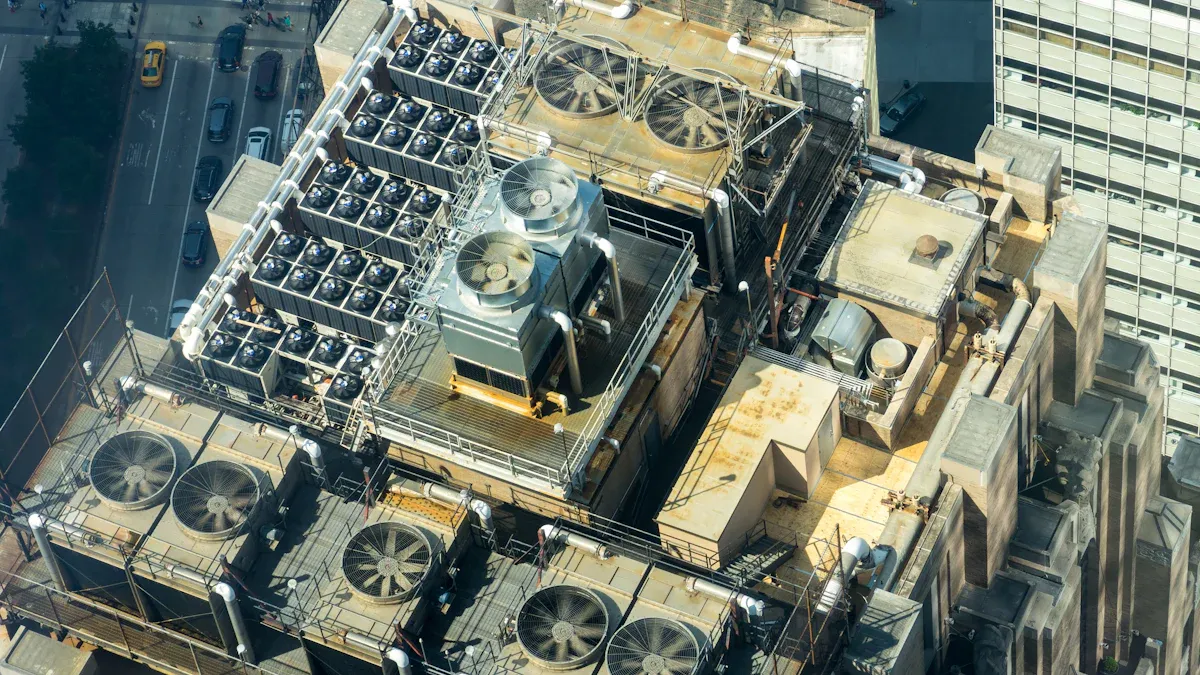
Stability and Reliability
You need an energy-efficient chiller that works well and does not break down often. When a chiller is stable, it keeps running without stopping suddenly. This is important for keeping buildings cool and for factories. If the chiller stops, you can lose control of temperature and humidity. In factories, even short stops can cause big problems. Reliable chillers help your systems work smoothly and protect your money. They also keep chilled water temperature steady. This helps you control air and humidity better. Picking a chiller with high stability means you pay less for repairs and avoid surprise shutdowns.
Tip: Always check if the manufacturer makes reliable chillers and ask about how often they break down before you buy.
Wide Modulation Range
A wide modulation range lets your energy-efficient chiller change how much it cools to fit what your building or process needs. This means the chiller can run at low, medium, or high power without wasting energy. Modern chillers use variable speed drives on compressors, pumps, and fans. These drives help the chiller match its cooling to what is needed. Studies show variable-speed chillers can make the energy efficiency ratio (EER) better by up to 8.8%. Controlling fan speed well can save up to 12.1% on electricity. When your chiller can change its output a lot, you get steady and exact control. This saves a lot of energy, especially when the chiller is not working at full power, which happens most of the time.
Feature | Benefit for Your System |
|---|---|
Wide Modulation Range | Matches cooling to demand, saves energy |
Variable Speed Drives | Reduces energy waste at part load |
Optimized Fan Control | Improves chiller efficiency |
You also help the environment and spend less on bills. The money you spend on these upgrades comes back in just a few months. With a wide modulation range, your chiller stays efficient no matter how much cooling you need.
Low Water-Side Resistance
Low water-side resistance is very important for any energy-efficient chiller. Water moves through the chiller’s evaporator and condenser. If resistance is high, pumps must work harder. This uses more energy and costs you more money. You want chillers with evaporators and condensers made for low resistance, usually less than 50 kPa. Lower resistance means pumps use less power. This makes the whole system work better and saves you money every month. It also means pumps last longer and need less fixing.
Note: Always ask about water-side resistance when you look at chillers. Lower numbers mean the chiller works better and saves you more money.
Adaptability to Variable Flow
Modern systems often use variable flow to save energy. Your energy-efficient chiller should handle big changes in water flow and still work well. Good chillers can work with flows from 30% to 130% of their rated value. They also react fast to changes and keep chilled water temperature steady. This is important for buildings like offices or malls where cooling needs change a lot. It is also important for factories where demand can change quickly. When your chiller can handle variable flow, you get better control, higher chiller efficiency, and save more energy. You also avoid problems like water hammer or unstable temperatures.
Pick chillers that can handle a wide range of water flow.
Make sure the chiller can react quickly to flow changes.
Look for features that keep water temperature steady when flow changes.
Energy-efficient chillers with these features give you flexible, reliable, and affordable cooling. You get the best chiller performance, lower energy bills, and a system that fits your needs.
Environmental and Installation Factors
Ambient Conditions
You need to think about the temperature and humidity around your data center. These things change how well your chiller works.
The outside temperature decides the coldest your chiller can get.
If it is hot outside, your chiller has to work harder.
Humidity can make machines break or use more power, especially in data centers.
Keeping both temperature and humidity steady helps your equipment work its best.
Good HVAC systems in rooms with insulation help save money by only cooling what is needed.
To keep your data center working well, always pick a chiller that fits the local weather and your needs. This keeps your coolant at the right temperature and helps your system use less energy.
Space and Clearance
Having enough space is very important when you put in a chiller for your data center. You must follow the rules from the maker to keep things safe and easy to fix. The table below shows the least space you need:
Clearance Area | Minimum Distance (feet) | Purpose/Reason |
|---|---|---|
Side Clearance | 3 to 5 | Lets air move well; stops airflow problems that hurt chiller work. |
Front and Rear | 2 to 3 | Gives room for fixing and lets air move for parts like condensers. |
Height Clearance | 5 to 6 | Lets hot air go up and away so heat does not build up. |
Some chillers need even more space, especially big ones for data centers. Modular chillers need space between them so air can move on its own. If your room is dusty, you might need to close off the area and use filters to keep your chiller working well.
Noise and Vibration
Noise and shaking can cause problems for your data center and make it less comfortable. Chillers make noise and move when they run. You should pick chillers that are made to be quiet, especially for places that need it. Put special pads under the chiller to stop shaking from spreading.
Keep chillers away from offices or control rooms.
Use sound barriers if you need extra quiet.
Check often for strange shaking, which can mean something is wrong with the coolant or parts.
If you control noise and shaking, you keep your data center safe and make it a better place to work.
Refrigerant and Environmental Impact
The refrigerant you pick for your chiller changes how green your data center is and how well it works. People do not use CFCs and HCFCs anymore because they hurt the ozone and warm the planet. Now, chillers use HFCs, HFOs, and natural refrigerants. Each one is different:
Refrigerant | Global Warming Potential (GWP) | Ozone Depletion Potential (ODP) |
|---|---|---|
CFC-12 | Yes (ozone-depleting) | |
HFC-134a | High (approx. 1,430) | No |
HFC-152a | Moderate (approx. 124) | No |
HFO-1234yf | Very low (approx. 4) | No |
CO2 (R-744) | Very low (1) | No |

Pick a refrigerant that is good for the planet and works well for your data center. Choices like HFO-1234yf and CO2 have low GWP and do not hurt the ozone. Always think about safety, how well it works, and what you need for your data center. The right refrigerant helps your data center stay green and run well.
Operational and Maintenance Considerations
Maintenance Requirements
You must take care of your chiller to keep it working well. Doing regular maintenance stops breakdowns and keeps energy costs low. Here is a simple list of what you should do:
Get a full service once a year. This means checking, cleaning, oiling, setting controls, and testing by trained workers.
Look at refrigerant and oil levels often. If they are low, the compressor can get damaged.
Clean condenser coils so heat can leave the system.
Check wires for damage or rust.
Tighten belts and pulleys and oil moving parts.
Set controls and sensors right so everything works well.
Test safety devices and make sure water flows as it should.
Check pressure often and look for leaks.
Doing these jobs helps you find problems early and keeps your chiller working well. Always call trained workers for big repairs.
Monitoring and Controls
Modern chillers need smart systems to watch and control them. Tools like ClimaCheck show how your chiller is working. These tools check things like refrigerant cycle, compressor, and heat exchanger. You get alerts if something is wrong, so you can fix it fast. Automatic tube cleaners like EQOBRUSH keep the condenser clean while the chiller runs. This stops dirt and scale from building up and hurting efficiency. Good controls use variable frequency drives to change motor speeds. This saves energy and makes parts last longer. Using these smart systems can cut energy use by up to 30% and stop surprise breakdowns.
Integration with Building Systems
You can make your chiller work better by linking it to your building automation system (BAS). BAS lets you watch and control your chiller from anywhere. You can see live data, change settings, and fix problems fast. Smart controls in BAS, like variable frequency drives and digital controls, help save energy and make equipment last longer. Standard protocols like BACnet help your chiller work with other building systems. New tech, like AI and machine learning, helps you know when to do maintenance and get the best performance. BAS collects data all the time to help you plan repairs, stop downtime, and keep everything running well.
Cost and Lifecycle Analysis
Initial Investment
When you build a new data center, you must think about the first cost of your chiller. High-efficiency chillers usually cost more than regular ones at the start. You pay extra for special parts like variable-speed drives or magnetic-bearing compressors. Water-cooled chillers need cooling towers, which makes them cost even more. Some things that raise the first price are:
Special technology inside the chiller
Extra things like cooling towers for water-cooled chillers
The work to put the chiller in your data center
You pay more at first, but you get better performance and the chiller lasts longer. Over time, you see that spending more at the start is worth it.
Operating Costs
You need to keep your data center working every day. The chiller uses a lot of power, so running costs are important. High-efficiency chillers use less energy, so your bills are lower each month. You also save money on fixing them because they break less often. New chillers can use 30% less energy at full power and over 50% less at part power than old chillers. This means you spend less on repairs and do not need emergency fixes as much. You also stop downtime, which can cost a lot for a data center.
Tip: Always look at the energy rating and how much care the chiller needs before you pick one for your data center.
Long-Term Savings
You want your data center to save money for many years. The total cost is the first price, energy bills, repairs, and lost work from downtime. To find out how long it takes to get your money back, do these steps:
Find out how much you save on energy each year.
Divide the extra cost of the new chiller by your yearly savings.
Add the money you save from less fixing and fewer repairs.
Think about other good things, like less downtime and following new rules.
A full lifecycle cost check tells you how long it takes to get your money back. Most data centers get a good return because high-efficiency chillers last longer and work better. You also feel good knowing your data center is safe and ready for the future.
Advanced Selection Requirements
Capacity Matching
You have to make sure your chiller’s cooling matches what your building or process needs. If the chiller is too big, you waste energy and money. If it is too small, it cannot cool enough. Engineers found that using things like multi-stage unloading compressors and variable speed drives helps a lot. These let you change how much cooling you get as you need it. For example, if you slow down a variable speed compressor by 20%, you can use up to 51% less energy. When you match the chiller’s cooling to what you really need, you save energy every year and your system works better. This also stops problems like the compressor turning on and off too much or making things too cold, which can break the equipment faster. If you have more than one chiller, setting up the right amount of cooling makes sure you always meet the rules for efficiency, even when the amount you need changes a lot.
Tip: Try using special software to see how much cooling you need during the year. This helps you pick the best chiller size and how to control it.
Temperature Difference Design
You should plan your chiller system with the right temperature difference between the water going out and coming back. If the temperature difference is bigger, you can move the same amount of cooling with less water. This means you use smaller pumps, pipes, and less insulation, so you save money. But if the temperature difference is too big, the chiller might not work as well. You need to find the best balance for good efficiency. If you have long pipes or special jobs, a bigger temperature difference can help you save space and money. Always check that your chiller and other parts can handle the temperature difference you pick.
Multi-Condition Analysis
You need to check how your chiller system works in many different situations. The amount of cooling you need changes with the weather, how many people are there, and what machines are running. Multi-condition analysis uses computer programs to try thousands of different cases. This helps you see how your chiller, pumps, and cooling towers work together all year. You can use these models to guess how much energy you will use, find weak spots, and make things work better. For important places, always think about having backup. Extra chillers, pumps, and cooling towers keep things cool if one breaks. Some common backup setups are N+1, 2N, and 2(N+1), and each gives a different amount of safety and backup.
Configuration | Description | Advantages |
|---|---|---|
N+1 | One extra unit beyond what you need | Simple, saves money |
2N | Full copy of the whole system | Best for safety |
2(N+1) | Copy of N+1 setup | Very safe, more choices |
By matching cooling, picking the right temperature difference, and checking many conditions, you make sure your chiller system works well, saves money, and is reliable.
You need to pick a room chiller machine that fits your data center’s needs.
1. You must control temperature well to keep equipment safe and save money.
2. The type of use, fluid, heat load, and space all change how much it costs and how well it works.
3. Using green refrigerants and following rules helps your data center meet laws and saves money over time.
4. Special features like variable speed drives and BMS help use less energy and lower costs.
5. Doing regular checks and cleaning keeps your data center working well and saves money.
6. Looking at everything together helps you get the best savings and makes your data center more reliable.
Experts say you should use a checklist and talk to pros or use software for big data center jobs. This helps you take care of your chiller, spend less, and keep your data center working its best.
FAQ
What is the most important factor when choosing a high-efficiency chiller?
You should care most about energy efficiency. Pick a chiller with a high COP or IPLV. These ratings tell you how well it uses power. Efficient chillers help you save money and protect the environment.
How often should you maintain your chiller?
Plan to do maintenance at least once every year. Check the refrigerant, clean the coils, and look at the controls. Taking care of your chiller helps it last longer and work better.
Can you use one chiller for both comfort cooling and process cooling?
Yes, but you need to match the chiller’s type and size to both jobs. Process cooling needs more exact temperature control. Always ask an expert before using one chiller for both.
What is the benefit of variable speed drives in chillers?
Variable speed drives let the chiller change how much it cools. This saves energy and makes the parts last longer. It also keeps the temperature steady and lowers your bills.