

A fan coil unit is a small machine that plays a crucial role in indoor climate control. So, what is a fan coil unit? It helps regulate indoor temperatures by heating or cooling spaces effectively. The unit operates by moving air through a coil to adjust the temperature, making it ideal for managing climate in a specific area. This functionality makes it perfect for homes, offices, or hotels. For more information, feel free to contact us.

Definitions and key components
Fan coil unit, short for fan coil, is one of the core components in the central air conditioning system. It is mainly responsible for adjusting indoor temperature and humidity to provide a comfortable indoor environment. Its basic structure includes coil, fan, controller and shell.
Coil is the core part of fan coil, mainly used for heat exchange;
The fan is responsible for driving the air flow to increase the heat transfer efficiency;
The controller is used to adjust the temperature and humidity to ensure indoor air comfort;
The shell serves to protect the internal components, but also has an aesthetic effect.
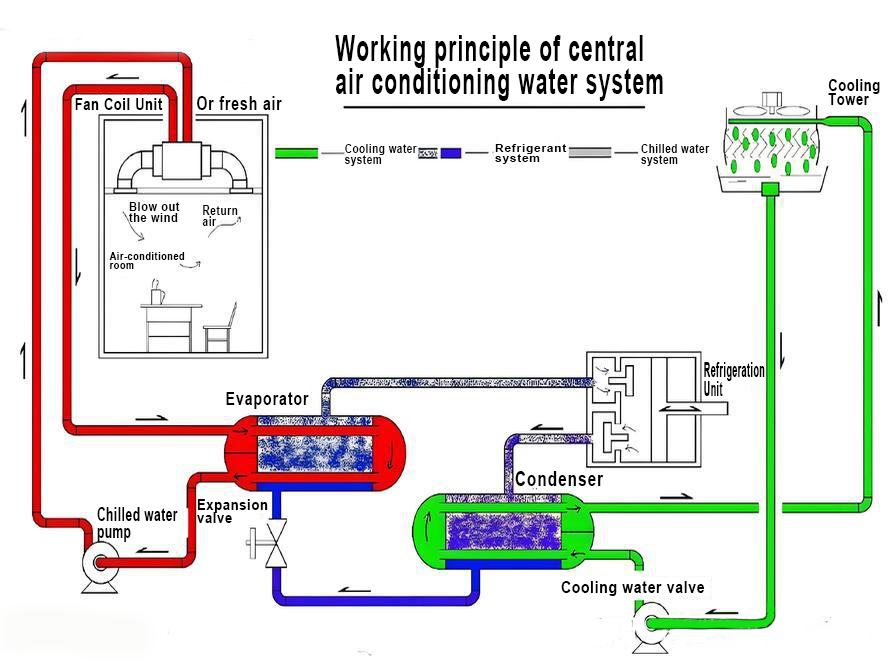
Working principle of fan coil
Heating and cooling mechanisms
The working principle of fan coil is based on the heat exchange between air and refrigerant. The heat exchange process is achieved by forced convection driven by fan.
Cooling mode, the low temperature and low pressure refrigerant enters the coil and exchanges heat with the high temperature air in the room to cool the air.
Heating mode, the high temperature and high pressure refrigerant enters the coil and exchanges heat with the low temperature air in the room to heat the air.
In addition, the study shows that fan coil can save energy and reduce carbon emissions. The hybrid system using fan coil can reduce energy consumption by 67.71% and reduce carbon dioxide emissions by 80.13%. This proves that fan coil is very efficient in heating and cooling.
Air circulation process
The fan in a fan coil unit drives airflow. Air enters the unit, passes through filters, and then contacts the coils. The fan either pushes or pulls air through the coils, helping to evenly distribute temperature throughout the room. A drip pan collects water generated during cooling to prevent moisture buildup. This system helps maintain your room’s comfort and dryness.
HVAC, system integration
When used in conjunction with HVAC systems, fan coil units (FCUs) can significantly reduce energy consumption. In hospitals, they enhance air quality and lower infection risks. In office environments, FCUs help regulate temperatures across different zones, saving energy while maintaining comfort levels. In eco-friendly buildings, FCUs can also be integrated with hot water supply systems to maintain optimal room temperatures.
Fan coil performance parameters
Fan coil is the terminal device in the air conditioning system, and its performance directly affects the indoor air temperature, humidity control and air quality. The following are the key parameters to evaluate the performance of fan coil:
Air flow rate
The air flow rate of the fan coil is the volume of air passing through the coil per unit time, usually in cubic meters per hour (m³/h). The size of the air flow directly determines the distribution and circulation efficiency of the refrigeration or heating capacity of the unit in the space.
Cooling/heating capacity
Cooling capacity refers to the total amount of heat removed from the air per unit time by the fan coil under certain conditions, usually expressed in kilowatts (kW). Heating capacity refers to the total amount of heat that can be provided to the room during winter operation.
Water flow rate
Water flow rate is very important for heat exchange effect, it determines the speed and efficiency of heat exchange between cooling water or hot water through the coil and air.
Inlet/outlet water temperature (Inlet/Outlet Water Temperature):
The inlet water temperature refers to the temperature of chilled water or hot water entering the fan coil, and the outlet water temperature is the temperature of the water after heat exchange. These two parameters directly affect the heat transfer efficiency and cooling/heating capacity.
Static pressure
Static pressure refers to the ability of fan coil unit to overcome the resistance of air supply duct. Different types of fan coil unit have different static pressure levels, which are suitable for air conditioning systems with different pressure requirements.
Noise level
The noise level generated by the fan coil during operation is also one of the important performance parameters, which is related to the comfort of indoor environment. (ordinary ≤40dB (A)/ low sound ≤35dB (A))
Condensate pan design (Condensate Pan Design): The design of condensate pan affects the drainage effect and anti-mold and antibacterial performance.
Fan coil type and applicable place
According to different classification methods, fan coil has a variety of types and is suitable for different places:
By use:
Constant temperature and humidity fan coil: suitable for indoor environment temperature and humidity requirements very strict places, such as laboratory, hospital operating room, precision instrument workshop, etc.
Cold and warm fan coil: with double function of refrigeration and heating, it is widely used in commercial buildings, offices, hotel rooms, family homes and other places that need to provide comfortable air conditioning throughout the year.
Fresh air fan coil: combined with the use of fresh air system, it can introduce fresh air while adjusting indoor temperature. It is commonly used in conference rooms, classrooms, libraries, shopping malls and other places with high air flow and high air quality requirements.

By installation method:
Vertical fan coil: usually placed vertically, occupies relatively small space, suitable for installation in the corner of a room or a small space.
Horizontal fan coil: horizontally installed, suitable for ceiling or under the floor space.
Wall-mounted fan coil: directly hung on the wall, saving floor space, often used in home bedroom, small office and other places.
Cardinal fan coil (also known as embedded fan coil): mainly embedded in the ceiling, integrated with decoration, both beautiful and space-saving, suitable for all kinds of modern decoration style of commercial and residential space.
Benefits and Drawbacks of Fan Coil Units
Advantages of Fan Coil Units
Fan coil units have many benefits for heating and cooling. Their small size saves space, making them great for homes and offices. They are energy-efficient and can lower energy bills by 30-40% yearly. This is based on data from the International Energy Agency. Newer models now have smart features for better performance. These features also help with maintenance, saving money over time.
Fan coil units are very flexible and work in many places. Schools, hospitals, and gyms often use them. Some models have special options like quieter operation and better air quality. These features can be customized to fit your needs. The demand for energy-saving HVAC systems is growing. The market for fan coil units may grow from $3.5 billion in 2023 to $5.8 billion by 2032.
Limitations and Challenges
Fan coil units also have some downsides. They need to fit between ceiling beams, which limits placement. Vertical stack units can be hard to clean, causing maintenance problems. Some models have weak filters, which can lower air quality. Mold can also grow in certain units, which may harm health and comfort.
Noise can be an issue in offices. While most units are quiet, some don’t meet noise standards. Managing heating and cooling in big spaces can also lower energy efficiency. This makes it harder to save energy in larger areas.
Comparison with Other HVAC Solutions
Fan coil units are different from air handling units (AHUs). AHUs are for large buildings, while fan coil units control temperature in small areas. AHUs handle air for entire buildings and bring in fresh air. Fan coil units mostly recirculate air in one room.
Feature | Fan Coil Units (FCUs) | Air Handling Units (AHUs) |
|---|---|---|
Scale and Capacity | Small units for single rooms | Large systems for whole buildings |
Air Handling and Ventilation | Recirculates air in one space | Brings in fresh air and ventilates |
Functionality | Focuses on heating and cooling | Manages air quality and ventilation |
Fan coil units are best for small rooms or areas. For big buildings needing fresh air and ventilation, AHUs are better.
Why Fan Coil Units Matter in HVAC Systems
Energy Efficiency and Cost Savings
Fan coil units save energy and cut costs. They use water to move heat, which works better than air systems. Upgrading fan coil units boosts efficiency and lowers maintenance costs. For example, retrofitting can reduce noise, improve air quality, and make the system last 25 years longer. Refurbishing costs less upfront but still improves temperature control and airflow.
Feature/Benefit | Fan Coil Retrofit | Fan Coil Refurbishment |
|---|---|---|
Cost | ❌ Costs more upfront | ✔️ Costs less upfront |
Energy Efficiency | ✔️ Big improvement | ✔️ Moderate improvement |
Indoor Air Quality | ✔️ Better with new systems | ✔️ Better with new filters |
Noise Reduction | ✔️ Big noise reduction | ✔️ Some noise reduction |
Extended System Life | ✔️ Adds 25 years | ✔️ Adds up to 10 years |
Temperature & Airflow Control | ✔️ Greatly improved | ✔️ Improved with upgrades |
Maintenance Costs | ✔️ Lower long-term costs | ✔️ Lower over time |
Disruption During Installation | ✔️ Low (8 hours) | ✔️ Moderate (6 hours) |
This table shows how fan coil units save money and improve comfort.
Versatility for Different Spaces
Fan coil units work well in many places. They are great for small apartments, hotel rooms, or hospital wards. Concealed units hide in ceilings, while vertical ones fit tight spaces. Their flexibility makes them easy to install almost anywhere, keeping you comfortable.
Role in Modern Building Design
Modern buildings focus on saving energy and being eco-friendly. Fan coil units help meet these goals. They work well with green systems, like those using renewable energy. Architects like them because they are small and blend into designs. Using fan coil units creates comfy, energy-saving spaces that match modern trends.
A fan coil unit lets you adjust room temperature easily. It saves energy, fits many spaces, and keeps rooms cozy. Its importance in HVAC systems makes it great for heating and cooling. > Tip: Use fan coil units to make your space comfy and green. 🌱
FAQ
How long does a fan coil unit last?
Fan coil units usually work for 10-15 years. Keeping them clean and fixing issues on time can make them last longer and work better.
Can a fan coil unit go in any room?
Yes, fan coil units fit in most rooms. Hidden units are great for ceilings, while upright ones fit small spaces. Pick the one that suits your room’s design.
Do fan coil units make air cleaner?
Fan coil units clean air as they run. But how well they do this depends on the filter. Better filters can improve air quality and cut down allergens.
Tip: Clean your fan coil unit often to keep it working well and improve air quality. 🛠️