

Air cooled units play a crucial role in cooling and refrigeration systems. These systems utilize the surrounding air to dissipate heat, making them particularly valuable in areas with limited or no access to water. Their compact design and straightforward installation make them an excellent choice for a wide range of applications.
The popularity of air cooled units has seen significant growth. In 2023, the market value reached $5.8 billion, and it is projected to expand to $9.7 billion by 2032, reflecting an annual growth rate of 6.1%. Their efficiency and adaptability to various requirements have driven this increasing demand.
Key Takeaways
Air-cooled units use air around them to cool systems. They work well in places where water is hard to get.
These units save energy and help businesses spend less money. They are also better for the environment.
Air-cooled systems are simple to set up and take care of. They have fewer parts than water-cooled systems.
They can be used in many industries, like food factories or data centers.
New air-cooled units with smart tech can lower energy costs a lot. They also make cooling work better.
How Air-Cooled Units Work
Parts of an Air-Cooled Unit
Air-cooled units use important parts to cool things well. Each part has a job to keep the system running smoothly. Here are the main parts of an air-cooled chiller:
Evaporator: Takes heat from water or fluids, making them cooler.
Compressor: Raises the refrigerant’s pressure and heat for the next step.
Condenser: Removes heat from the refrigerant, turning it back into liquid.
Expansion Valve: Lowers the refrigerant’s pressure, cooling it more before reuse.
Controls: Watches and adjusts the system for best performance and energy use.
These parts work together to absorb and release heat, creating a smooth cooling cycle.
How Cooling Happens in Air-Cooled Systems
Air-cooled systems cool by moving heat out of the system into the air. This process is based on heat exchange, which keeps the system cool.
Part | Job |
|---|---|
Condenser | Takes heat from refrigerant using coils, turning gas into liquid. |
Evaporator | Moves heat from fluid to refrigerant, lowering the fluid’s temperature. |
Here’s how it works:
The refrigerant absorbs heat from fluid in the evaporator, becoming a gas.
The compressor makes the gas hotter and increases its pressure.
The hot gas goes to the condenser, where air cools it, turning it into liquid.
The liquid refrigerant goes through the expansion valve, cooling it more.
The cycle starts again, keeping things cool.
This process makes air-cooled chillers a great choice, especially where water is scarce.
Saving Energy with Air-Cooled Chillers
Saving energy is very important for air-cooled chillers. New technology has made these systems much better at using less energy. Businesses now want systems that save money and help the environment.
Energy-saving air-cooled systems are popular because of strict rules and eco-friendly needs.
Modern chillers use smart controls and better materials to work well with less energy.
They don’t need water, so they’re perfect for places with little water.
Choosing an energy-saving air-cooled chiller helps you use less energy and protect the planet.
Advantages and Disadvantages of Air-Cooled Units
Benefits of Air-Cooled Refrigeration Systems
Air-cooled systems have many benefits, making them widely used. They don’t need water, so they work well in dry areas. This feature lowers costs and makes setup and care easier.
Low Maintenance: These units have fewer parts than water-cooled ones. Fewer parts mean less time and money spent on repairs.
Flexible Installation: They don’t need cooling towers or water pumps to work. You can place them outside, like on rooftops, saving indoor space.
Energy Efficiency: Newer models use smart controls and better materials to save energy. This lowers your power bills and helps the environment.
Versatility: They work in many places, like factories and data centers. For example, they stop servers from overheating and keep production steady.
These features make air-cooled units a smart and affordable choice for cooling.
Limitations Compared to Water-Cooled Systems
Air-cooled units are great but have some downsides compared to water-cooled ones. Knowing these differences helps you pick the right system.
Efficiency: Water-cooled systems move heat better because water holds heat well. This makes them better for big cooling jobs.
Noise Levels: Air-cooled units can be loud, reaching 90 decibels when busy. Water-cooled systems are quieter, around 49 decibels, and better for quiet spaces.
Energy Consumption: Even though air-cooled units save energy, they still use more power than water-cooled ones of the same size.
Space Requirements: Air-cooled systems don’t need cooling towers, but they can take up more space than water-cooled systems sometimes.
These drawbacks show why it’s important to think about your cooling needs before deciding.
Environmental and Sustainability Considerations
Air-cooled units help save water, which is vital in dry areas. But their impact on the planet depends on how well they work.
Cooling causes 3.4% of global emissions. Using energy-saving air-cooled systems can lower this number.
The International Energy Agency says better cooling systems could cut 460 billion tonnes of greenhouse gases. That’s like stopping eight years of emissions from 2018 levels.
Modern air-cooled units use eco-friendly refrigerants and smart controls to reduce harm to the environment.
Choosing the right air-cooled unit helps you stay cool and protect the planet.
Applications of Air-Cooled Units

Industrial Uses of Air-Cooled Chillers
Air-cooled chillers are important for cooling in factories. They work well for big tasks, even when conditions change. Industries like medicine, food, and chemicals use them to keep temperatures steady.
Here’s how they help:
Industry | How They Are Used |
|---|---|
Medicine | Keeps products safe by controlling storage temperatures. |
Food | Maintains the right temperature during food processing. |
Chemicals | Cools chemical processes that need exact temperatures. |
Plastic Making | Helps cool materials during manufacturing. |
Metal Coating | Provides cooling for coating and plating processes. |
Farming | Used for cooling in farming tasks. |
Smart systems, like Daikin’s advanced controls, improve efficiency by 15%. They use outdoor air to save energy, making them great for factories.
Commercial and Residential Cooling Applications
Air-cooled chillers are common in homes and businesses. They help HVAC systems keep apartments and houses comfortable. Bigger homes stay cool all year with these systems.
In business spaces, they are very useful:
Business Type | How They Are Used |
|---|---|
Malls | Keeps shoppers comfortable with good air conditioning. |
Offices | Cools large workspaces to boost productivity. |
Hotels | Ensures guests and workers stay comfortable. |
These chillers also stop data centers from overheating. This keeps computers running smoothly for businesses that depend on technology.
Special Uses in Refrigeration and Process Cooling
Air-cooled systems can be used in creative ways. For example, Halifax uses seawater to cool buildings with special equipment. Toronto uses lake water to cool offices, saving energy. These ideas show how chillers solve cooling problems while using less power.
In factories, air-cooled chillers keep machines and chemical reactions at the right temperature. They are reliable for industries needing exact cooling.
Comparison Between Air-Cooled and Water-Cooled Systems
How They Are Designed and Work
Air-cooled and water-cooled systems are built and work differently. Air-cooled systems use fans to blow air over a condenser. This helps remove heat from the refrigerant. They don’t need extra equipment like cooling towers or water pumps. These systems can be placed outside, like on rooftops. This makes them great for places with little indoor space.
Water-cooled systems, on the other hand, use water to get rid of heat. They need cooling towers, pumps, and a steady water supply to work. Water-cooled systems are more efficient because water moves heat better than air. They also last longer, often over 25 years, compared to air-cooled systems.
Costs, Maintenance, and Energy Use
Air-cooled systems cost less to set up. They don’t need cooling towers or lots of pipes, which lowers installation costs. But they might need more repairs because of parts like fans and compressors.
Water-cooled systems cost more at first but save money later. They use less energy, with ratings between 0.58 and 0.79 kW/ton. Air-cooled systems use more energy, around 1.13 to 1.25 kW/ton. Water-cooled systems need less frequent repairs but require special care. For example, water treatment is needed to stop scaling and rust.
Best Places and Climates for Each System
The location and weather decide which system works best. Air-cooled systems are good for dry places with little water. They are easier to care for in areas with bad water quality. But they don’t work as well in very hot weather since they depend on air to cool.
Water-cooled systems are better for hot or humid places. They work well no matter the outdoor temperature, making them great for big cooling jobs. However, they aren’t ideal for areas with little water or high water costs.
Future Trends in Air-Cooled Technology
Innovations in Energy-Efficient Cooling
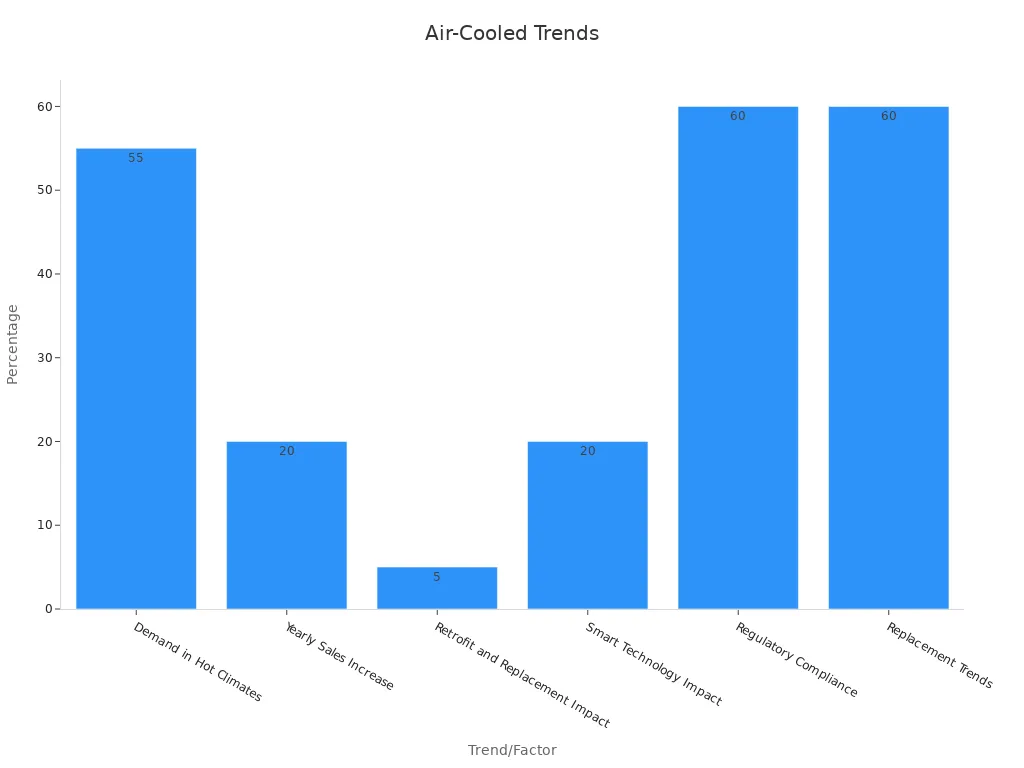
Energy-saving ideas are changing air-cooled systems. Companies are adding new technology to use less energy and work better. For example, radiant cooling tools from Hong Kong University can cut energy use by 50.4%. AI-powered thermostats, like Google’s Nest, adjust heating and cooling to save 15% on energy costs. These updates lower bills and help the environment.
New designs separate cooling from removing moisture. This stops overcooling and saves energy. These systems use 35% less energy than regular air conditioners. Materials like desiccants and evaporative cooling methods are also becoming popular. They make cooling simpler and still work well.
🌱 Tip: Switching to energy-saving air-cooled systems can reduce your energy bills by 10% to 30% each year.
Integration with Smart and IoT Systems
Smart technology is improving air-cooled units. IoT systems let you control cooling from anywhere. Sensors adjust cooling based on current conditions, saving energy. These smart systems can cut cooling energy use by 20%, making them great for homes and businesses.
AI tools also help with maintenance. They study data to find problems early, avoiding expensive repairs. This keeps your system running longer and reduces downtime. You get reliable cooling while spending less on fixes.
Advancements in Materials and Design
New materials and designs are making air-cooled units better. Engineers are using passive cooling, which relies on natural airflow. These systems are quieter, stronger, and use less energy.
Renewable energy is also being added to cooling systems. Solar panels and thermal storage are helping reduce pollution. Active cooling, with advanced heat exchangers, is improving how well these systems work.
Innovation Type | Description |
|---|---|
Passive Cooling | Uses airflow to save energy and lower noise. |
Renewable Energy Integration | Combines cooling with solar or thermal energy for better efficiency. |
Active Cooling | Uses advanced heat exchangers for stronger and more reliable cooling. |
These updates make air-cooled units a smart and eco-friendly choice for the future.
Air-cooled units cool things well in many situations. They use air to take away heat, which is great for places with little water. Their small size and simple setup save room and lower repair costs.
Pros | Cons |
|---|---|
Air conditioners can harm the environment. | |
Fans and dehumidifiers are cheaper options. | ACs increase demand on power systems. |
Some models use eco-friendly refrigerants. | Many refrigerants hurt the planet. |
Swamp coolers save energy. | Cooling raises overall energy use. |
New ideas bring exciting changes. Cold plate cooling is cheap and works well. Liquid cooling is creating new chances for businesses. The market for cooling data centers may grow from $16.97 billion in 2024 to $37.51 billion by 2029. This growth is due to renewable energy and advanced computing needs.
Air-cooled systems keep improving, offering greener and smarter ways to stay cool.

FAQ
What makes air-cooled units different from water-cooled systems?
Air-cooled units use fans to cool by removing heat. Water-cooled systems use water and cooling towers instead. Air-cooled units can be placed outside without extra tools. They work well in dry areas and need less upkeep. This makes them great for places with little water.
Can air-cooled units handle extreme temperatures?
Air-cooled units work best in places with mild weather. Very hot weather can make them less effective at cooling. In extremely hot areas, you might need extra cooling help. Water-cooled systems may work better in such conditions.
How do air-cooled chillers save energy?
Modern air-cooled chillers use smart technology to save energy. They don’t need water, which lowers running costs. Choosing energy-saving models can cut electricity bills. These systems also help protect the environment.
Are air-cooled units noisy?
Air-cooled units make noise because of their fans and compressors. Some models are quieter, especially smaller ones. If noise bothers you, place the unit far from living areas. You can also pick a model made to be quieter.
Where should you install air-cooled units?
Put air-cooled units in open spaces like rooftops or outdoors. Good airflow helps them cool better. Don’t place them near walls or tight spaces, as this blocks airflow. Always check the manufacturer’s instructions for the best setup.