
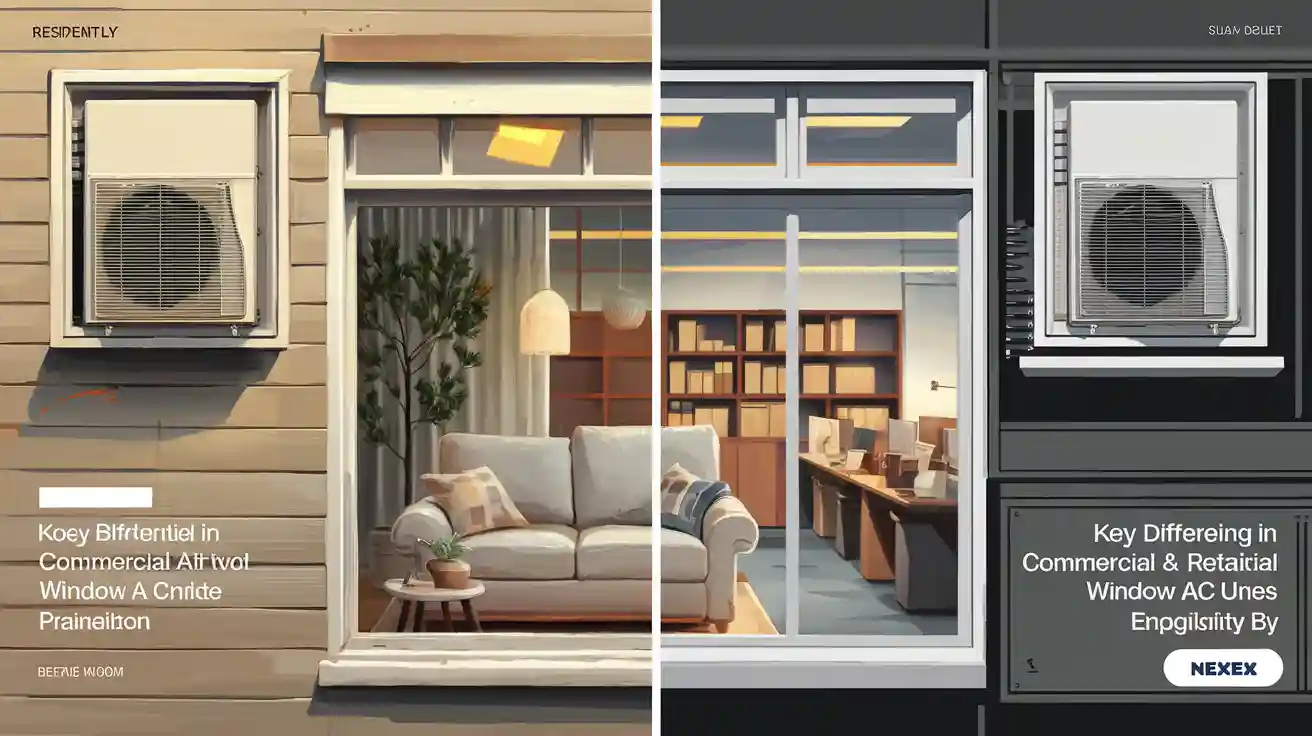
When you look at commercial window ac units and residential ac models, you see big differences in size, power, and features. Commercial ac units cool bigger spaces and work for more hours. Residential ac units are better for homes and small rooms. Commercial systems often need stronger support to install. Taking care of commercial systems needs more work than with residential units. Choosing the right unit gives you the best comfort, saves energy, and is a good value for your space.
Size & Capacity
Dimensions
When you choose an air conditioner, you need to look at the size of the unit. Residential window AC units come in many sizes. The width can be as small as 14 inches or as wide as 28 inches. Heights range from 7 to 27 inches. Depth can go from 12 to 36 inches. The table below shows the typical size ranges for residential window AC units and their matching cooling power:
Dimension | Typical Range for Residential Window AC Units | Corresponding BTU Range |
|---|---|---|
Width | 14 to 28 inches | 5,000 to 35,000 BTUs |
Height | 7 to 27 inches | 5,000 to 35,000 BTUs |
Depth | 12 to 36 inches | 5,000 to 35,000 BTUs |
Commercial window AC units are usually larger than residential models. You often see commercial units that need more space and stronger support. These units fit bigger windows or special wall openings. You may need to measure your window or wall before you buy a commercial unit.
Tip: Always check the size of your window or wall before you pick a unit. This helps you avoid problems during installation.
Cooling Power
Cooling capacity tells you how much heat an AC unit can remove from a room. Residential window AC units usually have a cooling capacity between 5,000 and 35,000 BTUs. Most homes use units at the lower end of this range. If you have a bigger room, you may need a unit with higher cooling capacity.
Commercial window AC units offer much more cooling power. These units often start at 1.5 tons (18,000 BTUh) and can go up to 5 tons (60,000 BTUh). Some commercial units even go beyond this range. You need this extra cooling capacity for large offices, shops, or public spaces. Commercial units keep big areas cool, even when many people or machines add heat to the room.
You should match the cooling capacity of the unit to the size of your space. If you pick a unit that is too small, it will not cool the area well. If you pick one that is too large, it may waste energy.
Design & Build
Build Quality
When you look at commercial and residential window AC units, you see they are built differently. Commercial hvac systems use strong materials like metal. These units have tough frames and metal covers. They can handle rough places like offices or schools. Commercial units work well even when used a lot. They keep running when many people need cool air.
Residential hvac units are made for comfort and quiet. Most of these units use lighter materials. You will see more plastic parts in them. They fit nicely in bedrooms or living rooms. The design helps them look good in your home. Residential units are lighter, so you can put them in easily.
Note: Commercial hvac units are heavy and big. You may need extra support to install them. Always check your window or wall before you start.
Durability
Durability is important when picking between commercial and residential window AC units. Commercial hvac units last longer because they have stronger parts. You can use them for many hours every day. They do not break down easily from lots of use. In busy places, commercial units keep cooling for a long time.
Residential units are best for homes or small rooms. They do not get used as much as commercial units. Most residential units come with a warranty. For example, Durastar window AC units have a 2-year warranty for parts and labor. This warranty is only for home use. If you use the unit in a store or rental, the warranty does not count. Manufacturers know commercial hvac units face harder work, so they may not give the same warranty.
Think about how much you will use your AC. If you need cooling for many hours in a big space, a commercial unit is stronger. For home use, a residential unit is enough and comes with a warranty.
Installation
Window Fit
You should check your window size before you put in a window AC unit. Both commercial and residential window air conditioners go into windows that fit them. There is not much difference in what windows they use. You need to measure your window to see if the unit will fit. Most residential units fit normal windows in houses. Commercial units are bigger and heavier, so they need larger or stronger windows. You might have to clear things away and check if the window sill is strong.
Tip: Always look at the window and sill for any damage before you put in a unit. This helps you avoid problems later.
Complexity
Putting in a residential window AC unit is usually easy. You can do it yourself with simple tools like a screwdriver and a level. The steps are:
Check the power supply so you do not overload it.
Get the window ready and clear the space.
Put the unit in the window and make it even.
Hold the unit with screws and lower the sash.
Fill any open spots with insulation.
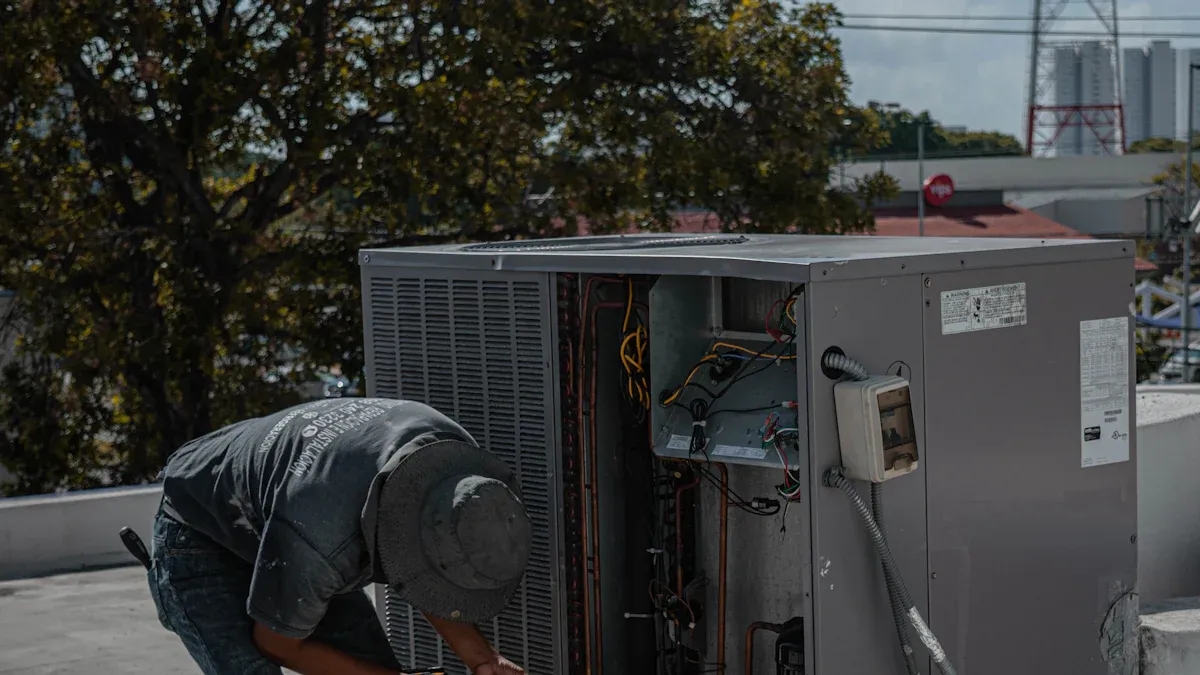
Commercial window AC units are harder to install. These units are bigger and heavier, so you may need extra support brackets. Local rules often say you must use these brackets for safety. You also have to follow strict rules for commercial setups. It is important to get a professional to install commercial units. Experts will check refrigerant levels, airflow, and temperature after they put it in. They also make sure the unit follows all safety rules.
Commercial setups need:
Following building codes.
Professional help for safe setup.
Regular checks for maintenance.
Residential setups focus on fitting the window and basic safety. You can usually do these steps yourself, unless you need to change the wiring.
Note: Commercial units need more planning and expert help. Residential units are easier to put in but still need careful work.
Features & Controls
Controls
When you check the controls on window AC units, you see they are not the same. Residential window AC units have easy controls. You might find:
Push buttons or dials for temperature and fan speed
Digital displays that show what you set
Remote controls so you can use it from far away
You can change the temperature or set a timer with just a few clicks. These controls help you get comfortable fast.
Commercial window AC units have more advanced control panels. You might see:
Programmable thermostats to set exact temperatures
Many fan speeds and airflow choices
Lockout features to stop people from changing settings
Tip: Commercial units let you set limits. Only some people can change the settings. This keeps the temperature steady in offices or public places.
The control panels on commercial units look harder to use. But they give you more choices for big spaces.
Smart Features
Smart features make your AC unit easier to use and help save energy. In residential window AC units, you often get:
Wi-Fi so you can control it with your phone
Voice assistant support like Alexa or Google Assistant
Energy-saving modes that learn what you like
You can turn your AC on before you get home or set times for it to run. These features help you save energy and money.
Commercial window AC units may have smart features too, but they focus on building management. You might see:
Feature | Residential Units | Commercial Units |
|---|---|---|
Wi-Fi Control | ✅ | Sometimes |
App Integration | ✅ | Sometimes |
Central Management | ❌ | ✅ |
Usage Tracking | ❌ | ✅ |
Commercial units often connect to building systems. You can watch many units at once and see how much energy they use. This helps you control costs in big buildings.
Note: If you want easy control and smart features, pick residential units with Wi-Fi and app support. For big spaces, commercial units let you control many rooms at the same time.
Energy Efficiency
Ratings
You should check the energy efficiency ratings before buying a window AC unit. These ratings tell you how well the unit uses power to cool your space. For residential air conditioning, you will see SEER ratings. Most residential ac units have a SEER rating of about 15. This means the unit cools your home and uses less electricity during the season.
Commercial ac units use different ratings. You may see IEER for commercial air conditioning. Most commercial units have an IEER between 11.4 and 11.8. Window air conditioners, used in both commercial and residential places, use CEER. These ratings are usually from 9.9 to 12.1.
Here is a table to help you compare the usual ratings:
AC Unit Type | Typical Energy Efficiency Rating Range |
|---|---|
Window Air Conditioners | CEER: 9.9 to 12.1 |
Residential Units (<65,000 BTU/hr) | SEER: ~15 |
Commercial Units (>65,000 BTU/hr) | IEER: ~11.4 to 11.8 |
Tip: Higher ratings mean better energy efficiency. You save more money on your electric bill with a higher rating.
Power Use
You need to think about how much power your AC unit will use. Residential air conditioning units use less power because they cool smaller spaces. These units work best for bedrooms, living rooms, or small offices. You can run a residential ac unit for a few hours each day and keep your energy costs low.
Commercial ac units use more power. These units cool large areas like shops, schools, or offices. Commercial air conditioning systems often run all day. They need more electricity to keep big spaces cool. You may see higher electric bills with commercial hvac systems, but they are made for heavy use.
If you want to save energy, look for units with high energy efficiency ratings. Residential hvac units with a good SEER rating help you use less power at home. Commercial ac units with a high IEER rating can lower costs in big buildings. Always match the unit to your space and needs for the best results.
Maintenance
Routine Care
You need to keep your window AC unit clean to help it work well. Regular care helps both commercial and residential units last longer. For residential units, you can do most tasks yourself. Start by turning off the power. Remove and clean the air filter every month. Wash it with water and let it dry before putting it back. Wipe the outside of the unit with a damp cloth. Check for dust or leaves around the vents.
Commercial window AC units need more attention. You should check the filters more often because these units run longer. Clean or replace filters every two weeks if the area is dusty or busy. You may need to vacuum the coils to remove dirt. Look for water leaks or strange noises. If you see any problems, call a professional.
Tip: Set a reminder on your phone to check your AC filter. Clean filters help your unit cool better and use less energy.
Here is a quick checklist for routine care:
Clean or replace air filters
Wipe down the exterior
Check for blockages in vents
Inspect for leaks or odd sounds
Repairs
Sometimes, your AC unit may stop working right. For residential units, you can fix small problems. If the unit does not cool, check the power cord and reset the circuit breaker. Make sure the filter is clean. If you hear rattling, tighten any loose screws.
Commercial units often need expert help. These units have more parts and stronger systems. If you notice weak cooling, water leaks, or loud noises, call a licensed technician. Do not try to fix electrical or refrigerant issues yourself.
Issue | Residential Unit Action | Commercial Unit Action |
|---|---|---|
Not cooling | Check filter, power | Call technician |
Strange noise | Tighten screws | Call technician |
Water leak | Check drain, clean | Call technician |
Note: Regular care and quick repairs keep your AC running well. You save money and avoid bigger problems later.
Cost
Purchase Price
When you look for a window AC unit, you will see price differences. Residential window AC units usually cost less money. Most home units cost between $150 and $800. The price changes if the unit is bigger or has more features. If you want smart controls or more cooling, you might pay extra.
Commercial window AC units are much more expensive. These units start at about $1,000 and can go over $4,000. The price goes up if the unit is stronger or has advanced controls. You also need to think about paying for professional installation. Most commercial units need an expert to set them up, which costs more.
Tip: Always check what comes with your AC unit. Some commercial models do not have support brackets or remote controls. You might need to buy these parts by themselves.
Here is a quick comparison:
Type | Typical Price Range | Installation Cost |
|---|---|---|
Residential | $150 – $800 | Low (DIY possible) |
Commercial | $1,000 – $4,000+ | High (Pro needed) |
Operating Costs
You will also pay for electricity and care after you buy your AC unit. Residential window AC units use less power. You will have lower bills if you use a home unit for a few hours each day. Most residential units have energy-saving modes to help you save more.
Commercial window AC units use more energy. These units run longer and cool bigger spaces. Your electric bill will be higher if you use a commercial unit. You also need to plan for regular care. Commercial units need more attention and may need repairs from a technician.
Residential AC: Lower energy use, easy care, fewer repairs.
Commercial AC: Higher energy use, more care, higher repair costs.
Note: If you want to save money, pick a unit with a high energy efficiency rating. Cleaning and changing filters often helps keep costs low.
Commercial Window AC Units vs. Residential
Usage Needs
You need to think about how you will use your air conditioner before you choose a type. Commercial window ac units work best in places where you need to cool large spaces. You often see these units in offices, shops, schools, or restaurants. These spaces have more people and more heat from lights or machines. Commercial ac units run for many hours each day. They keep the temperature steady even when the weather changes or the room gets crowded.
Residential ac units fit homes, apartments, or small offices. You use these units to cool bedrooms, living rooms, or small workspaces. Residential ac does not need to run all day. You can turn it on when you get home or when the room feels warm. These units use less power and make less noise. You get comfort without spending too much on energy.
If you need to cool a big area with many people, pick commercial window ac units. For smaller rooms or home use, residential ac gives you what you need.
Suitability
You should match the air conditioner to your space for the best results. Commercial window ac units suit places with heavy use and tough conditions. These units have strong parts and last longer. You can use them in busy stores, classrooms, or large meeting rooms. Commercial hvac systems handle dust, heat, and long hours. They also follow building codes and safety rules for public spaces.
Residential ac works well in quiet places. You want a unit that looks good and runs quietly in your home. Residential hvac units are easy to install and care for. You can put them in by yourself or with a little help. These units cost less and use less power. You save money on your electric bill and repairs.
Here is a quick table to help you decide:
Space Type | Best Choice | Why? |
|---|---|---|
Large office/shop | Commercial window ac units | Handles big spaces, heavy use |
School/classroom | Commercial window ac units | Strong, safe, long-lasting |
Home/bedroom | Residential ac | Quiet, easy, low cost |
Small office | Residential ac | Simple, energy-saving |
Tip: Always check your space size and how often you will use the unit. Commercial hvac works for big, busy places. Residential hvac fits homes and small rooms.
You make the best choice when you match your needs to the right type of air conditioner. Commercial window ac units give you power and strength for large spaces. Residential ac gives you comfort and savings for your home.
There are many differences between commercial and residential window AC units. Commercial units cool big areas and need more attention. Residential units work well in small rooms and cost less to use. When picking an AC, think about your room size, how much you will use it, and how much you want to spend.
Make sure the unit’s cooling power matches your room size.
Use residential units for small rooms and to save money.
Pick commercial units for large spaces and lots of use.
Remember to plan for setup, regular care, and future costs.
Picking the right size and taking care of your AC helps it last longer and saves you money.
FAQ
What size window AC unit do you need for your room?
You should measure your room’s square footage. For small rooms (100–250 sq. ft.), pick a unit with 5,000–6,000 BTUs. For large rooms or commercial spaces, choose higher BTUs. Always match the unit’s power to your space.
Can you install a commercial window AC unit by yourself?
You should not install a commercial window AC unit alone. These units are heavy and need strong support. Always hire a professional to make sure the installation is safe and meets building codes.
How often should you clean the air filter in your window AC unit?
Clean your air filter every month for home use. In busy or dusty places, check and clean it every two weeks. A clean filter helps your AC work better and saves energy.
Do commercial window AC units use more electricity than residential units?
Unit Type | Power Use |
|---|---|
Residential | Lower |
Commercial | Higher |
Commercial units use more electricity because they cool bigger spaces and run longer. You will see higher energy bills with commercial AC units.