
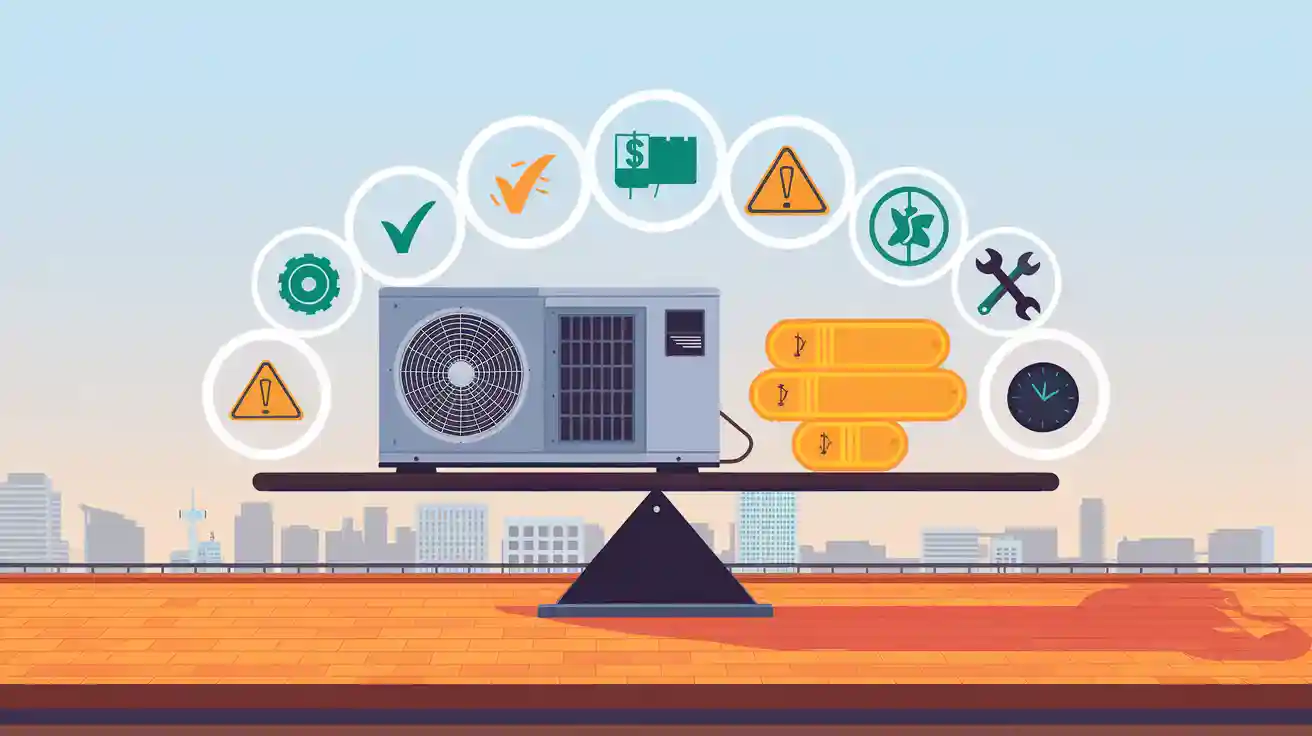
When you think about what is an rtu hvac, you see good and bad points. Many building owners pick an RTU because it saves space, runs quietly, and is easy to take care of. You also see that what is an rtu hvac can cost more to install and faces more weather problems. The best things are less noise inside and more space to use. The main bad things are weather dangers and needing to check it often. If you want to understand RTU hvac choices, knowing these facts helps you choose well.
What Is an RTU HVAC?
RTU HVAC System Overview
When you ask, what is an rtu hvac, you look at a special kind of rooftop hvac system. These rooftop units sit on the roof of your building. You find that rooftop hvac units work as packaged rooftop units, which means all the main parts come together in one box. This makes them different from other types of commercial hvac systems.
You see several important parts inside rooftop hvac units. Here is how these roof-mounted hvac systems work:
1. The blower pulls air into the unit. 2. The compressor moves refrigerant through the system. 3. The evaporator cools the air. 4. The condenser releases heat outside. 5. Thermostats, pressure switches, and flow sensors help control the temperature and keep the system running well.
The rooftop hvac system draws in outside air. It cleans the air with filters. The system then heats or cools the air, depending on what your building needs. After that, the fan pushes the conditioned air through ducts to different rooms. You get both heating and cooling from one commercial hvac system.
Tip: You can save space inside your building because rooftop hvac units stay outside on the roof.
Common Uses in Commercial Buildings
You often see rooftop hvac systems in many types of buildings. These rooftop units work best for places that need strong, reliable climate control. Here are some common places where you find rtu hvac systems:
Retail stores
Restaurants
Warehouses
Schools
Standalone offices
Rooftop hvac units fit well on low-rise buildings. You choose them because they are easy to install and maintain. You also get the benefit of keeping your indoor space free for other uses. When you wonder what is an rtu hvac, remember that these systems help many businesses keep their spaces comfortable all year.
Advantages
Energy Efficiency of Rooftop Units
You want your building to use less energy and save money. Rooftop units help you do this. These systems often have high SEER and EER ratings. This means they use less electricity to cool or heat your space. Modern RTU models use smart thermostats and variable-speed motors. They also have zoning features. These upgrades make the system use less energy and lower your bills. If you pick the right size and features, you can cut energy costs by up to 30%. Some buildings have saved as much as 60% on HVAC energy after switching to rooftop hvac units. This makes RTUs a smart choice for saving money and helping the environment.
Note: It is important to think about energy efficiency when you compare RTUs to other systems. VRF systems can be even more efficient, but RTUs still work well for most commercial needs.
Here is a table that shows how RTU HVAC systems and VRF systems compare for efficiency:
Equipment Type | Cooling Capacity (Btu/h) | Typical Minimum SEER | Typical Minimum EER |
|---|---|---|---|
Very Small RTU (CUAC/CUHP) | < 65,000 | ~16.0 | ~11.0 – 12.5 |
Small RTU (CUAC/CUHP) | 65,000 – 135,000 | ~11.8 – 16.0 | ~11.6 – 12.7 |
Large RTU (CUAC/CUHP) | 135,000 – 240,000 | ~10.9 – 12.2 | ~10.9 – 12.0 |
Very Small VRF | < 65,000 | ~16.0 | ~12.0 – 12.5 |
Small VRF | 65,000 – 135,000 | N/A | ~12.0 – 12.5 |
Large VRF | 135,000 – 240,000 | N/A | ~11.3 |

Space-Saving Design
You get more space inside your building with rooftop hvac units. Traditional split systems need big indoor machines. RTUs keep all main parts on the roof. This design gives you more floor space for offices or storage. You do not have to worry about large machines taking up room inside. This is very helpful in commercial and industrial buildings where space is important.
Tip: When you put your hvac system on the roof, your indoor areas become more open and flexible.
Easy Installation and Maintenance
You want a system that is easy to install and take care of. Rooftop units make this simple. All the main parts come in one package. This means installation is faster and causes less trouble. Technicians can put the unit on the roof and connect it to your building’s ducts quickly. This setup also makes maintenance easier. With everything in one place, service teams can check, fix, or replace parts without searching different rooms.
RTU systems have all parts together, so installation and maintenance are easy.
Split systems take more time and work because they have separate indoor and outdoor units.
You do not have to deal with many service points or complex wiring.
The table below shows how RTU HVAC systems and split systems compare for maintenance:
Aspect | RTU HVAC Systems | Split Systems |
|---|---|---|
Maintenance Access | All components on roof; easy for technicians | Multiple units; harder access, sometimes ladders |
Leak Checks & Repairs | Easier to detect and fix | Harder to access and repair |
Power Feed | Single power feed; simpler wiring | Multiple circuits; more complex |
Servicing Difficulty | Easier due to component proximity | More difficult due to dispersed units |
Cost-Effectiveness for Large Spaces
You want to keep costs low, especially in big buildings. Rooftop hvac units work well for large spaces. They give strong and even climate control across wide areas. The factory design of RTUs means you get reliable performance and fewer surprises on your bills. When you use RTUs in large commercial or industrial buildings, you often see lower installation and running costs than with other systems. The savings add up over time, so RTUs are a smart investment for many businesses.
Callout: Many commercial buildings save between 12% and 18% on energy each year after switching to RTU HVAC systems. These savings come from using less energy and easier maintenance.
Quiet Indoor Environment
You want your building to be quiet and comfortable. Rooftop units help by putting all noisy parts, like compressors and blowers, on the roof. This keeps humming and machine sounds outside, away from your workspaces or classrooms. You do not have to worry about loud equipment bothering your staff or customers. This is very important in places where quiet matters, like offices, schools, and hospitals.
Rooftop hvac units keep noise outside, so your indoor space stays peaceful.
Maintenance teams can work on the roof without bothering people inside.
You get a quieter and more productive space.
Note: Many building owners say the quiet operation of RTUs is one of the best things about them.
Disadvantages
Weather Exposure Risks
When you pick an RTU HVAC system, it goes on the roof. The roof leaves the unit open to all kinds of weather. Rain, snow, wind, and hot or cold days can hurt the system over time. Water can cause rust and make metal parts break down. Strong winds might bend or break parts of the unit. Cold weather can freeze parts and make ice form. These problems can make your HVAC work less well and not last as long.
Common weather problems are:
The compressor can have trouble when oil gets thick in the cold. This can make the system work too hard or not turn on.
Condensate lines can freeze and block air or cause leaks.
Ice can build up on outdoor units and stop air from moving. This makes the system less efficient.
The thermostat may not work right if the cold messes up the sensors.
Snow and ice storms can put extra stress on the system.
Tip: You should get regular checkups and use weather-proof coatings to help protect your RTU. It is smart to have inspections before and after tough weather seasons.
Roof Accessibility Issues
You must get to the roof to install or fix the unit. This can be hard, especially in tall or busy buildings. If your roof is hard to reach, you might need special tools or extra safety steps. These things can make installation and repairs take longer and cost more.
Technicians have to climb up to the roof every time they work.
Bad weather can make roof work unsafe or slow down repairs.
Some buildings have strict rules about who can go on the roof.
If your building has a steep or weak roof, it can be hard to put in or fix an RTU HVAC system. This is a big problem for many building owners.
Maintenance Costs
RTU HVAC systems need regular care to keep working well. Being outside in the weather means more checks, cleaning, and repairs. You might pay more for upkeep than with indoor systems. Cold weather can make metal parts shrink and wear out faster. Water and ice can block or break parts of the system. These problems mean you need to check your system more often.
Here is a table that shows how rooftop and indoor HVAC systems compare for maintenance:
System Type | Maintenance Frequency | Common Issues | Average Annual Cost |
|---|---|---|---|
Rooftop (RTU) | High | Weather damage, icing | Higher |
Indoor (Split/VRF) | Moderate | Dust, filter clogs | Lower |
You may also need to buy new parts or call for emergency repairs after storms. These extra jobs add to your total cost. If you skip regular care, your RTU might break down more and use more energy.
Note: Doing regular checkups and using smart tools can help stop big problems and keep your system working longer.
Building Suitability Limits
Not every building can use an RTU HVAC system. You need a strong, flat roof to put it on safely. Some old buildings or ones with sloped roofs cannot hold the weight or size of an RTU. If your roof is not right, you might have to pay more to make it stronger or pick a different HVAC system.
Buildings with small roofs cannot fit big RTUs.
Weak or old roofs may not let you put in a unit.
Local rules or building codes may not allow rooftop equipment.
These limits are important to think about. If your building does not meet the needs, you might pay more to install or fix the system. You should always check your building’s roof before picking an RTU.
Callout: Always talk to an HVAC expert before you install a unit. They can help you know if your building is right for a rooftop system.
RTU vs. Other HVAC Systems

Split Systems Comparison
When you look at rooftop hvac systems and split systems, you notice some big differences. Rooftop hvac systems go on the roof and have all their parts together in one unit. Split systems have one part inside and another part outside. People use split systems when they want zoning and better efficiency.
Here is a table that shows the main differences:
Feature | RTU HVAC Systems | Split Systems |
|---|---|---|
Installation | Installed on roof; centralized and easier access | Requires installation of separate indoor and outdoor units |
Maintenance | Easier due to centralized components on roof | Separate servicing needed for indoor and outdoor units |
Energy Efficiency | Centralized system with SEER ratings 14-18 | Zoned control with higher SEER ratings 16-25, more efficient |
Cost | Generally lower upfront cost | Potentially higher upfront but offers long-term energy savings |
Rooftop hvac systems are easier to put in and fix. Split systems can save you more money over time because they use less energy and let you control different areas.
Chiller and Boiler Systems
You might also think about chiller and boiler systems when picking an hvac system. Rooftop hvac systems are best for small or medium buildings. Chiller and boiler systems work well in big places like hospitals or tall buildings. Rooftop units give you both heating and cooling in one package. Chiller and boiler systems use different machines for heating and cooling.
A study found that rooftop hvac systems can use up to 15% less energy for cooling than some chiller-based systems. Chiller and boiler systems let you change things more and can handle bigger spaces. They need more care and cost more to put in.
Feature | RTU (Rooftop Unit) | Chiller/Boiler (AHU-based system) |
|---|---|---|
Installation | Mounted on rooftop, self-contained | Indoor, part of centralized HVAC system |
System Type | Packaged unit (compressor, coil, fan integrated) | Separate components (chiller, boiler, AHU) |
Application Size | Small to medium commercial buildings | Medium to large commercial, industrial, institutional buildings |
Maintenance | Simpler, easier to maintain | More complex, requires upkeep of multiple components |
Installation Cost | Lower initial cost, quicker install | Higher initial cost, complex installation |
Where Rooftop Units Excel or Fall Short
Rooftop hvac systems are easy to install, simple to take care of, and work well for most small or medium buildings. You get more space inside and less noise. But you might not get the best efficiency or control. Split systems and chiller/boiler systems can be better for big or special buildings. If you want something simple and not too expensive, rooftop units are a good choice. For large buildings or special needs, you may need a different system.
Tip: Always think about how big your building is, how much energy you want to save, and how much care the system will need before you choose an hvac system.
Choosing Commercial HVAC Rooftop Units
Building Size and Layout
You need to match your HVAC system to your building’s size and shape. Start by measuring the square footage. Divide this number by 500, then multiply by 12,000 to estimate the cooling load in BTUs. Add 380 BTUs for each person who works in the building. If you have a kitchen, add 1,200 BTUs for each one. If your building has many windows, add 1,000 BTUs for solar heat. Divide the total BTUs by 12,000 to find the right system size in tons. This method helps you choose commercial hvac rooftop units that fit your heating and cooling demands.
Tip: The layout of your building affects ductwork and where you place the unit. Large warehouses may need several rooftop units to keep every area comfortable.
Climate and Environmental Factors
Your local climate changes how well rooftop units work. In cold places, standard heat pumps may not keep up. Newer commercial hvac rooftop units use advanced heat pump technology to work better in low temperatures. Some units have variable speed compressors and smart controls to save energy. If you live in a cold area, look for units with features that help in winter. The Department of Energy now uses new ways to measure how well these systems work in different weather. This helps you pick a unit that meets energy rules and works well all year.
Budget and Long-Term Costs
Think about both the initial cost and what you will spend over time. RTU systems often cost less to install than hydronic or chiller systems. However, they may have higher long-term costs because they use more energy and do not last as long. Hydronic systems can last 25 years, while RTUs may need replacing after 15 years. Maintenance and upkeep for RTUs can also cost more, especially if you need special parts. When you plan your budget, look at both the price to buy and the money you will save or spend over the years. This helps you see the real long-term savings.
System Type | Typical Lifespan | Initial Cost | Maintenance Cost | Long-Term Savings |
|---|---|---|---|---|
RTU | 15 years | Lower | Higher | Moderate |
Hydronic | 25 years | Higher | Lower | Higher |
Maintenance and Accessibility
You must keep your rooftop unit clean and working well. Check the compressor, fans, and coils often. Make sure refrigerant levels stay correct. Easy roof access helps with installation and maintenance. If your roof is hard to reach, you may skip regular checks, which can shorten the unit’s life. RTUs work best on buildings under 10 stories. All parts on the roof make repairs easier for technicians. Good installation and maintenance keep your system running smoothly and help you avoid big repairs.
Quick Checklist for Selecting RTUs
Measure your building and calculate the needed system size.
Check your local climate and pick a unit that works in your area.
Compare the initial cost and long-term savings.
Make sure your roof is strong and easy to access.
Plan for regular maintenance and upkeep.
Review safety and installation best practices.
Consult an HVAC professional for advice.
Note: Always talk to an HVAC expert before you buy or install a new system. They can help you choose the best option for your building.
RTU HVAC systems help save space and keep things quiet. They also use less energy. But you need to think about your roof’s strength. Weather can hurt the system, and you must take care of it often. Look at this table to help you decide:
Factor | What to Check |
|---|---|
Size | Make sure the system fits your building |
Efficiency | Pick one with good SEER or EER ratings |
Maintenance | Plan for easy checks and regular care |
Budget | Think about both first and future costs |
It is smart to talk to an HVAC expert. They can help you make good choices and avoid problems.
FAQ
What does RTU stand for in HVAC?
RTU stands for Rooftop Unit. You see this term used for HVAC systems that sit on the roof of a building. These units provide both heating and cooling from one packaged system.
How often should you service an RTU HVAC system?
You should schedule maintenance at least twice a year. Regular checkups help your system run well and last longer. Always check before and after harsh weather seasons.
Can you install an RTU on any building?
You need a strong, flat roof to support an RTU. Some older or sloped roofs cannot hold the weight. Always ask an HVAC professional to check your roof before you decide.
Are RTU HVAC systems energy efficient?
Many RTU systems use less energy than older HVAC models. You can save money with high SEER or EER ratings. Look for units with smart controls and variable-speed motors for better efficiency.
What are the main benefits of choosing an RTU?
You save indoor space.
You get quieter rooms.
You find installation and maintenance easier.
Tip: RTUs work best for commercial buildings with flat roofs.