
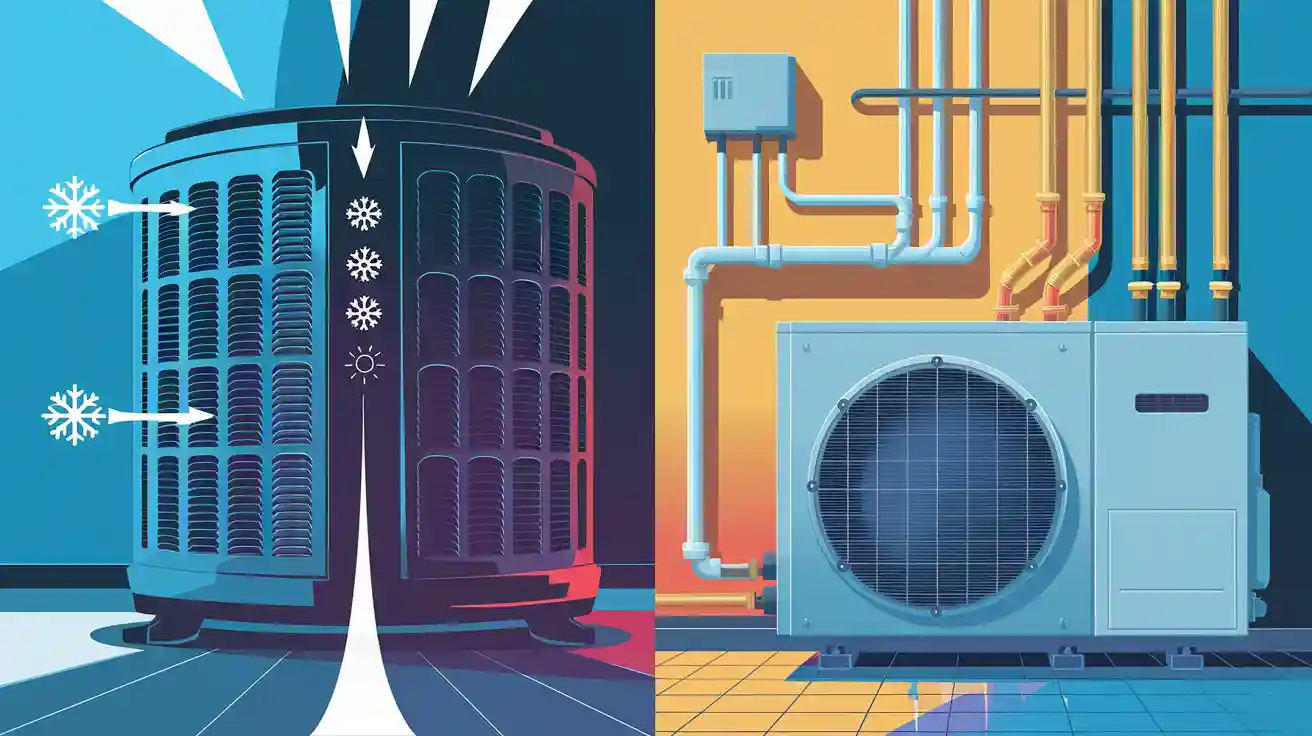
When it comes to heating and cooling systems, you’ve probably heard about fan coils and heat pumps. But do you know how they differ? Fan coiling systems use water and air to adjust room temperatures, while heat pumps move heat to keep spaces warm or cool. Both have unique strengths, and choosing the right one can make a big difference in comfort and energy savings.
In 2021, residential space heating made up 17% of the final energy use in the European Union and 11% globally, leading to 8% of total CO2 emissions.
Here’s an interesting fact:
The Residential Fan Coil Convector Market was valued at $4.42 billion in 2023.
The heating segment of the Heat Pump Coil Market is worth $1.4 billion.
By 2032, the total market is expected to grow to $6.2 billion.
Clearly, both systems play a major role in shaping the HVAC industry and energy efficiency.
Understanding Fan Coiling Systems
Fan coiling systems are used to heat and cool buildings. They work in homes and businesses. These systems adjust indoor temperatures using water and air. Let’s explore how they work and why they might be a good choice.
How Fan Coils Work
Fan coils use water to heat or cool a coil. A fan blows air over the coil to change the air temperature. This air is then sent into the room. The system keeps the temperature steady all year. Unlike systems that use refrigerants, fan coils rely on water to transfer heat. This makes them energy-efficient, especially for buildings with changing temperature needs.
Fun Fact: Fan coil units can cut energy use by 67.71% in hybrid systems. They also lower CO2 emissions by 80.13%. That’s great for saving money and helping the planet!
Types of Fan Coils
There are two main types of fan coils: two-pipe systems and four-pipe systems. Each type works differently and has unique uses.
Two-Pipe Systems
Two-pipe systems are simple and affordable. They have one pipe for hot water and another for cold water. You can switch between heating and cooling, but not at the same time. These systems are best for places with fewer temperature changes.
Four-Pipe Systems
Four-pipe systems are more advanced. They have separate pipes for hot and cold water. This lets you heat and cool different areas at once. These systems are great for buildings like hotels or offices that need flexible temperature control.
Feature | Two-Pipe Systems | Four-Pipe Systems |
|---|---|---|
Heating and Cooling | Can’t work at the same time | Can work at the same time |
Cost | Cheaper | More expensive |
Flexibility | Limited | Very flexible |
Benefits of Fan Coils
Fan coiling systems offer many advantages that make them a smart choice.
Energy Efficiency and Zoning
Fan coils save energy by adjusting to different temperature needs. They only use the energy required to keep the room comfortable. They also allow zoning, which means you can control the temperature in each room separately. This saves energy and makes rooms more comfortable.
Compact and Flexible Design
Fan coils are small and easy to install. They fit into ceilings, walls, or floors, depending on your space. Whether you’re replacing an old system or adding a new one, fan coils are simple to set up.
Tip: Upgrading your fan coil system can make it last 25 years longer. It can also lower yearly energy costs by 30-40%.
Fan coiling systems are a smart way to control indoor temperatures. They save energy and fit into many spaces, making them a great investment.
Applications of Fan Coils
Fan coils work in many places and are very useful. They can make homes or big buildings more comfortable. Let’s see where they are most helpful.
Residential Spaces
Fan coils are great for houses. They keep your home cozy and save energy. Here’s why people like them:
Customizable Comfort: You can set the temperature for each room. Everyone gets their perfect comfort level.
Space-Saving Design: Fan coils fit in small areas. They can go in ceilings, walls, or floors. This is ideal for apartments or small homes.
Quiet Operation: New fan coils are quiet. You won’t hear loud noises from them.
Tip: If you’re fixing up your home, think about adding fan coils. They make your home comfy and save energy over time.
Fan coils are great for places with changing weather. If summers are hot and winters are cold, fan coils keep your home nice all year.
Commercial and Industrial Settings
Fan coils are also used in offices, hotels, and factories. They give good temperature control for busy spaces. Here’s why they work well:
Flexible Zoning: Different areas need different temperatures. Fan coils let you set zones for comfort.
Energy Efficiency: Big buildings use lots of energy. Fan coils save energy by working only where needed.
Durability: These systems are strong. They handle heavy use in busy places.
Fun Fact: Fancy hotels use four-pipe fan coils to give guests custom heating and cooling.
Fan coils are helpful in factories and warehouses too. They keep temperatures steady to protect machines and goods. Their small size makes them easy to install in tight spaces.
Fan coils are a smart choice for homes and businesses. They are flexible, save energy, and make spaces comfortable.
Exploring Heat Pumps
Heat pumps are a smart way to heat and cool spaces. They move heat instead of making it, which saves energy. Let’s learn how they work and why they might be right for you.
How Heat Pumps Work
Heat pumps use a simple process to control temperatures. They take heat from one place and move it to another. In winter, they pull heat from outside to warm your home. In summer, they do the opposite to cool your space. This makes them useful all year.
Air-Source Heat Pumps
Air-source heat pumps are common and easy to use. They take heat from the air outside and bring it inside. In summer, they switch to cooling by moving heat out. These pumps work best in places with mild weather. They are also simple to install and maintain, making them great for homes.
Ground-Source Heat Pumps
Ground-source heat pumps use the earth’s steady temperature. Pipes underground collect heat in winter and release it in summer. These systems work well in very hot or cold weather. They cost more to set up but save money over time. They are a smart choice for saving energy.
Tip: Ground-source heat pumps are eco-friendly. They lower your carbon footprint and work well all year.
Benefits of Heat Pumps
Heat pumps have many advantages that make them special.
Heating and Cooling in One
Heat pumps can heat and cool your home. You don’t need separate systems for different seasons. This saves space and makes upkeep easier. Whether it’s cold or hot outside, heat pumps keep your home comfy.
Energy Efficiency
Heat pumps use less energy than regular systems. They move heat instead of creating it, which saves power. New features like smart controls make them even better. This means lower bills and less harm to the planet.
Fun Fact: Heat pumps use up to 50% less energy than electric heaters. That’s good for your wallet and the environment!
Applications of Heat Pumps
Heat pumps work well in many places. Here’s where they are most useful.
Homes
Heat pumps are great for houses. They keep rooms warm or cool while saving energy. You can use them for heating water, drying clothes, or warming pools. They are quiet and small, which is perfect for families.
Businesses
Heat pumps help businesses save energy and stay efficient. Food factories use them to keep items at the right temperature. Greenhouses use them to grow plants in colder months. Their flexibility makes them useful for many industries.
Aspect | Details |
|---|---|
Major Market Drivers | Rising energy costs and eco-friendly goals are increasing demand for heat pumps. Government support for green energy is also helping their growth. |
Key Market Trends | Electric heat pumps are popular because they produce less carbon. Smart features like AI are improving their performance. |
Geographical Trends | Asia Pacific leads the market due to helpful policies and investments. |
Challenges and Opportunities | High setup costs are a problem, but people want cheaper and greener heating options. |
Technological Advancements | New features like smart controls and better compressors make heat pumps more reliable. |
Growing Awareness | More people are choosing heat pumps to save energy and reduce pollution. |
Heat pumps are a great choice for homes and businesses. They are flexible, save energy, and work all year.
Key Comparisons Between Fan Coils and Heat Pumps
Choosing between fan coils and heat pumps can be tricky. Let’s compare them based on efficiency, installation, and noise.
Efficiency
Energy Use
Energy use matters when picking an HVAC system. Fan coils and heat pumps work well but in different ways. Fan coils are better for heating, especially in places with changing temperatures. Heat pumps are great for cooling since they move heat instead of making it.
Scheme | Energy Efficiency | Performance Characteristics |
|---|---|---|
1 | Higher under heating conditions | Lower under cooling conditions |
2 | Lower under heating conditions | Higher under cooling conditions |
3 | Lower in all conditions | N/A |
If you want to save energy all year, heat pumps are a good pick. But if you need mostly heating, fan coils might work better.
Seasonal Changes
Seasons affect how these systems perform. Fan coils use water to control temperatures, which works well in mild weather. But they may not handle extreme heat or cold. Heat pumps, like ground-source ones, do better with big seasonal changes. They use the earth’s steady temperature to keep things comfortable.
Tip: If your area has very cold winters or hot summers, heat pumps are more dependable.
Installation
Setup Difficulty
Installing these systems can be hard. Fan coils are easier to install, especially in small spaces. Heat pumps need more care during setup. For example, refrigerant levels and airflow must be just right for them to work well.
Here are some tips for installation:
Always check the manufacturer’s instructions.
Make sure refrigerant and airflow are correct.
Use smart tools to make installation easier.
Did you know? Up to 90% of HVAC systems have problems from bad installation. This can raise energy costs and shorten their lifespan.
Space Needs
Space is important when choosing a system. Fan coils are small and fit in ceilings, walls, or floors. This makes them great for tight areas. Heat pumps, especially ground-source ones, need more space for underground pipes. If you don’t have much room, fan coils are better. But if you have space, heat pumps can save money over time.
Noise Levels
Fan Coil Sound
Fan coils are quiet, especially newer models. They’re made to reduce noise, so they’re good for bedrooms or offices. Older units might hum a little if not maintained.
Heat Pump Sound
Heat pumps can be louder, especially air-source ones. The outdoor unit with the compressor makes noise when running. Newer models have features to lower noise, so they’re less disruptive.
Fun Fact: Some heat pumps are as quiet as 40 decibels, softer than a normal conversation.
Both systems are quieter now, but fan coils are usually the quieter choice.
Maintenance
Taking Care of Fan Coils
Fan coils are simple to maintain but need regular care. Clean or replace air filters every few months for good airflow. Dust can gather on the coils, so clean them often to keep them working well. If your system uses water, check pipes for leaks or clogs.
Why is maintenance important?
It improves airflow and lowers energy bills.
It prevents sudden breakdowns, saving you money on repairs.
It helps your system last longer, giving you better value.
Most fan coils need a yearly check-up. If you use them a lot, consider servicing them twice a year. A little effort keeps your system running smoothly.
Taking Care of Heat Pumps
Heat pumps need more attention, especially if used year-round. Experts suggest servicing them once a year. For heavy use, schedule maintenance twice—once in spring and once in fall. This prepares your system for seasonal changes.
Why is regular care helpful?
It keeps the system efficient, lowering energy costs.
It spots problems early, reducing repair expenses.
It ensures steady performance, keeping you comfy all year.
Tasks include cleaning the outdoor unit, checking refrigerant, and inspecting the compressor. These steps boost efficiency and extend the system’s life. Think of maintenance as a smart investment—it pays off over time.
Environmental Impact
Reducing Carbon Footprint
Both fan coils and heat pumps help lower carbon footprints. Fan coils use water for temperature control, making them energy-efficient and eco-friendly. They don’t use refrigerants, avoiding harmful chemical risks.
Heat pumps are highly energy-efficient. They move heat instead of creating it, using less energy than older systems. Newer heat pump models work even better, especially in cold weather. Both systems are good for the environment, but heat pumps may save more energy overall.
Using Refrigerants
Fan coils don’t need refrigerants, which is great for the planet. Refrigerants can harm the environment if they leak, so avoiding them is safer. This makes fan coils a good choice for eco-friendly homes.
Heat pumps do use refrigerants to transfer heat. The good news is that newer models use eco-friendly refrigerants with lower global warming potential (GWP). Manufacturers are also improving designs to prevent leaks. If you pick a heat pump, choose one with low-GWP refrigerants to reduce its impact.
Best Climates for Each System
Fan Coils in Hot Areas
Fan coils work well in warm places where cooling is key. They use water to control temperatures, making them great for mild to moderate heat. Their small size fits well in homes or offices with limited space.
If you live in a hot area, fan coils can cool your home without using too much energy. They’re best in places where temperatures stay steady year-round.
Heat Pumps in Cold Areas
Heat pumps are excellent for cold climates. Newer models work even in temperatures as low as 5°F. They provide steady heating, though backup systems might help in extreme cold.
Ground-source heat pumps are especially good in cold regions. They use the earth’s stable temperature to heat homes, even in freezing weather. If you live in a cold area, heat pumps can keep you warm while saving energy.
Pricing and Long-Term Value
Choosing between fan coils and heat pumps depends on cost and benefits. Let’s look at the details.
Initial Costs
Fan Coil Pricing
Fan coils cost less to buy and install. They are small and easy to set up. Upgrading parts costs $1,000 to $5,000. Replacing the whole system costs $5,000 to $30,000, depending on size.
Extra features like zoning add $1,000 to $5,000. Fan coils are a good choice if you want a cheaper option for small spaces.
Heat Pump Pricing
Heat pumps cost more upfront, especially ground-source ones. Prices depend on home size, efficiency, and ductwork needs. A system for a 2,300-square-foot home with SEER 13 costs $13,126. A SEER 17 system costs $19,557, which is $6,000 more.
Ductwork adds $2,000 to $10,000, based on complexity. Permits cost $250 to $400. Heat pumps cost more initially but save money over time.
Operating Costs
Energy Costs
Both systems save energy but work differently. Fan coils use water to transfer heat, which works well for steady temperatures. Heat pumps move heat instead of making it, saving up to 50% on energy compared to older systems.
Fan coils are better for mild weather. Heat pumps are more efficient in places with big seasonal changes.
Maintenance Costs
Fan coils are easy to maintain. Clean filters and check for leaks regularly. Annual servicing costs are low, making them simple to care for.
Heat pumps need more upkeep, especially if used all year. Check refrigerant and inspect compressors often. Maintenance costs more but keeps them efficient and lasting longer.
Long-Term Value
Return on Investment
Both systems give good returns, but it depends on your needs. Fan coils save energy and last decades with care. Zoning lets you control room temperatures, reducing waste.
Heat pumps save even more over time. They heat and cool, so you don’t need two systems. Ground-source models cost more upfront but lower bills and help the environment.
System Lifespan
Fan coils last 20 to 25 years with regular care. They are durable and reliable for homes and businesses.
Heat pumps last 15 to 20 years, and ground-source ones may last longer. A high-quality heat pump gives years of savings and comfort.
Tip: Fan coils are great for small spaces with lower costs. Heat pumps are better for saving energy in larger areas.
Decision-Making Guide: Choosing the Right System
Picking between fan coils and heat pumps might seem hard, but it doesn’t have to be. By thinking about your needs, comparing features, and looking at long-term benefits, you can choose wisely. Let’s break it into simple steps.
Understanding Your Needs
Climate and Location
Where you live matters when picking a system. Fan coils work best in places with mild weather and steady temperatures. Heat pumps are great for areas with extreme seasons. They handle both heating and cooling, even in very cold winters or hot summers.
Here’s how to decide based on your location:
Mild Weather: Use fan coils for steady temperatures.
Cold Weather: Choose heat pumps, especially ground-source ones, for freezing winters.
Hot Weather: High-SEER heat pumps are perfect for cooling in hot climates.
Tip: Not sure what’s best? Ask an HVAC expert to check your home’s insulation and energy needs. This helps you pick a system that works all year.
Budget Planning
Your budget is important too. Fan coils cost less upfront, making them a good choice for smaller spaces. Heat pumps cost more at first but save money later with lower energy bills.
Here’s how to balance cost and value:
Pick systems with high reliability to avoid repairs.
Choose energy-efficient models to save on bills.
Look for eco-friendly refrigerants like R32 or R454B for easier maintenance.
Refrigerant | GWP (Global Warming Potential) | Eco Impact | Maintenance Cost |
|---|---|---|---|
R-410A | 2,088 | Not eco-friendly | Higher costs |
R32 | 675 | 68% less harmful | Lower costs |
R454B | 466 | More eco-friendly | Easier to repair |
Note: Systems with R32 or R454B refrigerants are better for the planet and save money over time.
Comparing Features
Efficiency and Performance
Efficiency is key when choosing a system. Fan coils are great for controlling temperatures in specific rooms. Heat pumps are even more efficient because they move heat instead of creating it.
Here’s a quick comparison:
Feature | Fan Coils | Heat Pumps |
|---|---|---|
Efficiency | Good for zoning | Excellent, moves heat energy |
Costs | Cheaper upfront, higher running costs | Higher upfront, lower running costs |
Best For | Small to medium spaces | Larger spaces, all climates |
If you want year-round energy savings, go for heat pumps. If you need room-specific control, fan coils are a better fit.
Noise and Maintenance
Noise and upkeep are also important. Fan coils are quiet, making them good for bedrooms or offices. Newer heat pumps are even quieter, some as soft as 40 decibels—quieter than a conversation.
For maintenance, fan coils are easier to care for. Clean filters and coils regularly to keep them working well. Heat pumps need more attention, like refrigerant checks and professional servicing, but this keeps them efficient.
Tip: Schedule yearly maintenance for both systems to avoid breakdowns and extend their lifespan.
Why Choose Newex HVAC?
Newex HVAC offers reliable and innovative systems. Here’s why they’re a great choice:
Advanced Fan Coiling Systems
Newex fan coils are efficient and flexible. They fit into small spaces like apartments or offices. With zoning features, you can control temperatures in each room while saving energy.
Energy-Saving: Adjusts to your needs, reducing waste.
Durable: Built to last for years.
Custom Solutions: Designed to fit your specific requirements.
High-Tech Heat Pumps
Newex heat pumps combine smart technology with eco-friendly features. They’re ideal for homes and businesses wanting to save energy and reduce carbon footprints.
Eco-Friendly Refrigerants: Uses R32 for lower environmental impact.
All-Season Comfort: Works well in any climate, hot or cold.
Trusted Expertise: Over 10 years of experience in HVAC innovation.
Fun Fact: Newex HVAC systems meet and exceed industry standards, giving you great value and peace of mind.
By choosing Newex HVAC, you’re investing in comfort, efficiency, and long-term savings.
Deciding between fan coils and heat pumps depends on what you need. Fan coils are easy to install and great for specific areas. Heat pumps work all year and are better for the environment. Here’s a simple comparison to guide you:
Feature | Fan Coils | Heat Pumps |
|---|---|---|
Efficiency and Energy | Less efficient, heats/cools one area | Very efficient, moves heat |
Installation Complexity | Simple, no ducts required | Harder, may need changes |
Noise Levels | Louder because of the fan | Quieter when running |
Maintenance and Longevity | Needs regular filter cleaning | Lasts longer, needs more care |
Environmental Impact | Not applicable | Uses renewable energy, eco-friendly |
Think about your weather, money, and future plans. For smart options, check out Newex HVAC’s dependable fan coils and advanced heat pumps. They’re made to fit your needs perfectly.
FAQ
What’s the main difference between fan coils and heat pumps?
Fan coils use water and air to change temperatures. Heat pumps move heat to warm or cool spaces. Fan coils are great for controlling specific areas, while heat pumps handle extreme weather better.
Which system saves more energy?
Heat pumps save more energy because they move heat instead of making it. Fan coils work well in mild weather but may use more energy in tough conditions.
Are fan coils or heat pumps quieter?
Fan coils are usually quieter, especially newer ones made to reduce noise. Heat pumps can be louder, but advanced models are much quieter now.
How long do these systems last?
Fan coils can last 20-25 years if cared for properly. Heat pumps usually last 15-20 years, but ground-source ones might last longer.
Which system works best in small spaces?
Fan coils are small and fit into walls, ceilings, or floors. This makes them perfect for tight spaces. Heat pumps need more room, especially ground-source types.
Do heat pumps work in very cold weather?
Yes, modern heat pumps work well even in freezing temperatures, as low as 5°F. Ground-source heat pumps are especially good in very cold places.
What kind of maintenance do these systems need?
Fan coils need regular cleaning of filters and checking for dust on coils. Heat pumps need refrigerant checks and compressor servicing, especially if used all year.
Can I use both systems together?
Yes, you can combine fan coils and heat pumps for better comfort and energy savings. This setup works well in big homes or buildings with different needs.