

A rooftop air conditioner is a complete HVAC system placed on a building’s roof. It provides heating and cooling efficiently, making it a popular choice. These systems are often used in homes and businesses because they save energy and are practical.
New improvements show how well these systems work:
Around 265 MWa of energy can be saved in commercial HVAC systems in the Pacific Northwest.
Switching from SEER-13 to SEER-15 can save up to 25 times more energy.
Modern packaged air conditioners are almost twice as efficient as those from the 1970s.
This system is reliable and saves space while keeping indoor areas comfortable.
What Is a Rooftop Air Conditioner?
Definition and Purpose
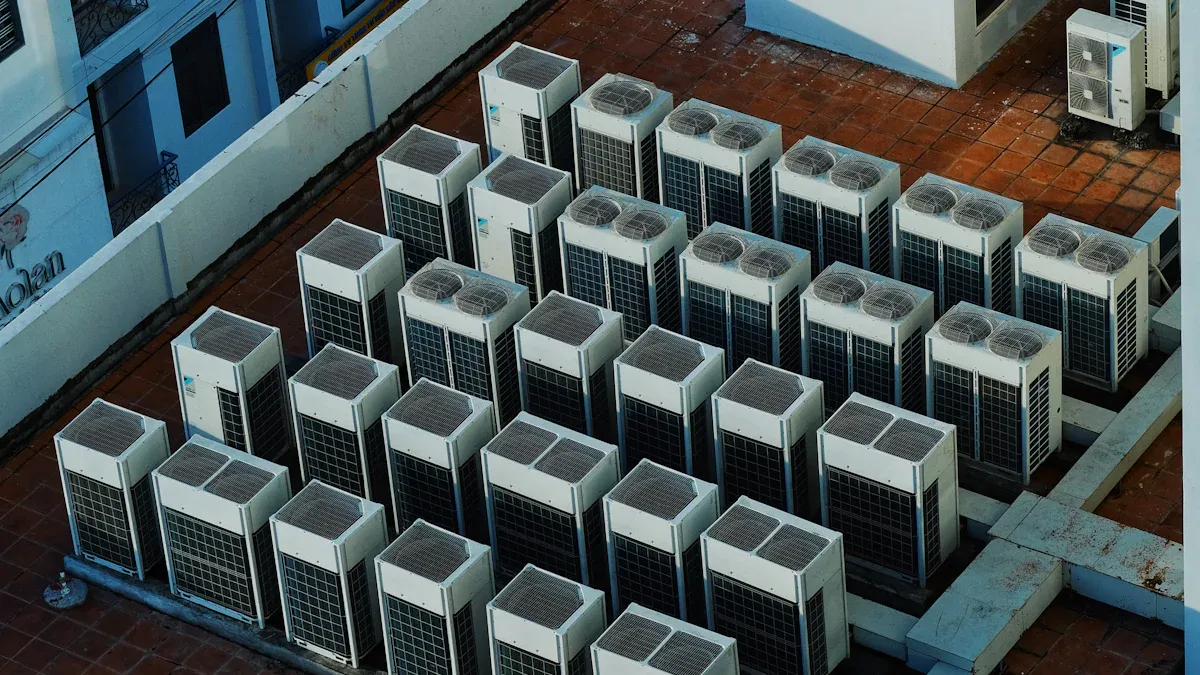
A rooftop air conditioner is an all-in-one cooling system placed on a building’s roof. Unlike regular HVAC systems with separate parts, this unit combines everything into one compact design. This setup makes it easier to install and maintain while working efficiently. It pulls warm air from inside the building through ducts to the roof. The air is cooled by passing through an evaporator coil and then sent back inside to keep the temperature comfortable.
These systems can cool and heat, making them useful all year. They are great for places with limited space since they save room indoors and outdoors. Rooftop air conditioners work well in many buildings, from homes to large businesses.
Common Applications
Commercial Buildings
Rooftop air conditioners are common in commercial buildings because they are efficient and handle big cooling needs. For example, in 2022, commercial buildings used over 30% of energy, showing the need for energy-saving systems. Many businesses now use DC rooftop units to lower costs and improve performance. Retail stores, factories, and data centers also benefit from these systems. Retailers plan to switch to DC rooftop units by 2025 to make customers more comfortable. In factories, where cooling uses 20% of electricity, rooftop units help keep things running smoothly.
Residential Use
While more common in businesses, rooftop air conditioners are becoming popular in homes too. Homeowners like their space-saving design and reliable cooling and heating. These systems are especially helpful for multi-story homes or places with small yards. By putting the unit on the roof, you can use your outdoor space better while staying cool indoors.
Benefits of a Rooftop AC Unit
Rooftop AC units have many benefits, making them a top choice for building owners. First, their small size saves space, which is important in crowded cities. Second, being on the roof protects them from damage like flooding or vandalism. Third, they are energy-efficient. The U.S. rooftop AC market, worth about $9 billion in 2023, is expected to grow by 4.8% yearly until 2030. This growth shows the demand for affordable, energy-saving cooling systems.
Rooftop air conditioners are also easy to fix. Technicians can work on them without bothering people inside the building. Their ability to cool and heat makes them a smart and dependable choice for many uses.
How Does a Rooftop AC System Work?
The Cooling Process
Air Intake and Filtration
The rooftop AC system starts by pulling air from inside. This air moves through ducts to the rooftop unit. Before cooling, filters clean the air by removing dust and pollen. Clean filters help improve air quality and keep the system working well. Changing or cleaning filters often is important for efficiency.
Refrigeration Cycle
After filtering, the cooling process begins. The system uses a refrigerant to take heat from the air. The refrigerant cools the air as it passes through the evaporator coil. It then carries the heat to the condenser coil outside. The heat is released into the air outside. This process repeats to keep your space cool.
Air Distribution
Once cooled, fans push the air back into the building. The air moves through ducts to cool every room evenly. Good air distribution keeps the indoor space comfortable. You can use the thermostat to set the temperature and airflow as needed.
Heating Capabilities
Rooftop AC systems also provide heat during cold weather. In heating mode, they use electric heaters or gas furnaces to warm the air. The warm air flows through the same ducts to heat the building. This makes the system useful for both summer and winter.
Energy Efficiency Features
Modern rooftop AC units save energy and lower costs. They have variable-speed fans and compressors that adjust to cooling or heating needs. This reduces energy use. Some units have smart thermostats to program temperature settings. These features make rooftop AC systems efficient and eco-friendly.
Key Parts of a Rooftop AC System
Compressor
The compressor is the main part of the rooftop AC. It compresses refrigerant gas, raising its pressure and heat. This step helps the refrigerant release heat at the condenser coil. A variable-speed compressor adjusts speed to match cooling needs. This saves energy and reduces wear on the system.
Modern compressors in rooftop units have advanced features. Variable-speed technology keeps temperatures steady and lowers costs. With energy ratings up to 21.2 SEER2, these compressors are highly efficient.
Evaporator Coil
The evaporator coil cools the air inside your building. It absorbs heat from the air as refrigerant flows through it. The cooled air is then sent into the building to keep it comfortable.
Good evaporator coils improve performance and last longer. They also control humidity better, using less energy than older systems. This is especially helpful in humid areas where air quality is harder to manage.
Condenser Coil
The condenser coil is outside and releases heat from the refrigerant. Fans help push the heat into the air around the unit. This step finishes the cooling process, making your space cooler.
Advanced condenser coils are built for efficiency. They work with systems like the DirectPlus™ blower, which has a high-efficiency motor to cut costs. Optional MERV 13 and 16 filters trap tiny particles, improving air quality. These features make rooftop AC systems a smart and cost-effective choice.
Tip: Keep these parts clean for better performance. Regular maintenance can prevent expensive repairs and make your rooftop AC last longer.
Technical Details Table
Here’s a summary of the technical details for these key parts:
Feature | Description |
|---|---|
Energy Efficiency Ratings | Up to 21.2 SEER2, 23.1 IEER, and 14.3 EER2 for top performance. |
Humidity Control | Better dehumidification saves energy compared to older systems. |
Total Cost of Ownership | Lower costs with variable-speed parts and smart operation. |
Variable-Speed Compressor | Adjusts to cooling needs, reducing cycling and boosting efficiency. |
DirectPlus™ Blower System | High-efficiency motor for great performance and lower costs. |
High Efficiency Air Filters | Optional MERV 13 and 16 filters improve air quality by trapping small particles. |
Air Filters
Air filters help keep your rooftop AC working well. They trap dust, pollen, and tiny particles in the air. This stops dirt from spreading inside your building. Clean filters also protect the AC parts from damage caused by dirt buildup.
To keep the air clean, use filters rated MERV-13 or higher. These filters catch viruses and other harmful particles. Experts like ASHRAE suggest MERV-13 filters to reduce the spread of viruses, including COVID-19.
Key facts about air filters:
Many systems replace filters based on time, not actual performance.
Advanced systems can check if filters are working properly.
Regular cleaning and replacing filters keep the AC efficient.
Feature | Benefit |
|---|---|
MERV-13 or Higher | Traps viruses and improves air quality indoors. |
Energy Efficiency | |
Maintenance Protocols | Helps the AC last longer and work better. |
Using good filters and taking care of them improves indoor air quality. This makes your space healthier and more comfortable.
Fans and Blowers
Fans and blowers move air around your building evenly. They push cooled or heated air through ducts to every room. This keeps the temperature steady and comfortable.
Modern rooftop ACs often have variable-speed fans. These fans change speed based on cooling or heating needs. They save energy and improve comfort. For example, they use 30% less energy than older single-speed fans.
Tips for keeping fans and blowers working well:
Check them often for damage or wear.
Clean the blades and motor to remove dust.
Replace broken parts quickly to avoid problems.
Taking care of fans and blowers helps your AC run smoothly. This ensures your building stays comfortable all year.
Thermostat and Controls
The thermostat controls the temperature of your rooftop AC. It lets you set the temperature to stay comfortable all day. Many modern systems have smart thermostats with advanced features. These include programmable settings and remote control.
Smart thermostats save energy by adjusting temperatures based on your schedule. For example, they lower energy use when no one is in the building. Some thermostats also show energy usage data to help you improve efficiency.
Tips for using your thermostat:
Set a steady temperature and avoid changing it often.
Use programmable settings to match your daily routine.
Check energy usage and adjust settings to save power.
Smart thermostats make your rooftop AC system more efficient. They help you save money while keeping your space comfortable.
Advantages of Rooftop Air Conditioners

Space-Saving Design
A rooftop air conditioner is great for small spaces. Placing it on the roof saves room inside and outside. This is very useful in crowded cities where space is limited. The extra space can be used for storage or seating areas.
These units also help reduce clutter. Unlike regular systems with separate parts, they combine everything into one unit. This neat design keeps your property tidy and looking nice.
Easy Maintenance Access
Taking care of a rooftop unit is easy. Technicians can work on it without entering your building. This avoids disturbing your daily activities. Being on the roof also protects the unit from flooding or damage on the ground.
Simple tasks like cleaning filters or checking parts are quick with these systems. Their design makes maintenance fast and helps the unit last longer.
Tip: Regular check-ups keep your rooftop AC working well. This prevents big repairs and saves energy.
Energy Efficiency
Modern rooftop air conditioners save energy and money. They have variable-speed fans and compressors that adjust to cooling needs. Smart thermostats let you set temperatures based on your schedule, saving even more energy.
These systems work well in large spaces too. For example, warehouses and factories use them for specific cooling needs. The table below shows how rooftop AC units help in different places:
Application Type | Benefits |
|---|---|
Office Buildings | Better employee comfort and productivity |
Retail Stores | Happier customers |
Warehouses | Effective cooling for big areas |
Manufacturing Facilities | Custom cooling for functional needs |
Choosing a rooftop AC unit means lower bills and eco-friendly cooling.
Versatility in Applications
Rooftop air conditioners are useful in many places. They work well in busy commercial areas and cozy homes. Their design makes them a smart choice for different needs.
1. Commercial Spaces
Many businesses use rooftop AC units to keep spaces comfortable. Offices, stores, and restaurants depend on them for cooling. For example:
Office Buildings: These systems cool large offices evenly. This helps workers stay focused and productive.
Retail Stores: Shoppers enjoy staying longer when the store feels cool.
Restaurants: Diners stay comfortable, and kitchen staff work better in cooler conditions.
Tip: Businesses can improve customer and worker comfort with rooftop AC units.
2. Industrial Facilities
Factories and warehouses need special cooling solutions. Rooftop ACs cool machines, storage areas, and workspaces. They prevent equipment from overheating and keep workers safe.
3. Educational Institutions
Schools and colleges benefit from rooftop AC systems too. They cool classrooms, libraries, and auditoriums efficiently. This creates a better learning space for students and teachers.
4. Residential Properties
Rooftop AC units are becoming popular in homes. They are great for multi-story houses or small yards. By placing the unit on the roof, you can use your yard for other activities like gardening or playing.
Application Type | Key Benefit |
|---|---|
Commercial Spaces | Improves comfort for workers and customers |
Industrial Facilities | Keeps equipment safe and workers comfortable |
Educational Institutions | Creates better learning spaces |
Residential Properties | Saves yard space and cools reliably |
Rooftop air conditioners are flexible and work in many settings. They provide heating and cooling while meeting different needs. This makes them a smart choice for any property.
Disadvantages of Rooftop Air Conditioners
High Installation Costs
Rooftop air conditioners cost more to install than regular HVAC systems. Putting them on the roof needs special tools and skilled workers. A crane might be needed to lift the unit, which adds to the price. The tricky setup can also make labor costs higher.
Before installing, experts must check if the roof can hold the unit. This check might show that the building needs stronger support, raising costs further. These expenses are important to keep the system safe and working well.
Structural Requirements
Your building must meet certain needs to hold a rooftop air conditioner. The roof must be strong enough to carry the unit and handle vibrations. If it isn’t, you may need to make changes to the structure.
Important things to check include:
Making sure the unit is sealed to stop water damage.
Confirming the roof can handle the unit’s weight.
Placing the unit where it’s easy to fix or clean.
If the unit is hard to reach, airflow might suffer, and energy use could rise. Regular checks help keep the system running well and avoid damage over time.
Weather Exposure
Rooftop air conditioners are always exposed to weather, which can wear them down. Rain, snow, and heat can harm the unit’s parts. Electrical pieces are especially at risk and need extra care.
To protect the unit, schedule regular check-ups and maintenance. This helps find problems early and keeps the system working smoothly. Using weatherproof covers can also make the unit last longer.
Tip: Regular care keeps your rooftop AC safe from weather issues and ensures it heats and cools reliably all year.
Noise Levels
Rooftop air conditioners can be noisy, which may bother you. Knowing what causes the noise and how to fix it helps keep things quieter.
What Makes Rooftop AC Units Noisy?
Different parts of the system make noise. The compressor, fans, and blowers are the main culprits. These parts create vibrations and sounds when running. Over time, wear and tear can make the noise worse. Loose screws or panels might rattle during use. Air moving through ducts can also hum or whistle if airflow isn’t balanced.
Weather can make the noise louder. Wind may shake the unit, and rain or hail can hit the metal casing noisily. If the unit is near a window or vent, the sound might seem louder inside.
How to Make Rooftop AC Units Quieter
Here are ways to reduce noise from your rooftop air conditioner:
Regular Maintenance: Check the unit often to keep parts in good shape. Tighten loose screws and replace worn parts to stop extra vibrations.
Add Noise-Reducing Tools: Use rubber pads or mounts to absorb vibrations. These tools can lower noise levels a lot.
Improve Airflow: Seal and balance ducts properly. This stops humming or whistling caused by uneven airflow.
Pick a Quiet Model: Newer rooftop AC units, like those from Newex, are quieter. Look for models with variable-speed fans and compressors for less noise.
Tip: Place the unit far from windows or vents to reduce indoor noise.
Noise Ratings to Check
When buying a rooftop air conditioner, look at its noise rating in decibels (dB). Lower dB ratings mean quieter units. For example, 50 dB is as quiet as talking, while 70 dB sounds like a vacuum cleaner.
By managing noise levels, you can enjoy your rooftop air conditioner without losing comfort.
Things to Think About Before Installing a Rooftop AC Unit
Roof Strength
Before putting a rooftop AC on your building, check if your roof is strong enough. A professional should inspect it to see if it can hold the unit’s weight and handle vibrations. Rooftop AC units are heavy, often weighing hundreds of pounds. If the roof is weak, it could get damaged or become unsafe.
The unit’s placement is also important. Putting it in the right spot spreads the weight evenly and avoids stress on the roof. Sealing the unit properly stops water leaks and protects against weather damage. After installation, regular checks help keep the roof and AC system in good shape.
Tip: Get your roof inspected first to avoid expensive fixes later.
Installation Expenses
Setting up a rooftop AC comes with several costs. These include buying the unit, paying for installation, and making any needed changes to the roof. Installation alone can make up about 40% of the total cost. Spending more on quality installation can save money later by reducing repairs and extending the system’s life.
Here’s a look at average costs for different AC types:
Type of New AC Unit | Average Unit Cost | Average Installation Cost |
|---|---|---|
Portable AC Unit | $100–$500 | $80–$700 |
Window AC Unit | $150–$800 | $60–$400 |
Central AC | $2,500–$4,500 | $3,500–$7,000 |
Ductless Split System | $2,000–$3,000 | $1,200–$10,000 |
Geothermal | $4,200–$12,000 | $11,000–$28,000 |
Though rooftop ACs cost more upfront, they are energy-efficient and last longer. You might also save money with tax credits or rebates. For example:
Energy Star® upgrades can give you up to $3,200 in tax credits each year until 2032.
Some states offer rebates for energy-saving systems.
Note: Units with higher SEER2 ratings cost more but save energy and money over time.
Building Size and Cooling Needs
Picking the right rooftop AC depends on how big your building is and how much cooling it needs. A unit that’s too small won’t cool well, and one that’s too big wastes energy.
To find the right size, measure your building’s square footage. Use this chart for guidance:
Room Size | Square Footage | AC Size (BTUs) |
|---|---|---|
Small | 150–250 | |
Medium | 250–350 | 7,000–8,500 |
Large | 350–550 | 9,800–12,500 |
For bigger spaces, divide the total square footage by 500 to get the base BTU. Adjust the number based on these factors:
Add 4,000 BTUs for kitchens.
Increase by 10% for sunny rooms.
Add 600 BTUs for each extra person after two.
Convert the BTU to tons to choose the right unit. A properly sized system cools better and uses less energy.
Tip: Ask an HVAC expert to help figure out your building’s cooling needs.
Local Climate
Your area’s weather affects the type of rooftop AC you need. Different climates require specific features for good performance and energy savings.
Hot and Dry Climates
Hot, dry places need rooftop ACs that cool and dehumidify well. Units with advanced evaporator coils and high SEER2 ratings work best. They cool efficiently and use less energy.
Humid Climates
Humid areas need systems that control moisture and cool air. Rooftop ACs with strong dehumidifiers keep indoor spaces comfortable. Choose units with MERV-13 or higher filters. These filters trap allergens and pollutants common in humid regions.
Cold Climates
Cold climates need rooftop ACs with heating features. Systems with heat pumps or gas furnaces keep buildings warm in winter. Variable-speed compressors save energy while adjusting to heating needs.
Mixed Climates
Places with hot summers and cold winters need flexible systems. Rooftop ACs with both heating and cooling functions work best. Smart thermostats improve efficiency by adapting to seasonal changes.
Tip: Check your local weather before picking a rooftop AC. This ensures the system fits your needs year-round.
Choosing a Trusted Brand Like Newex
Picking a reliable brand is as important as choosing the right system. A trusted name like Newex offers dependable rooftop ACs for various needs.
Why Choose Newex?
Proven Performance: Newex units use advanced technology for steady cooling and heating. They work well even in tough weather.
Energy Efficiency: Newex systems have variable-speed compressors and smart thermostats. These features lower energy bills and reduce carbon footprints.
Durability: Built to handle bad weather, Newex units last longer. Their strong design means fewer repairs and lower maintenance costs.
Advanced Features: Newex models include efficient filters, quiet operation, and adjustable settings. These features improve comfort and ease of use.
Customer Support and Warranty
Newex offers great customer service and solid warranties. This protects your investment and gives peace of mind.
Note: Choosing a trusted brand like Newex ensures you get a quality system for your heating and cooling needs.
By considering your area’s climate and selecting a reliable brand like Newex, you can enjoy a comfortable and energy-saving indoor space all year.
Maintenance Tips for a Rooftop AC System
Regular Cleaning of Filters
Cleaning filters in your rooftop AC system is very important. Dirty filters block air and make the system work harder. This uses more energy and wears out the unit faster. Clean or replace filters often to keep airflow smooth and improve efficiency.
Experts say filters should be changed every 30 days. Doing this can boost energy efficiency by up to 15%. It also stops dust buildup that might cause expensive repairs. Clean filters make indoor air healthier and more comfortable.
Tip: Check your filters every month. This simple task saves money and helps your system last longer.
Inspecting and Servicing Components
Checking your rooftop AC system’s parts regularly keeps it working well. Look at key parts like the compressor, fans, and coils for damage or wear. Fixing small problems early stops them from becoming big issues.
Getting a yearly tuneup is a smart idea. It costs $60 to $200, depending on the system. Technicians clean filters, clear lines, and check important parts during a tuneup. This helps your system run smoothly all year.
Did You Know? Regular maintenance can lower energy costs by 18%. It also helps your system last 14 years while staying efficient.
Monitoring Energy Efficiency
Watching your rooftop AC system’s energy use can catch problems early. Higher energy bills might mean clogged filters, leaks, or broken parts. Fixing these issues quickly prevents bigger problems later.
Preventative care keeps energy use low and extends the system’s life. Studies show reactive fixes can raise energy use by 30-60% and shorten equipment lifespan. Staying proactive saves money and keeps your system running well.
Pro Tip: Use a smart thermostat to track energy use. It shows real-time data and helps you adjust settings for better efficiency.
Scheduling Professional Maintenance
Getting professional maintenance for your rooftop air conditioner helps it work better and last longer. Regular check-ups by skilled technicians can find and fix problems early. Following a clear maintenance plan keeps your system running smoothly and avoids sudden breakdowns.
Recommended Maintenance Schedule
Stick to this schedule to keep your rooftop AC in good shape. It lists tasks to do daily, weekly, monthly, quarterly, and yearly:
Frequency | Maintenance Tasks |
|---|---|
Daily | Look for visible issues, check thermostat settings, and ensure airflow is steady. |
Weekly | Inspect filters, outdoor units, and access panels for damage or dirt. |
Monthly | Clean or replace filters, check belts, and monitor refrigerant levels. |
Quarterly | Inspect heating and cooling parts, clean coils, and test electrical systems. |
Annually | Do a full system check, deep clean, and inspect all parts thoroughly. |
Following this plan stops small problems from becoming big repairs. It also keeps your system working well all year.
Benefits of Proactive Maintenance
Taking care of your rooftop AC regularly saves money over time. A study compared two buildings over 25 years. The building with regular maintenance spent $375,000, or 83 cents per square foot. The other building, with delayed maintenance, spent $467,000, or $1.54 per square foot. By year 25, the first building’s total cost was $9.15 per square foot, while the second building’s cost jumped to $21.23 per square foot.
This shows how regular maintenance lowers costs and improves reliability. Taking care of your system ensures it works efficiently, saves money, and keeps your space comfortable.
Tip: Choose a trusted brand like Newex for expert maintenance services. Their skilled team will keep your rooftop AC in top condition.
By following a maintenance plan and using professional services, you can make your rooftop air conditioner last longer and enjoy a cozy indoor space all year.
A rooftop air conditioner is a small, efficient system for heating and cooling. It works well in homes and businesses, saving space and energy. In 2023, the Commercial HVAC Rooftop Unit Market was worth $12.11 billion. Heating and cooling units are popular because they can do both jobs. Cooling-only units are also useful as global temperatures rise.
Using a top-quality rooftop AC can cut energy costs by $1 billion yearly. Advanced models have energy efficiency ratios (IEER) of 20 or higher. Companies like Newex make strong, energy-saving systems that last a long time. Taking care of your unit with regular maintenance keeps it working well and lowers expenses.
Picking a reliable brand like Newex gives you steady temperature control. It also helps create a greener, more sustainable world.
FAQ
1. How long does a rooftop air conditioner last?
Rooftop air conditioners usually last 15 to 20 years. Regular care can make them last longer. Clean filters, check parts, and get professional tune-ups to keep them working well.
2. How can I tell if my rooftop AC saves energy?
Look at the SEER2 rating. Higher numbers mean better energy savings. Features like smart thermostats and variable-speed compressors also help lower energy use and bills.
3. Can rooftop AC units handle bad weather?
Yes, they are built to work in tough weather. Using weatherproof covers and doing regular maintenance keeps them safe from rain, snow, and heat. Picking a strong brand like Newex adds extra reliability.
4. Are rooftop air conditioners loud?
Newer models, like those from Newex, are quieter. They have variable-speed fans and compressors to reduce noise. Fixing loose parts during maintenance also stops rattling or humming sounds.
5. How often should I clean the filters?
Clean or change filters every 30 days. This helps air flow better, saves energy, and keeps the air inside healthy. Dirty filters make the system work harder and cost more to run.
6. Do rooftop AC units heat as well as cool?
Yes, many rooftop ACs can heat too. They use electric heaters or gas furnaces to warm air in winter. This makes them useful all year round.
7. What size rooftop AC do I need?
The size depends on how big your building is. For example, a 350–550 sq. ft. space needs 9,800–12,500 BTUs. Ask an HVAC expert to help you pick the right size for good cooling.
8. Why pick Newex for a rooftop AC?
Newex makes strong, energy-saving systems with smart features like thermostats and top-quality filters. They are reliable and have great customer service, making them a good choice.