

Choosing the best condensing unit for your hvac system starts with finding one that fits your space and weather. You should think about some important things to pick the right one:
The right size and match help your system work well and last longer.
The shape and size of your space change how much energy you use.
Weather affects which system is best for you.
Good equipment saves money on bills and needs fewer fixes.
Follow these tips to choose with confidence.
Understanding the Condensing Unit in HVAC Systems
What a Condensing Unit Does
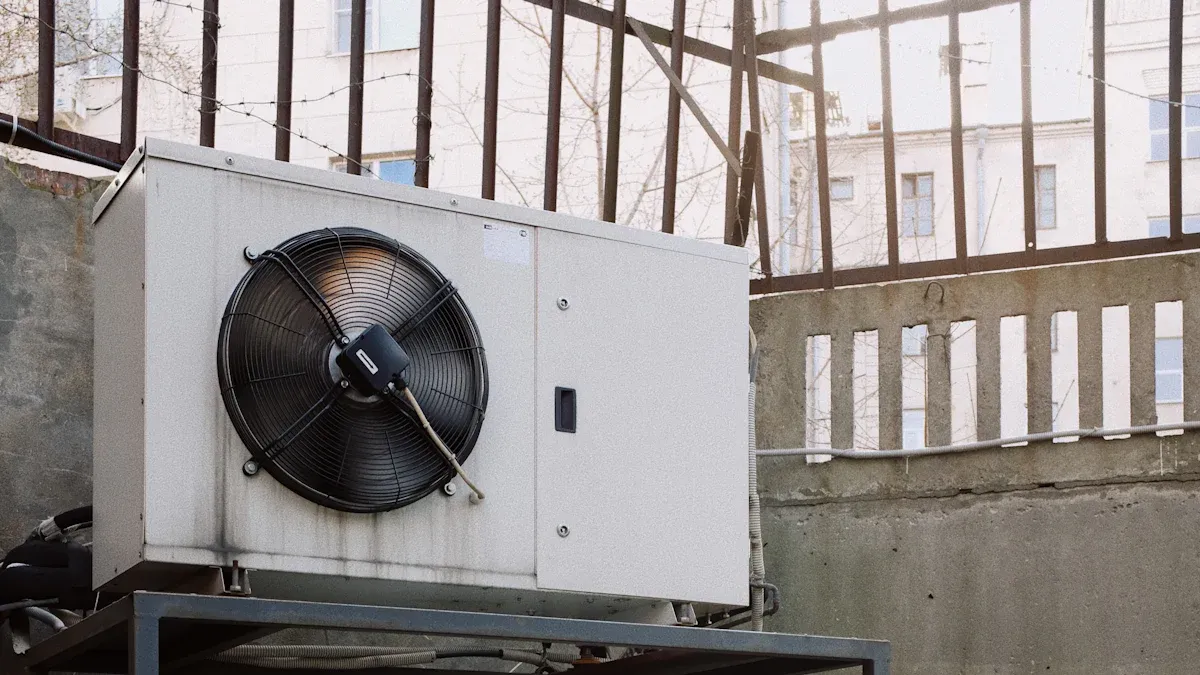
Your condensing unit helps keep your house cool. It takes heat from the refrigerant and sends it outside. When you use your air conditioner, the condensing unit moves heat out of your home. This keeps your rooms cool and the temperature steady.
The condensing unit is important for your hvac system. Picking the right one helps your system work better and saves energy. You can see how different types compare in the table below:
Type of Condenser | Description |
|---|---|
Air-Cooled Condensers | Used in smaller systems. They do not work as well as water-cooled condensers. |
Water-Cooled Condensers | These use water to cool the refrigerant. They work better and save more energy. |
Waterside Economizer | Uses outdoor air to cool water directly. This can lower your energy bills a lot. |
Why System Compatibility Matters
Your condensing unit must match the other hvac parts. If you mix the wrong parts, you can have problems. Here are some issues you might see:
All hvac parts need to work together for good results.
If parts do not match, your system may waste energy and break down more.
The condensing unit and evaporator coil should be the same size, use the same refrigerant, and have the same efficiency.
Old hvac systems may not work with new condensing units.
If you switch from central air to a heat pump or change energy sources, check for compatibility.
Indoor and outdoor units are made to work as a team. Using different types can cause trouble.
If your condensing unit does not fit your system, you may notice problems. Rooms can get too hot or cold, energy bills can go up, and your system can get noisy. The table below shows what can happen:
Consequence | Description |
|---|---|
Temperature Regulation Problems | Some rooms may be too hot or too cold. |
Increased Energy Expenditure | Your system may use more energy and cost more to run. |
System Breakdowns | Parts may wear out faster and need more repairs. |
Short Cycling | The system may start and stop too often, which can damage it. |
Noisy Operation | You may hear loud or strange noises from mismatched parts. |
Tip: Always make sure your condensing unit matches your hvac system before you buy. This helps you avoid mistakes and keeps your home comfortable.
Key Factors When Choosing a Condensing Unit
Build Quality and Durability
When you pick a condensing unit, you want it to last. Good units use strong materials and special coatings to stop rust. These things help the unit handle bad weather and keep working for years. If you choose a unit with good build quality, you will not fix it as much. You also save money and get better cooling.
Here is a table that shows how long different brands can last:
Brand Tier | Expected Lifespan (Years) |
|---|---|
Premium | 18-25+ |
Mid-Tier | 15-20 |
Budget | 12-18 |
A premium condensing unit lasts longer and works better. You get fewer problems and more years of cooling.
Compressor and Refrigerant Type
The compressor is the most important part of your ac. It moves refrigerant and helps control how much cooling you get. There are different types of compressors. Each type has its own good points for how well it works and how long it lasts.
Compressor Type | Performance Characteristics | Reliability Characteristics |
|---|---|---|
Reciprocating | Works well, uses up to eight cylinders, but pistons can wear out. | May fail if pistons wear down. |
Scroll | Has fewer moving parts, newer design, more reliable. | Very reliable because of simple design. |
Screw | Very efficient, good for big systems. | One of the most reliable types. |
Rotary | Quiet, small, less vibration. | Reliable with fewer vibration problems. |
Centrifugal | Made for large hvac systems, uses spinning force for cooling. | Big and costly, but very efficient. |
You also need to think about the refrigerant. New rules say you must use refrigerants that are better for the earth. The old kind, R-410A, is being replaced by R-32 and R-454B. These new refrigerants help the planet and follow the law.
The 2025 hvac rules will stop high-GWP refrigerants like R-410A.
New refrigerants, R-32 and R-454B, have lower global warming potential.
Big systems must use refrigerants under 150 GWP, and small ones under 300 GWP.
This change helps your hvac system be better for the environment.
Climate and Ambient Temperature
Where you live changes how your condensing unit works. If you live somewhere hot, you need a unit that can handle heat. In cold places, you need a unit that works in low temperatures. Picking the right one keeps your ac running well and gives you the cooling you need.
Tropical, dry, mild, continental, and polar places need different cooling.
People in cold places need different cooling than people in hot places.
Places with changing seasons need a flexible hvac system.
Bad indoor temperatures can make you feel sick and work less.
For very hot or cold places, look for these things:
Units made for extreme weather keep cooling strong.
The right compressor type fits your cooling needs.
Pick refrigerants that work best for your weather.
Tip: Always check if your condensing unit fits your local weather. This helps your ac work well and last longer.
Maintenance and Serviceability
Taking care of your condensing unit helps it last and work better. You should clean the coils, change filters, check for leaks, and make sure wires are safe. Doing these things often keeps your ac strong and your bills low.
Clean coils stop overheating and save energy.
New filters keep air moving and protect the unit.
Check refrigerant lines for leaks and good insulation.
Make sure wires are safe.
Keep the drain clear to stop water problems.
Test the system each season for best results.
If your unit is easy to reach, it is faster to fix. This saves money and helps your condensing unit last longer. Good care means fewer problems and better cooling.
Note: Regular care keeps your hvac system working well. It also helps you avoid big repairs and keeps your ac strong.
Sizing Your Air Conditioner and Condensing Unit
Calculating Air Conditioner Size (BTU and Tonnage)
You need to find the right size ac unit for your home to get the best cooling and energy efficiency. The size of your ac and condensing unit depends on many things. You should start with a load calculation. This calculation looks at your space, climate, and how you use your home. The Manual J calculation is the most accurate way to find the right size for your air conditioning system.
Here are the main factors you should include in your load calculation:
Square footage of your home
Climate zone
Ductwork condition
Number and style of windows
Natural shade or sunlight
Quality and amount of insulation
Number of people using the space
Heat from appliances
You can use this table to help with your calculation:
Factor | Value |
|---|---|
23 BTU | |
BTU per window | 200 BTU |
BTU per occupant | 200 BTU |
Add up the BTUs from each factor to get the total cooling capacity you need. Divide the total BTUs by 12,000 to find the tonnage for your condensing unit. This calculation helps you match your ac to your space and meet installation requirements.
Why Proper Size Matters for Your System
Getting the size right for your ac and condensing unit is very important. If you pick the wrong size, your system will not work well. Many people make mistakes by using only square footage or ignoring windows and sunlight. Some forget about ductwork or insulation. Others just replace an old unit with the same size without a new load calculation.
Here are some problems you might face with the wrong size:
Short cycling: An oversized unit turns on and off too much. This causes more wear and higher energy bills.
High humidity: Big units do not run long enough to remove moisture. Your home can feel clammy, and mold may grow.
Constant running: An undersized unit runs all the time. This wastes energy and wears out parts faster.
Poor comfort: The system cannot keep the temperature steady. You may feel too hot or too cold.
Bad air quality: The system does not remove enough humidity, which can hurt indoor air quality.
More repairs: Both over- and under-sized units need more maintenance and repairs.
Tip: Always use a full load calculation before you choose your ac size. This helps you get the best energy efficiency, comfort, and fewer maintenance requirements.
Comparing Types and Efficiency Ratings
Air-Cooled vs. Water-Cooled Units
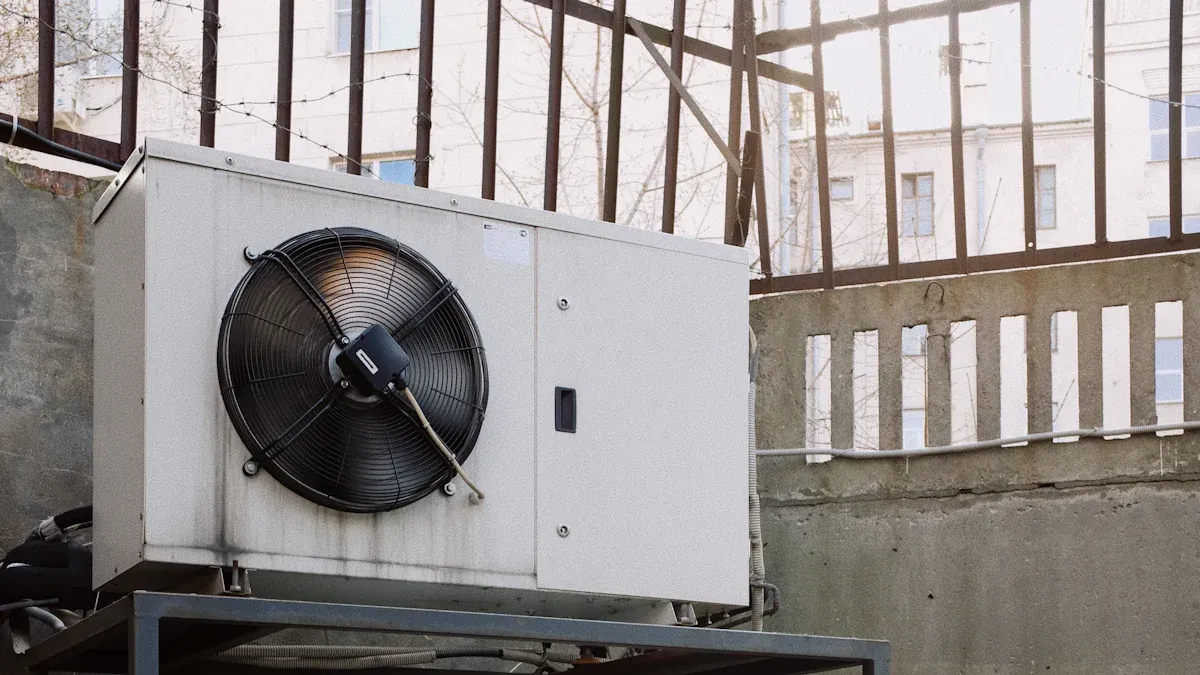
When you pick a condensing unit for your ac, you should know how air-cooled and water-cooled units are different. Each one works best in certain places. Air-cooled units use fans to blow heat into the air. Water-cooled units use water to take heat away. This can make them work better in some buildings.
Here is a table to help you compare:
Feature | Air-Cooled Units | Water-Cooled Units |
|---|---|---|
Installation Complexity | Simple, needs less plumbing | Needs plumbing and a steady water source |
Space Efficiency | No extra water source or cooling tower needed | May need cooling towers, uses more space |
Water Consumption | Low, does not use water for cooling | Uses water, not good for dry areas |
Maintenance | Easier, no water treatment needed | Needs water treatment, more involved |
Temperature Sensitivity | Affected by outside air temperature | More stable, less affected by temperature |
Noise | Usually noisier because of fans | Quieter, fewer fans |
Energy Efficiency | Less efficient in hot weather | More efficient, better heat transfer |
You might want an air-cooled unit if you want something simple or easy to put in. Water-cooled units are good for big buildings or places with lots of water.
SEER and EER Efficiency Ratings
You should look at SEER and EER ratings before you buy an ac system. SEER means Seasonal Energy Efficiency Ratio. It shows how much cooling you get for the energy you use in a season. EER means Energy Efficiency Ratio. It tells you how well your ac cools when it is very hot.
A higher SEER means your ac uses less energy.
EER shows how well your ac works on hot days.
If you go from a SEER of 10 to 16, you can save up to 30% on cooling energy.
New ac systems can lower your yearly cooling bills by 15% to 30%.
Here are the newest rules for ac systems:
Type of Unit | Minimum EER (2023) | |
|---|---|---|
Split System Air Conditioners | 14.3 | 11.7 |
Split System Heat Pumps | 14.3 | 7.5 |
Single-Packaged AC | 13.4 | 10.6 |
Tip: If you live somewhere hot, a higher SEER rating can help you save more money on your energy bills.
Cost and Installation Considerations
The price of a new ac system depends on the type, size, and how hard it is to put in. Most 2–3 ton units cost between $1,200 and $2,500. Installation can add $1,500 to $3,500. Bigger or fancier units cost more money. If you need new ductwork, it can cost $3,000 to $10,000 more.
Other things that change the price are:
The brand and type of ac system you choose
The size and shape of your house
Local labor costs and weather
How hard it is to install, like adding ductwork
A good installation helps your ac system work better and last longer. Bad ductwork or setup can make your heating and cooling bills go up.
Picking the right condensing unit makes your home more comfortable. It also helps you pay less for energy. You should follow these main steps:
Factor | Why It Matters |
|---|---|
Fits your space for the best cooling and savings. | |
Energy Efficiency | Higher SEER or EER means you spend less money. |
Makes sure all parts work well together. | |
Maintenance | Easier care helps your system last longer. |
Always check the size of your system and how air moves.
If you are not sure, ask a certified HVAC professional for help.
If you choose carefully, your HVAC system will work well and last for many years.