

Choosing the best multi split AC is important for comfort. These systems cool specific areas, keeping every spot cozy. By 2025, they are 30% more energy-saving than older models. Features like Wi-Fi and better air filters make them easy to use. Hotter weather and working from home have increased their popularity. They save money and fit well in small spaces. Mini split systems let you pick indoor units to suit your needs.
Key Takeaways
Pick a multi split AC with a high SEER rating. This helps save energy and lowers your electricity costs.
Look for DC inverter technology for steady cooling and less noise. It makes the AC last longer and use less energy.
Find the right BTUs for your room size and insulation. This ensures your AC cools well without wasting energy.
Get a professional to install your AC for best performance. Proper installation keeps it working well and protects the warranty.
Choose smart features like Wi-Fi control and AI tools. These make using the AC easier and save more energy.
Energy Efficiency in Multi Split Systems

Energy efficiency is very important when picking a multi split AC. Choosing an efficient system lowers electricity bills and helps the environment. New systems in 2025 have features that make them work better than older ones.
SEER and Energy Ratings Explained
SEER stands for Seasonal Energy Efficiency Ratio. It shows how well an AC works during a cooling season. Higher SEER numbers mean better energy savings. For example, switching from a 10 SEER to a 16 SEER system can save about $200 each year. A SEER rating of 20 or more can double those savings.
Energy ratings help compare systems easily. Grade 1 systems use less power and cool or heat better. Older fixed-speed units often fall into Grade 3 or 4, making them less efficient. Below is a table showing efficiency details for modern systems:
Metric | Value | What It Means |
|---|---|---|
IEER | Top VRF system efficiency in the U.S. | |
EER | > 4 W/W | For systems with 20-28 kW cooling capacity |
Efficiency Increase | > 50% | Efficiency improvement since 2012 |
IPLV Cooling | 7 to 8 W/W | Average efficiency for variable-speed units |
Energy Efficiency Grade | Grade 1 | Best efficiency for variable-speed systems |
Energy Efficiency Grade | Grade 3-4 | Lower efficiency for fixed-speed systems |
Always check SEER ratings and energy grades before buying. These numbers show how much energy the system can save over time.
Benefits of DC Inverter Technology
DC inverter technology has changed how multi split systems work. Instead of turning on and off, DC inverters adjust speed to keep temperatures steady. This saves energy and makes the unit last longer.
For example, the Newex DC Inverter Multi Split Unit uses this technology for better temperature control. It works well in extreme weather, from -15℃ to 52℃. This makes it great for both cooling and heating.
DC inverters also allow multi zone cooling. You can connect several indoor units to one outdoor unit. This lets you cool or heat rooms separately, saving energy and improving comfort.
Another advantage is quieter operation. DC inverters avoid the loud on-off cycling of older systems. This makes your home quieter, which is perfect for bedrooms or offices.
Choosing the Right Cooling Capacity
Picking the right cooling capacity is very important. It helps your multi split AC work well and saves energy. Here’s how to find the right size for your needs.
BTU Calculation for Multi Split Air Conditioners
BTU stands for British Thermal Unit. It measures how much cooling or heating an AC can do. To figure out the BTUs you need, think about room size, insulation, and weather. Experts suggest about 20 BTUs per square foot of space. But things like ceiling height and windows can change this.
Use these formulas for better accuracy:
Calculation Type | Formula |
|---|---|
Cooling BTUs | Room volume (cubic feet) x Insulation factor x 25 |
Heating BTUs (Cold Climate) | Room volume (cubic feet) x Insulation factor x 40 |
Heating BTUs (Moderate Climate) | Room volume (cubic feet) x Insulation factor x 35 |
For example, if your room is 1,000 cubic feet with an insulation factor of 1.5, the cooling BTUs needed are:
1,000 x 1.5 x 25 = 37,500 BTUs
For bigger spaces, you may need to add up cooling needs. Think about lights, windows, and people in the room. The table below shows how these factors add to the cooling load:
Item | Calculation | Total |
|---|---|---|
Floor area | 3,000 ft² (3,000 x 20) | |
Servers and racks | 150 racks with 8 servers each | 750 kW |
UPS with battery power consumption | Maximum capacity of 1,755 Btu/hour | 0.5 kW |
Lighting | (15,000 W x 4.25) / 3,412.14 | 63,750 Btu or 18.7 kW |
Windows | 2,500 ft² of windows (2,500 x 60) | 150,000 Btu/hour or 44 kW |
People | 50 employees (50 x 400 Btu/hour) | 5.9 kW |
Grand total | 836.7 kW of max cooling |
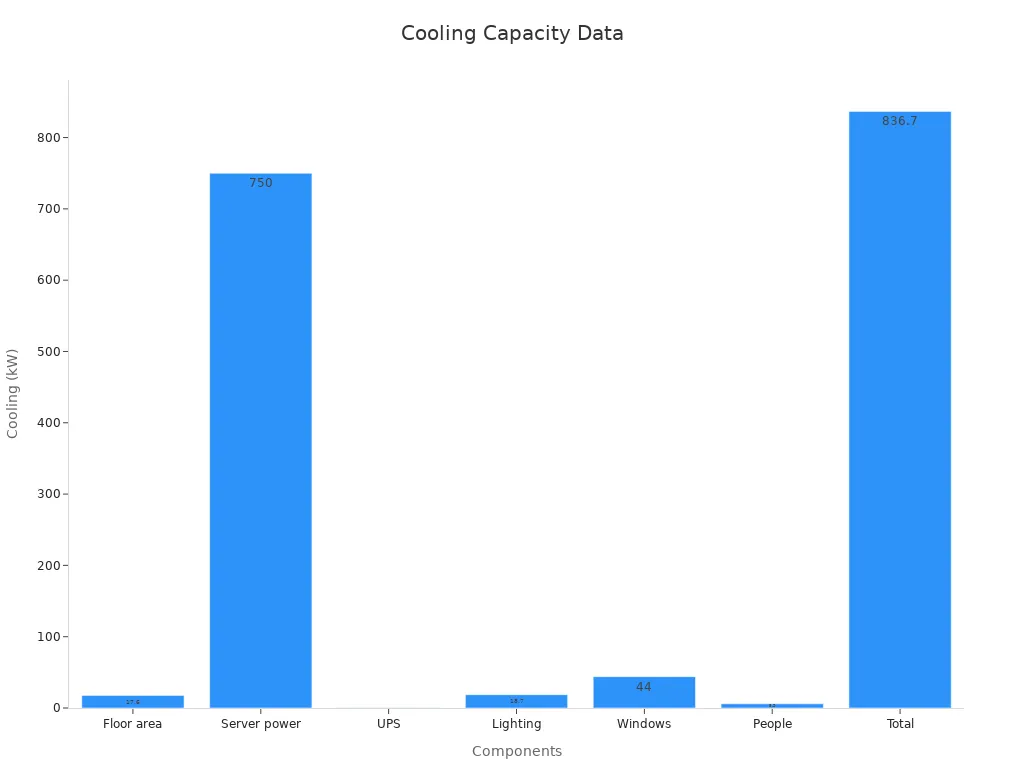
By knowing these numbers, you can pick a system that fits your needs and saves energy.
Determining the Number of Indoor Units for Your Space
The number of indoor units depends on your home’s layout. Multi split systems connect many indoor units to one outdoor unit. This makes them great for cooling or heating multiple rooms. To decide how many units you need, think about:
Room Usage: Which rooms need cooling or heating? Bedrooms, living rooms, and offices often need separate units.
Room Size: Big rooms might need stronger or extra units. Small rooms may only need one.
Zoning Preferences: Multi zone systems let you set different temperatures in each room. This is helpful if people like different temperatures or some rooms are used less.
For instance, a mini split system with three indoor units can cool a living room, bedroom, and office at the same time. If you choose a heat pump, it can also warm your home in winter. This makes multi split systems useful all year.
Talk to a professional installer to plan your setup. They can help place and size the units correctly. This improves energy use and makes your system last longer.
Smart Features in Multi Split Air Conditioners
Benefits of Wi-Fi and App Control
Wi-Fi and apps make using your AC much easier. You can control the system from anywhere. For example, change your living room’s temperature while at work. Or, set it to turn on before you get home. This makes life more convenient.
Smart thermostats make things even better. You can use apps or voice commands to adjust settings. For instance, say, “Set the bedroom to 72°F,” and it will do it. This is great for homes with multiple zones needing different temperatures.
Here’s a table showing smart features and their benefits:
Feature | Description |
|---|---|
Inverter Technology | Saves energy by adjusting compressor speed based on cooling needs. |
Smart Thermostat | Lets you control temperature and settings with apps or voice. |
Self-Cleaning Features | Cuts down on maintenance by stopping mold and bacteria growth. |
These features make your AC easier to use and save energy. They are a smart choice for any home.
AI and Automation for Energy Optimization
AI and automation help your AC save energy. They study how you use the system and adjust settings automatically. For example, if no one is in a room, the system lowers cooling or heating. This avoids wasting energy.
Two key metrics show how AI improves energy use:
Metric | Threshold | Description |
|---|---|---|
CV(RMSE) | <30% | Measures how well the system predicts energy use. |
NMBE | <10% | Checks for errors in energy use predictions. |
These metrics prove AI systems save energy and cut costs. They also help the environment. With AI, your AC works well all year, whether cooling in summer or heating in winter. It’s a great upgrade for modern homes.
Mini Split Installation and Maintenance
Why Professional Installation Matters
Getting a professional to install your mini split AC is important. Experts know how to set it up the right way. This helps the system work better and last longer. If installed poorly, it may use more energy and break sooner.
Professionals make sure the system is sized and placed correctly. This is very important for setups with many indoor units. Wrong sizing or placement can damage the system over time.
Hiring a pro also keeps your warranty safe. Brands like Daikin, Gree, and Mitsubishi require expert installation. If you skip this step, your warranty might not cover repairs.
Brand | Needs Pro Installation? | Why It’s Important |
|---|---|---|
Daikin | Yes | Ensures proper setup and good performance. |
Gree | Yes | Helps with efficiency and warranty protection. |
Mitsubishi | Yes | Uses trained experts for the best results. |
Choosing professional installation helps your AC work well and last longer.
Maintenance Tips for Longevity and Efficiency
Taking care of your mini split AC keeps it running smoothly. Skipping maintenance can make it less efficient and cost more to use. Regular checks find problems early and prevent expensive fixes.
Start by cleaning filters, coils, and pipes often. Dirty filters block airflow, so clean them to keep air moving. Technicians should check pipes to stop small issues from becoming big ones.
Fix small problems quickly to avoid bigger repairs. For example, call a technician if airflow is weak or the unit makes strange noises. Cleaning both indoor and outdoor parts also helps it work better.
Here are some easy maintenance tips:
Clean filters every month to keep air flowing.
Look for leaks or clogs in the pipes.
Get a yearly checkup from a professional.
Wash coils and outdoor units to remove dirt.
By following these steps, your AC will save energy and work well all year.
Budget and Warranty Considerations
Typical Costs of Multi Split Systems in 2025
Knowing the cost of a multi split system helps you plan better. In 2025, prices depend on the brand, type, and installation needs. Below are average costs:
Unit Brand | Average Cost |
|---|---|
Daikin | $1,000 to $4,000 |
Fujitsu | $1,100 to $8,300 |
Mitsubishi | $1,200 to $8,650 |
Panasonic | $1,700 to $2,800 |
Rheem | $1,100 to $8,300 |
The total price also depends on zones and installation difficulty. For example:
System Type | Cost of Equipment | Installation Costs | Total Estimated Cost |
|---|---|---|---|
Single-zone (6,000-18,000 BTUs) | $1,500-$3,500 | $1,500-$3,000 | $3,000-$6,500 |
Multi-zone (2-3 zones) | $4,000-$6,500 | $2,500-$5,000 | $6,500-$11,500 |
Whole-home (4+ zones) | $7,000-$10,000+ | $5,000-$7,000+ | $12,000-$17,000+ |
Think about upfront costs and long-term savings when buying. Energy-saving systems may cost more but lower electricity bills later. Advanced ductless systems can also cut maintenance costs.
Evaluating Warranty and After-Sales Support
Good warranties and support give you peace of mind. Check warranty details when comparing multi split systems. Most brands cover parts, compressors, and sometimes labor. For instance, some warranties last 5 years for parts and 10 years for compressors.
Brands offering professional installation help keep warranties valid. Proper setup ensures the system works well and avoids voiding the warranty. Poor installation can lead to higher repair costs.
After-sales support matters too. Pick brands with helpful customer service. Fast access to technicians and spare parts saves time and money. Some companies offer extended warranties or maintenance plans for extra convenience.
By choosing strong warranties and support, you protect your system and make it last longer.
Picking the right multi split AC means checking key factors. Look at energy use, cooling power, smart features, setup, and cost. These all help the system work well and save money. Comparing different models helps you pick the best one for your space. Getting advice from experts ensures it’s installed correctly and lasts longer.
Choose systems that are reliable and worth the cost. Check options, ask for advice, and pick one that makes your home or office comfy and efficient.

FAQ
What’s the difference between multi split and single split ACs?
A multi split AC uses one outdoor unit for many indoor units. It cools or heats several rooms. A single split AC has one indoor and one outdoor unit. It works best for small areas.
How do you find the right size for a multi split AC?
Use BTUs to size your AC. Multiply the room’s size in square feet by 20 BTUs. Think about ceiling height, windows, and insulation too. For exact sizing, ask an expert for help.
Can you install a multi split AC on your own?
It’s better to hire a professional. They size and place the system correctly. This helps it work well, avoids damage, and keeps the warranty safe. DIY installation can cause expensive problems.
How often should you take care of your multi split AC?
Clean filters every month and get a yearly checkup. Regular care stops leaks, clogs, and poor performance. Maintenance helps your AC last longer and work better.
Are multi split ACs good for saving energy?
Yes, especially ones with DC inverter technology. These systems adjust speed to save power. Choose models with high SEER ratings for the best energy savings.