
A wall mount air handler is a small device. It helps control the temperature inside your home or office. It spreads warm or cool air evenly in the space. This keeps the area comfortable all the time. It also improves air quality by moving and cleaning the air. It removes dust and allergens, making the air healthier. Since it heats and cools, it works well in every season.
Key Takeaways
A wall-mounted air handler keeps rooms comfy by spreading warm or cool air evenly.
These systems save energy, lowering power bills while heating or cooling all year.
Wall-mounted air handlers are small and simple to set up, perfect for tight spaces without big changes.
Cleaning or changing air filters often is key to keeping it working well and lasting long.
Newer models are quiet and clean the air by removing dust and allergens, making the space peaceful.
Place the air handler in a good spot for airflow. Don’t block it with furniture or put it in direct sunlight.
Watch for problems like strange sounds or weak airflow to fix issues early and avoid expensive repairs.
Picking a unit with a high SEER rating, like the R454B, saves energy and works well in any weather.
What Is a Wall Mount Air Handler?
Definition and Purpose
A wall mount air handler is a small device. It helps control the temperature inside your home or office. It spreads warm or cool air evenly in the space. This keeps the area comfortable all the time. Unlike big HVAC systems, it is placed on walls. This makes it great for small spaces. It works for both heating and cooling. It also cleans the air by removing dust and allergens. This makes the air healthier to breathe.
Key Features of Wall-Mounted AC Systems
Wall-mounted air handlers have many useful features. Here are some of them:
High Efficiency: These systems save energy and lower power bills.
Compact Design: They are slim and fit well in small spaces.
Easy Installation: You can set them up without big changes to buildings.
Advanced Air Filtration: They clean the air by catching dust and allergens.
Quiet Operation: These units work quietly, keeping the space peaceful.
Common Applications in Residential and Commercial Spaces
Wall-mounted air handlers are used in homes and businesses. In houses, they are great for bedrooms and living rooms. In offices, stores, and restaurants, they save space and work well. They are also used in special places like oil refineries and water plants.
Feature | Description |
|---|---|
These systems save energy and work well in tough places. | |
Easy Installation | Simple to install without needing big building changes. |
Common Applications | Used in homes, offices, stores, and special facilities like water plants. |
If you need a heating and cooling system, wall-mounted air handlers are a great choice. They are flexible and work well in many places.
How Does a Wall Mount Air Handler Work?
The Air Handling Process
A wall mount air handler moves air to control room temperature. It takes air from the room, changes it, and sends it back. First, air enters through the intake vents of the unit. Inside, the air goes over coils that heat or cool it. After this, the air is blown back into the room by a fan.
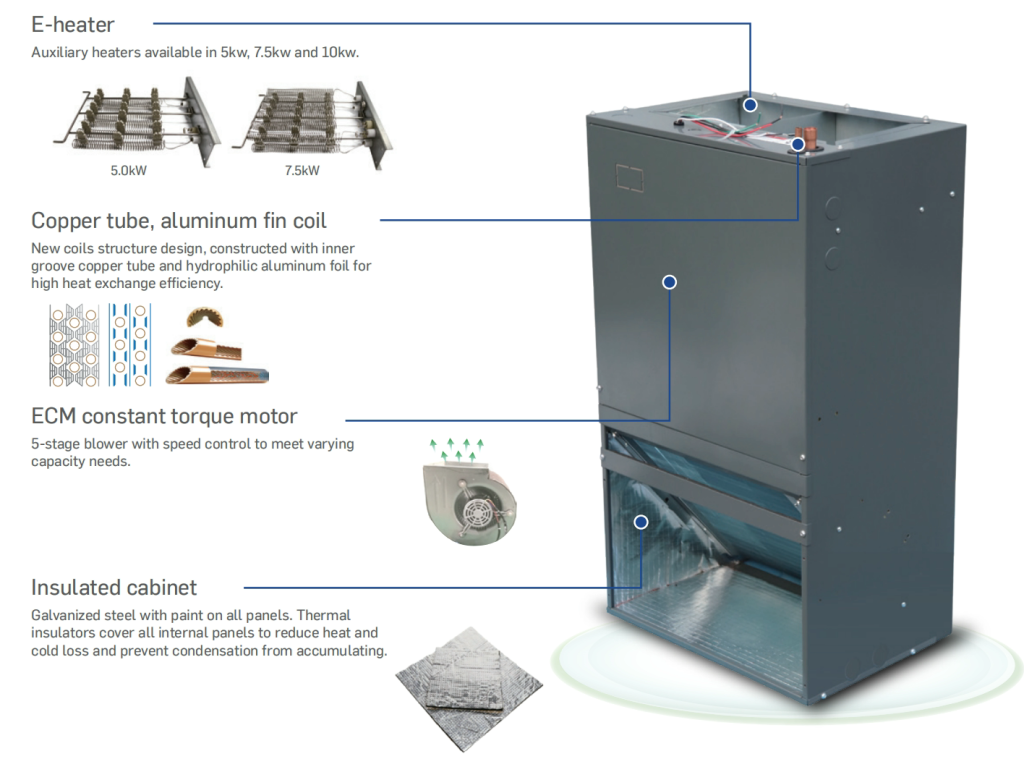
This system also reduces moisture, making the room more comfortable. Advanced models, like the R454B 14.3 SEER2, use special coils. These coils are made of copper and aluminum for better heat transfer. This makes the air handling process work well and saves energy.
Heating and Cooling Mechanisms
Wall-mounted AC units heat and cool for all seasons. For cooling, they use refrigerant to take heat from the air. The heat is sent outside, leaving the room cooler. For heating, the process is reversed. Heat is taken from outside air, even in winter, and brought inside.
Some units, like ductless heat pumps, are very energy-efficient. They use inverter technology to change compressor speed as needed. This avoids wasting energy and keeps performance steady. High SEER models, like the R454B, save energy while keeping the room comfortable.
Air Circulation and Filtration in Wall-Mounted AC Units
Wall-mounted AC units keep air moving and clean. They spread air evenly, so the whole room feels the same. Built-in filters catch dust, allergens, and other particles. This makes the air healthier, especially for people with allergies.
Modern units, like the R454B, have advanced filters. These filters are easy to clean and stay effective longer. The system also runs quietly, so you can enjoy clean air in peace.
Tip: Clean or replace air filters often to keep your AC working well and lasting longer.
Components of a Wall Mount Air Handler
Blower or Fan
The blower, also called the fan, is very important. It pushes air through the system and into your room. A good blower spreads air evenly, keeping the room’s temperature steady. Many modern air handlers use advanced motors like five-speed ECM motors. These motors work with both 120 V and 240 V setups, giving you options.
The blower also helps save energy. It changes its speed to use only the power needed. This lowers electricity costs while keeping your room comfy. If you want a dependable system, pick one with a high-quality blower. It will last longer and work better.
Coils for Heating and Cooling
The coils in an air handler heat or cool the air. They are made from materials like copper and aluminum. Copper coils are strong and efficient, while aluminum ones are light and resist rust. Some systems even have UV-resistant coils for longer use.
When air moves over the coils, it heats or cools based on the setting. For heating, the system might use electric or hot water options. This lets you adjust the air handler to fit your needs. Advanced models, like the R454B, have high-performance coils. These coils work well even in very hot or cold weather.
Air Filters and Their Role
Air filters keep the air clean and healthy. They catch dust, allergens, and other particles, stopping them from spreading in your room. This is helpful if someone in your home has allergies or breathing problems.
Modern air handlers have filters that are simple to clean or replace. Cleaning them often helps the system work better and last longer. For example, the R454B air handler has filters made for long-term use. This makes it a good choice if you want something easy to maintain.
Tip: Clean your air filters every few months. This keeps your air handler working well and improves air quality.
Control Systems and Adjustability
The control system in a wall mount air handler helps you easily manage your indoor temperature. Modern air handlers have advanced features for simple and accurate temperature control. You can change the settings to match your comfort, whether you need heat or cool air. Many units come with a digital thermostat to set the exact temperature you want. Some models even include remote controls or smartphone options, so you can adjust settings from anywhere in your home.
These systems are also highly adjustable. You can change airflow settings to fit your room’s size and shape. For instance, the R454B air handler has a 5-stage ECM motor. This motor changes airflow automatically, keeping the room comfortable without wasting energy. You can also adjust the air return style, making it flexible for different setups. These features ensure the air handler works well while meeting your needs.
Tip: Choose an air handler with programmable settings. This lets you schedule temperature changes to save energy when you’re away.
Drainage System for Condensation
Wall mount air handlers have a drainage system to handle moisture. When cooling the air, the unit removes humidity by collecting water as condensation on the coils. Without proper drainage, this water could leak and damage your walls or floors.
The drainage system safely removes the collected water. Most units use a drain pan and pipe to carry the water away. Advanced models, like the R454B, have insulated cabinets to stop condensation buildup. This design keeps the system working well and protects your home from water damage.
Check the drainage system often to make sure it works. A clogged pipe can cause water to back up and leak. Cleaning the drain pan and pipe regularly helps avoid these problems. If you see water around your air handler, inspect the drainage system right away.
Note: Keeping the drainage system clean prevents leaks and helps your air handler last longer.
Installation of a Wall Mount Air Handler

Wall-Mounted Configuration and Placement
To install a wall mount air handler, pick the right spot. Choose a place where air can spread evenly in the room. Avoid areas with furniture or curtains that block airflow. Mount the unit high on the wall, but not too close to the ceiling. This helps air move around better.
Where you place the air handler affects how well it works. For example, putting it on an outside wall makes connecting to an outdoor unit easier. Make sure the wall is strong enough to hold the unit. If unsure, ask a professional to check the wall’s strength.
Tip: Keep the air handler away from sunlight or heat sources. This keeps the room cool and saves energy.
Space Requirements and Considerations
Measure the space before installing the air handler. These units are small but need space around them for airflow and cleaning. Check the manual for the required clearance on all sides.
Think about the room’s size and shape. Bigger rooms might need stronger units or more air handlers. In small spaces, the compact size of the unit is helpful. But ensure there’s enough room for the drainage system to work.
Good ventilation is also important. The air handler needs fresh air to work well. If placed in a closed area, make sure there are vents for air to flow.
Professional Installation vs. DIY Setup
You can hire a professional or install the air handler yourself. Professionals ensure safe and correct installation. They handle tasks like connecting to the HVAC system, securing the unit, and testing it.
If you want to do it yourself, follow the manual closely. Use tools like a drill, level, and screwdriver. First, mount the bracket on the wall. Then, attach the air handler securely. Connect it to power and the drainage system. Test it to make sure it works.
DIY saves money but can be tricky if you’re new to HVAC systems. Mistakes can cause problems or damage the unit. For safety and peace of mind, hire a professional for complex work.
Note: Always turn off the power before starting installation to stay safe.
Advantages of Wall Mount Air Handlers
Compact Design for Small Spaces
Wall-mounted AC units are small and save space. They don’t need big equipment, leaving more room in your home. You can place them high on walls, which is great for garages, basements, or sunrooms. Unlike older systems, they don’t need large ducts or floor setups. This helps you use your room’s layout better.
Installing these units is simple and flexible. They fit well in small apartments or single rooms. This makes them perfect for modern homes where saving space matters. With a wall mount air handler, you get both style and comfort without losing space.
Fun Fact: Wall-mounted AC units work well in places like attics or tiny homes where regular HVAC systems won’t fit.
Saves Energy and Lowers Costs
Wall-mounted AC units cool specific areas, saving energy. They don’t heat or cool the whole house, which reduces waste. These systems use smart technology to control temperatures while using less power than central air systems. For example, ductless heat pumps adjust speed to save energy and cut bills.
The cost to install one ranges from $2,000 to $10,500. The price depends on size, power, and setup difficulty. While the upfront cost may seem high, you save money over time with lower energy bills. Their efficiency ensures you get great heating and cooling without spending too much.
Tip: Pick a unit with a high SEER rating, like the R454B 14.3 SEER2, to save more energy.
Works for All Seasons
Wall-mounted AC units keep you comfy all year. In summer, they cool by removing heat from the air. In winter, they bring heat inside, even from cold outdoor air. This makes them useful in any season.
You can adjust these systems to fit your needs. Many models let you change airflow or add extra heaters for better warmth. Whether cooling one room or heating several, these units adapt easily. They provide steady comfort no matter the weather.
Note: New models like the R454B have advanced motors for top performance in all conditions.
Quiet Operation for Comfort
Wall mount air handlers work quietly to keep your space peaceful. Unlike older HVAC systems, they use smart technology to lower noise. The fan and motor move air smoothly without making loud sounds. This makes them perfect for bedrooms, offices, or quiet areas.
Even at full power, these units stay quiet. New models, like the R454B 14.3 SEER2, have insulated cabinets. These cabinets stop vibrations and reduce noise. This design helps the unit work well without bothering you.
Did You Know? Wall-mounted air handlers are as quiet as a whisper. They are one of the best choices for silent indoor cooling and heating.
If you want a calm space, these air handlers are a great pick. You can work, relax, or sleep without noise interruptions. Cleaning the fan and filters often can make them even quieter.
Durability and Long-Term Performance
Wall mount air handlers are made to last a long time. Strong materials like galvanized steel and anti-rust coatings keep them durable. These units handle daily use well, making them dependable for years. For example, the R454B model has a tough cabinet that protects its parts and increases its lifespan.
Smart features also help these systems work better over time. The 5-stage ECM motor saves energy and reduces wear on the unit. This means fewer repairs and lower costs in the future.
Tip: Check the coils and drainage system regularly. This keeps your air handler working well for a long time.
Wall-mounted air handlers are a smart choice for comfort and reliability. Their sturdy build and efficient design save money and provide steady heating and cooling. Pick a good model and take care of it to enjoy years of great performance.
Maintenance Needs for Wall Mount Air Handlers
Cleaning and Changing Air Filters
Cleaning air filters is very important for your wall-mounted AC. Filters catch dust, allergens, and particles to keep air fresh. Over time, they can get clogged, blocking airflow. This makes the unit work harder, wasting energy and raising costs.
To clean filters, take them out and rinse with water. Let them dry fully before putting them back. If filters are too dirty or damaged, replace them. Most brands suggest cleaning or replacing filters every 1-3 months. This depends on how often you use the unit and the air quality. Keeping filters clean helps your air handler last longer and work better.
Tip: Check your filters every month. This simple step saves money on energy and repairs.
Checking and Maintaining Main Parts
Look at key parts of your air handler often to avoid problems. Start with the fan or blower. Make sure it spins easily and isn’t noisy. Strange sounds could mean wear or dirt buildup. Next, check the coils for dirt or damage. Dirty coils make heating and cooling less effective.
Also, check the drainage system for clogs in the pipe or pan. Clogs can cause water leaks. If you have a ductless heat pump, inspect refrigerant lines for leaks. Low refrigerant can hurt performance. Always turn off power before checking any part of the unit. If you find problems, call an HVAC expert for help.
Note: Regular checks catch small issues early and prevent expensive repairs.
Tips for Long-Lasting Performance
Preventive care keeps your wall-mounted AC working well for years. Schedule a professional check-up once a year. A technician will clean the unit, check for wear, and test all parts. This is especially helpful before summer or winter when the system works hardest.
Keep the area around the unit clean and clear. Dust or clutter can block airflow and lower efficiency. Don’t put furniture or curtains near the unit. Use a programmable thermostat to save energy. For example, set a higher temperature when you’re not home to reduce strain on the system.
Pro Tip: Write down when you clean, inspect, or service your unit. This helps you stay on top of maintenance and keep your air handler in great shape.
Signs of Wear, Repairs, or Replacement Needs
Your wall mount air handler works hard to keep your indoor space comfortable. Over time, it may show signs of wear or need repairs. Recognizing these signs early can save you money and prevent bigger problems. Here are some common indicators to watch for:
Unusual Noises
If you hear strange sounds like banging, rattling, or squealing, your air handler might have a problem. These noises often come from loose parts, a failing motor, or debris stuck in the fan. Ignoring these sounds can lead to more damage.
Weak Airflow
When the airflow feels weaker than usual, it could mean a clogged filter, a dirty coil, or a failing blower. Weak airflow reduces the system’s efficiency and makes it harder to maintain a comfortable temperature.
Inconsistent Temperatures
If some areas of your room feel too hot or too cold, your air handler might not be working properly. This issue could result from a malfunctioning thermostat, blocked vents, or worn-out components.
Higher Energy Bills
A sudden increase in your energy bills might signal that your air handler is working harder than it should. This could happen due to dirty filters, leaks in the system, or an aging unit that has lost efficiency.
Frequent Cycling
If your system turns on and off more often than usual, it might have a problem with the thermostat or the motor. Frequent cycling wastes energy and puts extra strain on the unit.
Visible Leaks or Moisture
Water pooling around your air handler is a sign of a drainage issue. A clogged drain pipe or a damaged pan can cause leaks. Addressing this quickly prevents water damage to your home.
Unpleasant Odors
Strange smells coming from your air handler could mean mold growth, a burnt-out motor, or dirty filters. These odors not only affect comfort but also pose health risks.
Age of the Unit
Most air handlers last 10-15 years with proper maintenance. If your unit is older and frequently needs repairs, replacing it might be more cost-effective.
Tip: Schedule regular inspections to catch these issues early. A professional technician can identify and fix problems before they become serious.
Knowing these signs helps you decide whether to repair or replace your air handler. Acting quickly ensures your system continues to provide reliable heating and cooling.
A wall mount air handler has many advantages for homes or offices. Its small size fits in tight spaces, saving room. It uses less energy, which helps reduce your bills. It keeps your space warm in winter and cool in summer. It also cleans the air by removing dust and allergens, making it healthier to breathe.
If you need a system that is comfy, efficient, and flexible, this is a great option. Install one to enjoy cleaner air and a cozier space.
If you want to know more about Newex’s air handling products, please contact us.

FAQ
1. What is the lifespan of a wall mount air handler?
Wall mount air handlers usually last 10-15 years with good care. Cleaning filters and checking parts often can make them last longer.
Tip: Get a professional to inspect your unit once a year.
2. Can you install a wall mount air handler in any room?
Yes, it can be installed in most rooms. It works well in bedrooms, living rooms, offices, and garages. Place it correctly for better airflow and comfort.
Note: Don’t put the unit near sunlight or heat sources.
3. How often should you clean the air filters?
Clean filters every 1-3 months based on use and air quality. Dirty filters block air and make the unit less effective.
Pro Tip: Set a monthly reminder to check and clean filters.
4. Are wall mount air handlers energy-efficient?
Yes, they save energy and lower bills. Models with high SEER ratings, like the R454B 14.3 SEER2, are very efficient.
Fun Fact: Ductless systems waste less energy than older HVAC setups.
5. Do wall mount air handlers work in extreme weather?
Yes, they work well in hot and cold weather. Advanced units, like the R454B, have strong coils and motors for all seasons.
6. Can you install a wall mount air handler yourself?
Yes, but hiring a professional is safer and better. DIY installation needs careful reading of the manual and proper tools.
Warning: Wrong installation can break the unit or cancel the warranty.
7. What size wall mount air handler do you need?
The size depends on your room’s size. Bigger rooms need stronger units. Ask an expert to find the right size for your space.
Tip: Too big wastes energy, and too small won’t cool or heat well.
8. How do you know if your air handler needs repairs?
Watch for weak airflow, strange noises, or higher bills. Leaks or uneven temperatures also mean something’s wrong.
Note: Fix problems early to avoid expensive repairs or replacements.