
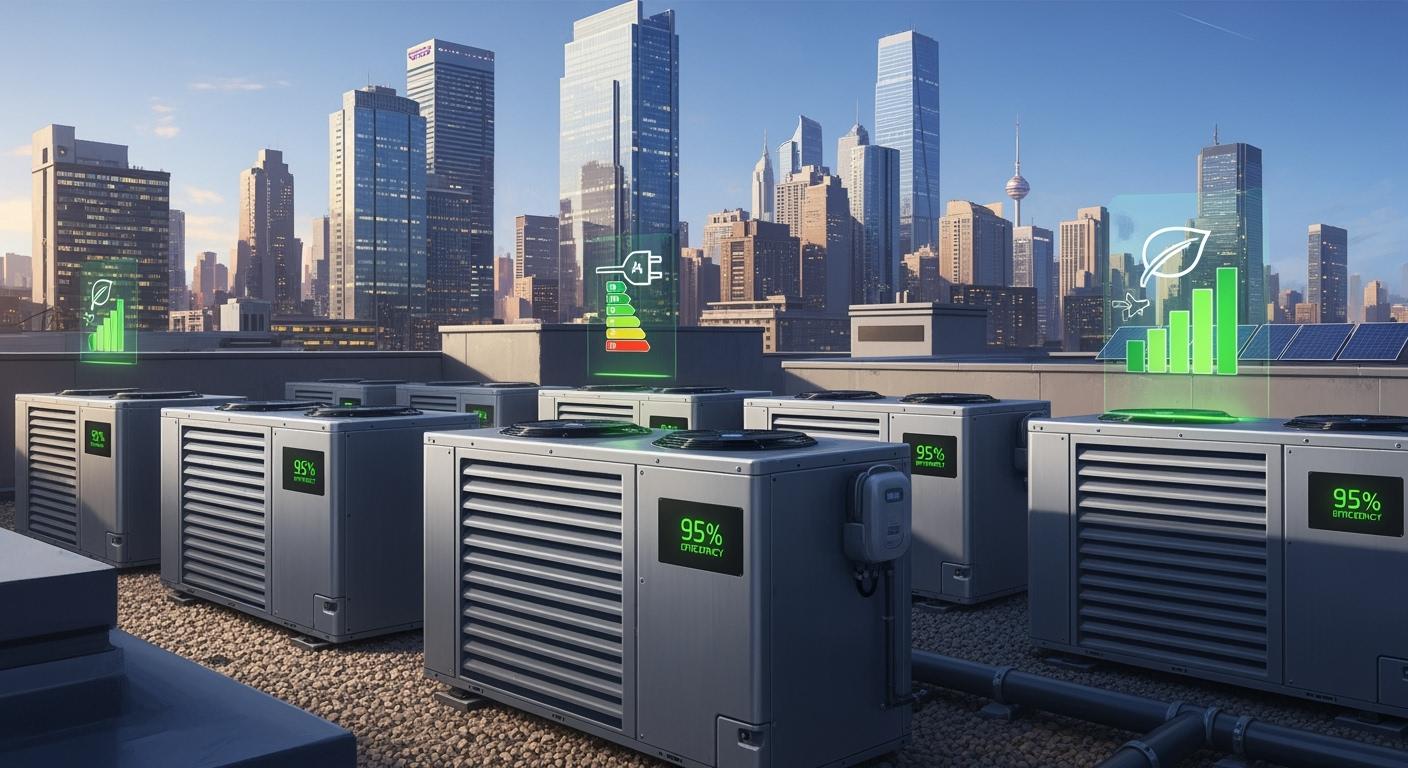
You want the best energy-saving options for your home or building. In 2025, models like the Carrier Infinity® 25VNA4 and Lennox SL25XPV are great choices. These packaged rooftop heat pump systems have high SEER2 ratings and special features. The table below shows the top brands for saving energy:
Brand | Model | SEER2 | HSPF2 | Notable Features |
|---|---|---|---|---|
Carrier | Infinity® 25VNA4 | 20.5 | 10.5 | Greenspeed® Intelligence, cost savings |
Lennox | SL25XPV | 23.5 | N/A | Solar-ready, ultra-quiet operation |
Mitsubishi | Hyper-Heating H2i® | N/A | N/A | Reliable in extreme cold |
Picking the right unit helps you save money and energy every month.
Best Packaged Rooftop Heat Pumps 2025
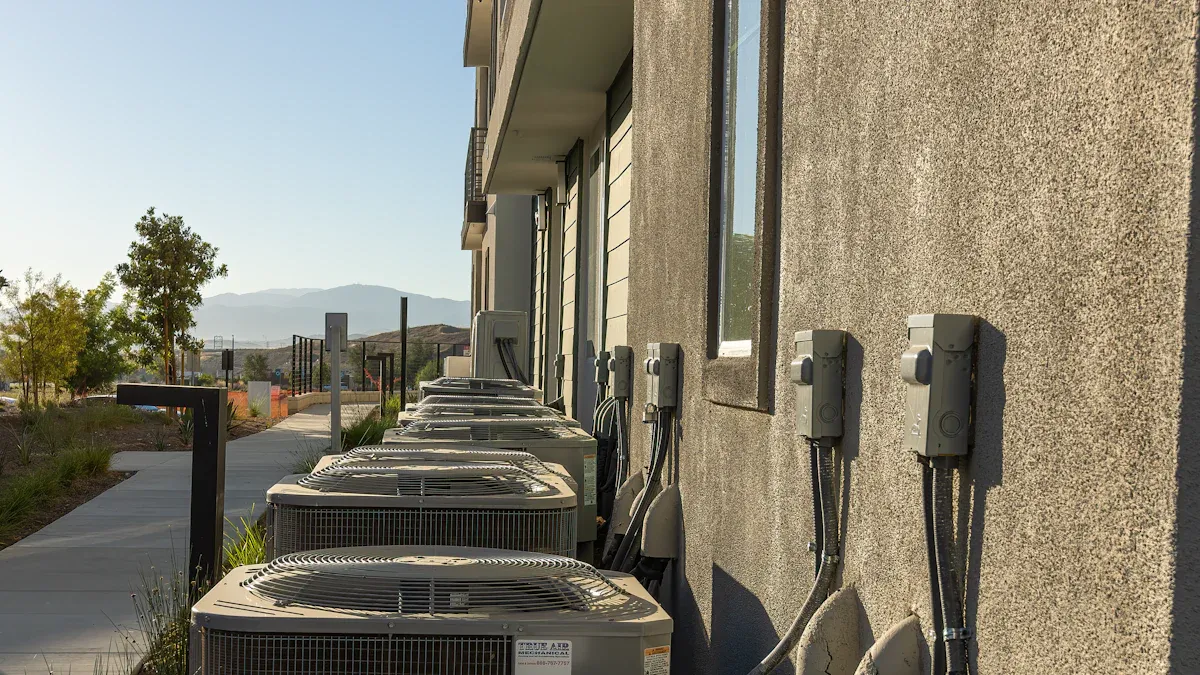
Top Models and Brands Overview
If you want a packaged rooftop heat pump, look for one that saves energy and works in every season. Many brands have good choices for 2025. Here are some top models and what makes them special:
Brand | Model | Key Features |
|---|---|---|
Bosch | IDS Premium Connected | Best overall; cold-climate capable, ENERGY STAR certified, quiet operation, remote monitoring. |
Carrier | Infinity 24 with Greenspeed® | Best for cold climates; efficient down to -15°F, qualifies for federal tax credits. |
Mitsubishi | Hyper-Heating H2i® | Best for reliability; consistent performance in freezing conditions, available in ducted and ductless. |
Goodman | GZV6SA3610 | Best on a budget; dependable, cost-effective, solid efficiency ratings for mild to moderate climates. |
Lennox | SL25XPV | Solar-ready, ultra-quiet, high SEER2, good for noise-sensitive areas. |
American Standard | Gold 15 | Durable, easy to service, strong performance in most climates. |
Rheem | Endeavor Line | Reliable, good for large homes, offers advanced humidity control. |
Ruud | Ultra Series | Simple maintenance, solid warranty, good for long-term value. |
Daikin | DP5HH | Advanced inverter technology, stable temperatures, ENERGY STAR certified. |
Trane | XL16c | Two-stage cooling, quiet, good for comfort and energy savings. |
Each rooftop heat pump has its own strengths. Bosch and Carrier work well in cold places. Mitsubishi gives steady heating in freezing weather. Goodman is a good choice if you want to save money. Lennox and Trane are quiet and comfortable. American Standard, Rheem, and Ruud are easy to take care of and have strong warranties. Daikin has advanced technology for steady temperatures.
Tip: If your winters are very cold, pick Carrier Infinity 24 or Mitsubishi Hyper-Heating H2i. If your climate is mild, Goodman or Ruud may be best for your budget.
Efficiency Ratings Comparison
You want to know how much energy your rooftop heat pump will save. The main ratings to check are SEER2 and HSPF2. SEER2 shows how well the unit cools in summer. HSPF2 tells you how well it heats all winter. Higher numbers mean better energy savings.
Here is a simple guide to these ratings:
SEER2 of 14.3 or more is needed for split system heat pumps everywhere.
In the North, air conditioners need at least 13.4 SEER2.
In the Southwest and Southeast, split system air conditioners should have SEER2 from 13.8 to 14.3.
The lowest allowed for split system heat pumps is 7.5 HSPF2.
ENERGY STAR systems need 8.1 HSPF2 or more.
A higher HSPF2 means your rooftop unit uses less electricity to heat your home.
Here is a table that compares energy ratings for top models:
Brand | Model | SEER2 | HSPF2 | ENERGY STAR Certified |
|---|---|---|---|---|
Lennox | SL25XPV | 23.5 | N/A | Yes |
American Standard | Gold 15 | 16.0 | 8.5 | Yes |
Rheem | Endeavor Line | 15.2 | 8.1 | Yes |
Ruud | Ultra Series | 15.2 | 8.1 | Yes |
Daikin | DP5HH | 16.0 | 8.2 | Yes |
Trane | XL16c | 16.0 | 8.5 | Yes |
Lennox has a very high SEER2 rating. American Standard, Daikin, and Trane also have strong ratings. Most models meet ENERGY STAR rules. This means you can pay less for energy and get good performance.
If you want a quiet rooftop hvac unit, Lennox and Trane are great picks. For easy care, American Standard and Ruud are good choices. If you want to spend less at first, Goodman and Rheem are solid values. Daikin and Bosch have advanced features and keep temperatures steady.
Note: Always look at the energy ratings before you buy. A higher SEER2 or HSPF2 means you save more money over time.
Picking the right rooftop heat pump gives you comfort, savings, and reliability. You can choose based on your climate, budget, and needs. The best rooftop hvac units for 2025 give you many ways to save energy and stay comfortable.
Performance Metrics for Rooftop Units
SEER2, HSPF2, and AFUE Explained
When you shop for a rooftop heat pump, you see lots of ratings. These ratings show how well the unit works and how much energy it uses. The main ratings are SEER2, HSPF2, and AFUE.
SEER2 means Seasonal Energy Efficiency Ratio 2. This rating tells you how well your rooftop unit cools your home in summer. SEER2 uses new tests that show real results. A higher SEER2 means your rooftop system uses less energy to cool you.
HSPF2 is the Heating Seasonal Performance Factor 2. This rating shows how well your rooftop heat pump heats your home in winter. A higher HSPF2 means you save more energy.
AFUE stands for Annual Fuel Utilization Efficiency. This rating matters if your rooftop unit uses gas for heating. AFUE shows how much fuel turns into heat for your home.
Here is a table to help you compare these ratings:
Rating Type | Definition | Efficiency Impact |
|---|---|---|
SEER2 | Cooling efficiency in real-world conditions | More accurate cooling efficiency |
HSPF2 | Heating efficiency in real-world conditions | More accurate heating efficiency |
AFUE | Fuel-to-heat conversion rate | Higher AFUE means less wasted fuel |
You can see how SEER2 standards are different in each region:
Region | Minimum SEER2 | Recommended SEER2 |
|---|---|---|
Northern States | 14.3 | 15 |
Southern States | 15.2 | 16 |
Ohio & Similar | 13.4 | 14 |

Real-World Energy Savings
You want your rooftop system to save you energy. High-efficiency rooftop heat pumps use less power because they move heat instead of making it. This means you pay less for energy bills.
Modern rooftop units work well even in very cold weather. For example, Carrier’s rooftop heat pump keeps full heating power at 5°F and still works at -10°F. This helps you save energy all year, even in cold winters.
If you add solar panels to your rooftop system, you can save even more money. Many new rooftop heat pumps connect with solar power. This gives you extra energy savings and helps the planet.
Tip: Pick a rooftop unit with high SEER2 and HSPF2 ratings for better performance and lower bills.
When you choose a rooftop heat pump with strong ratings, you get comfort, efficiency, and real energy savings every month.
Advanced Features in Residential Rooftop HVAC Units
Variable Speed and Two-Stage Technology
Modern packaged hvac systems do more than heat and cool. Variable speed motors help your system change how fast it runs. Two-stage compressors let your unit use less power when it does not need to work hard. This makes your system quieter and gives you better airflow. Your home stays comfortable and does not waste energy. Two-stage compressors mostly use less energy. They help stop big changes in temperature. Your system can last longer. You will have fewer spots that feel too hot or cold.
Humidity Control and Smart Integration
New rooftop units control humidity well and work with smart thermostats. These features make your home more comfortable and help you save money. Here are some things you get:
Smart thermostats can help you spend up to 10% less on heating and cooling each year.
You can set times for your system to run that fit your daily life and the seasons.
You can see how much energy you use right now and make better choices.
You can use your phone to control your system, even if you are not home.
Smart thermostats help your heat pump packaged unit keep humidity at a good level, especially in summer.
These features make your packaged hvac system easier to use and more efficient.
Tax Credits and Incentives 2025
In 2025, you can get new tax credits and rebates for energy-saving rooftop systems. Many units with ENERGY STAR certification can get these savings. You may get money back from the government if you put in a high-efficiency system. These deals help you pay less at first and make it easier to upgrade. Always look for local and federal programs before you buy. Picking an efficient system can save you money now and later.
Types of Packaged Rooftop Heat Pumps
Heat Pump Units: Pros & Cons
You can choose a heat pump unit for your rooftop if you want both heating and cooling in one system. These units move heat instead of making it, which saves energy. Many models, like the LRP15HPK and LRP16HP, offer high efficiency and quiet operation.
Product Name | SEER2 | HSPF2 | Sound Rating | Features |
|---|---|---|---|---|
LRP15HPK | 15.2 | 6.7 | 71 | Two-stage, variable-speed |
LRP16HP | 15.2 | 6.7 | 78 | Compact, high-efficiency |
LRP13HPK | 13.4 | 6.7 | 76 | Single-stage, constant torque |
LRP14HP | 13.4 | 6.7 | 78 | Compact, residential use |
Pros:
You get both heating and cooling from one rooftop unit.
These systems are often quieter than traditional options.
You may save money over time because of lower energy use.
Cons:
Maintenance can be harder if the rooftop is hard to reach.
Tip: Tax credits can help lower the cost of installing a heat pump rooftop system.
Dual-Fuel Units: Pros & Cons
Dual-fuel rooftop units use both electricity and gas. The system switches between them to use the most efficient fuel for the weather.
Aspect | Description |
|---|---|
The unit picks the best fuel for the temperature, saving energy. | |
You may pay more at first, but you can save money in areas where electricity is cheaper. |
Pros:
You get reliable heating in very cold weather.
The system helps you save energy by switching fuels.
Cons:
The initial price is higher than single-fuel rooftop units.
The setup is more complex.
Gas-Electric Units: Pros & Cons
Gas-electric rooftop units use gas for heating and electricity for cooling. You often see these in homes where gas is easy to get.
Space efficiency: The unit sits on the rooftop, so you keep your yard clear.
Reduced noise: You hear less noise inside your home.
Less dirt: The rooftop location keeps the unit cleaner.
Cost savings: Many models use energy well, so you pay less for utilities.
Cons:
The unit can be heavy, so your roof must be strong.
Bad installation can cause water problems.
You might forget to check the unit since it is out of sight.
Weather can damage the unit over time.
Packaged Air Conditioners: Pros & Cons
Packaged air conditioners cool your home but do not heat it. You may pick this type if you live in a warm place.
Feature | Heat Pumps | Air Conditioners |
|---|---|---|
Energy Efficiency | Up to 4x more efficient | Lower efficiency |
Annual Savings | Up to $1,500 | N/A |
Operating Costs | Lower | Higher |
Environmental Impact | Lower carbon footprint | Higher carbon footprint |
Heat pumps give you both heating and cooling, while air conditioners only cool.
You can save more money with a heat pump rooftop unit because it uses less energy.
Note: If you only need cooling, a packaged air conditioner may work for you. If you want year-round comfort, a heat pump rooftop system is a better choice.
How to Choose the Best Residential Rooftop HVAC Units
Assessing Home and Climate Needs
You need to pick a rooftop hvac unit that fits your home and weather. First, look at your home’s size and how well it keeps heat in. Check how high your ceilings are. Do a load calculation to find the right system. If you live where it gets cold, use a sizing method that uses real data and Manual J rules. This helps your home stay warm when it is freezing. If your system is too big, it can make some rooms too hot and cost more money. If it is too small, your home might not feel comfortable. Always check your climate zone before you choose a rooftop hvac unit.
Tip: Doing a good load calculation helps your rooftop hvac unit work well and keeps your home comfy.
Matching Features to Priorities
When you choose a rooftop hvac unit, look for features that matter most to you. Use this table to compare what each unit can do:
Feature | Description |
|---|---|
Energy Efficiency Ratings | High-efficiency compressors and controls save energy. |
Advanced Control Capabilities | Systems adjust to changing needs for better comfort. |
Economizer Function | Uses outdoor air for cooling to lower energy use. |
Humidification/Dehumidification | Maintains indoor air quality and comfort. |
Maintenance Requirements | Units with low maintenance needs save time and money. |
Variable Speed Compressors | Improve dehumidification and energy savings. |
Heating Modules | Staged firing rates boost seasonal efficiency and comfort. |
Think about what is most important for your home. If you want to pay less for energy, pick a rooftop hvac unit with high energy ratings. If you want better air, choose one with good humidity control.
Installation, Maintenance, and Warranty
Before you put in a rooftop hvac unit, check if your roof is strong enough. Make sure it can hold the unit and handle shaking. Plan where to put the unit and make sure the ducts work well. The steps are getting the site ready, putting the unit in place, hooking up the ducts and pipes, and doing the wiring. Each step needs to follow building rules. Take care of your rooftop hvac unit by cleaning coils, checking refrigerant, and making sure air flows right. Keep good records when you install the unit. This helps with repairs and keeps your warranty safe.
Note: Picking a rooftop hvac unit with a strong warranty and easy care helps your home stay comfy for a long time.
Benefits of Upgrading to Energy-Efficient Rooftop Systems
Lower Bills and ROI
If you get a new energy-efficient rooftop heat pump, you start saving money fast. New systems use less energy, so your bills go down each month. Most people save between $1,500 and $2,500 every year in a regular home. These savings help you pay back what you spent on the new system. Many people get their money back in 10 to 15 years. Rebates and incentives can pay for up to half of your first costs. If you sell your home, you can get 5-7% more money if you have an energy-efficient rooftop system.
Here is a simple chart that shows how these systems save you money:
Aspect | Details |
|---|---|
Efficiency | Heat pumps use less energy, especially in mild climates. |
Cost Recovery | Savings help you recoup costs in 10-15 years. |
Energy Use | Lower energy consumption than older residential systems. |
Tip: Picking a rooftop heat pump means you save energy for years and your home is worth more.
Environmental Impact
When you pick an energy-efficient rooftop system, you help the earth. These heat pumps use electricity to move heat instead of burning fuel. This means less greenhouse gas and less air pollution. In cities, using air-to-air heat pumps can lower carbon emissions, especially if you use clean power. You can also add solar panels or wind turbines to run your rooftop unit, which makes your home even greener.
Heat pumps can make up to three times more heat than old systems while using less energy.
You use less fossil fuel, which helps stop climate change.
Cleaner air means your family and neighbors stay healthier.
Comfort and Control
A new rooftop heat pump makes your home more comfortable every day. These systems keep the temperature steady and control how much moisture is in the air. You can use smart thermostats to change settings from your phone. Better air filters take out dust and allergens, so you breathe easier. Inverter technology lets your system change speed to fit what you need, so your home stays comfy without wasting energy.
Old systems waste energy and make the air inside worse.
New rooftop units use smart controls for better comfort and to save energy.
You get cleaner air and steady comfort with better air filters.
When you upgrade your rooftop system, you get more control, cleaner air, and a comfortable home.
Picking an energy-efficient packaged rooftop heat pump helps you save money on energy bills. It can also make your home worth more and cut down on pollution. The best models for 2025, such as Trane Precedent and Daikin DHH Series, have good warranties and easy-to-use digital controls. You can look at the comparison guide to find the features and savings that fit what you want.
To get the best results, talk to HVAC experts and see if you can get rebates or tax credits where you live. Good guides and trusted resources will help you make a smart choice for your home.