
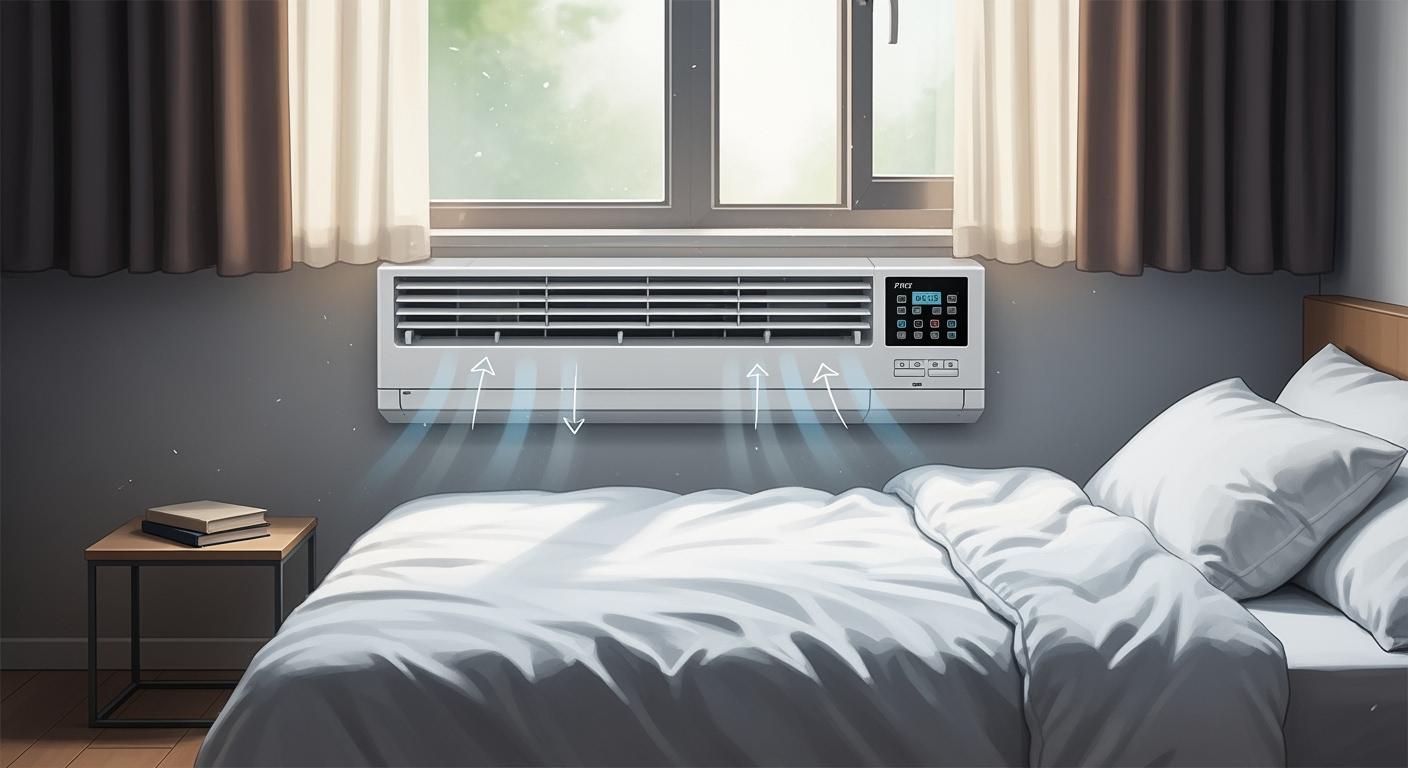
A ptac unit gives you a ductless, self-contained way to heat and cool a room. You often see ptac systems in hotels, apartments, or dorm rooms. When you know how a ptac works, you can choose the right system for your space. Many people like these units because they help improve energy efficiency and increase comfort for anyone in the room.
PTAC Unit Basics

What is a PTAC Unit
A ptac unit helps you change the temperature in one room. You do not need any ducts for this system. The ptac unit comes in one box and fits in a wall. Most ptac units go through an outside wall. This lets the unit bring in fresh air and send heat outside. All the main parts for heating and cooling are inside the box. Some people call it a packaged terminal air conditioner. You can use a ptac unit to heat or cool a room. You do not need to connect it to a big central system.
Tip: If you want easy setup, pick a ptac unit. You just make a hole in the wall and plug it in.
Common Applications
You see ptac units in places with separate rooms. Here are some places where ptac units work well:
Hotels: Each room has its own ptac unit. Guests set their own temperature.
Apartments: Each apartment can have a ptac unit for comfort.
Dormitories: Students use ptac units to change their room’s climate.
Senior living centers: Residents control heating and cooling in their rooms.
Offices: Small offices use ptac units for easy setup and control.
The ptac unit is good for buildings without big duct systems. You can put in a ptac unit fast. You do not need to change the building much. The steps are simple. Cut a hole in the wall, put the ptac unit in, and connect it to power. You do not need extra pipes or vents. This makes ptac units popular for many owners.
Setting | Why Use a PTAC Unit? |
|---|---|
Hotels | Each room has its own control |
Apartments | Easy to install, personal comfort |
Dormitories | Simple climate control |
Senior Living | Comfort for each resident |
Offices | Flexible setup |
If you want heating and cooling without a big project, a ptac unit is a smart choice. You can install it faster than other systems. Each room gets good heating and cooling.
How a PTAC Works
Cooling Operation
When you turn on the cooling mode, the ptac starts to remove heat from your room. The system uses a compressor, coils, and a fan to make this happen. First, the compressor pushes refrigerant through the coils inside the unit. The refrigerant absorbs heat from the air in your room. Then, the fan blows this cooler air back into your space. The ptac sends the heat outside through the wall. You get a comfortable, cool room even on hot days.
You can control the temperature with simple buttons or a digital display. Most ptac units let you pick the exact temperature you want. Some models have energy-saving features. For example, you might find a sleep mode or an energy saver setting. These options help you use less electricity while keeping your room cool.
Tip: Clean the air filter in your ptac every month. This helps the cooling system work better and keeps your air fresh.
Heating Operation
You can use a ptac for heating as well as cooling. When you switch to heating mode, the system changes how it works. Many ptac units use a heat pump. The heat pump pulls warmth from the outside air and brings it into your room. If the weather gets very cold, some ptac units use electric heat strips. These strips make extra heat so you stay warm.
The fan spreads the warm air around your room. You can set the temperature just like you do for cooling. The ptac will keep your room at the level you choose. Some units let you use both the heat pump and electric heat strips for faster heating.
Heating Method | How It Works | When Used |
|---|---|---|
Heat Pump | Moves heat from outside to inside | Mild to cool days |
Electric Heat Strip | Heats air with electric coils | Very cold weather |
If you want both heating and cooling in one system, a ptac unit gives you that option. You do not need a separate heater or air conditioner.
Thermostat and Controls
You control your ptac with a built-in thermostat and simple controls. Most ptac units have a control panel on the front. You can use buttons or a dial to set your desired temperature. Some newer ptac models have digital displays or even remote controls.
The thermostat checks the room temperature and tells the ptac when to turn on or off. This keeps your room at the temperature you like. You can also set the fan speed or choose between heating and cooling modes. Some ptac units let you set a timer. This means you can have the system turn on before you get home or turn off while you sleep.
Note: If you want easy control over your room’s climate, a ptac gives you simple options. You do not need to adjust a lot of settings to get comfortable.
A ptac unit gives you both heating and cooling in one package. You get control, comfort, and energy savings with just a few button presses.
PTAC Components

Compressor and Coils
You find the compressor and coils at the heart of every ptac unit. The compressor moves refrigerant through the system. This refrigerant helps transfer heat in and out of your room. The coils work with the compressor to make this process happen. The indoor coil absorbs heat from your room when you want to cool it. The outdoor coil releases that heat outside. If you use the ptac for heating, the process can reverse. The compressor and coils work together to keep your room at the right temperature.
Tip: Clean the coils regularly. This helps your ptac run better and last longer.
Fan System
The fan system moves air across the coils and into your room. You control the fan speed on most ptac units. A higher fan speed cools or heats your room faster. A lower speed makes less noise. The fan pulls air from your room, passes it over the coils, and then pushes it back out. This keeps the air moving and helps you feel comfortable. The fan system also helps filter dust and small particles from the air.
Here is what the fan system does:
Circulates air for even temperature
Helps with air quality
Supports both cooling and heating modes
Control Panel
The control panel gives you easy access to all ptac settings. You use the panel to set the temperature, change the fan speed, and switch between modes. Some panels have simple dials. Others have digital displays and buttons. Many ptac units offer remote controls for extra convenience. The control panel lets you enjoy individual room control. You can adjust your comfort without leaving your seat.
Note: If you want simple operation, look for a ptac with a clear and easy-to-use control panel.
PTAC vs Other HVAC Systems
PTAC vs Window Units
You might wonder if you should pick a ptac or a window unit for your room. Both systems cool and sometimes heat a single space. A window unit sits in your window frame. A ptac unit fits through a wall. You get more control over where you place a ptac. Window units often block your view and let in outside noise. PTAC units usually seal better and look neater.
Here is a quick comparison:
Feature | PTAC Unit | Window Unit |
|---|---|---|
Placement | Wall | Window |
Noise Level | Lower | Higher |
Room View | Unblocked | Blocked |
Controls | More options | Basic |
Tip: If you want a quiet room and a clear window, choose a ptac.
PTAC vs Central Air
Central air cools or heats your whole home with one big system. You need ducts in your walls and ceilings. A ptac works in one room at a time. You do not need ducts or big changes to your building. Central air costs more to install and fix. You pay for the whole system, even if you only use one room. With a ptac, you save money by controlling each room on its own.
Central air gives even temperature everywhere.
PTAC lets you set each room just how you like it.
Central air needs more space and planning.
If you want to control costs and comfort in single rooms, a ptac is a smart choice.
PTAC vs Mini-Splits
Mini-split systems also cool or heat rooms without ducts. You see a slim unit on your wall inside and a box outside. A ptac unit puts everything in one package through the wall. Mini-splits often cost more to buy and install. PTAC units are easier to replace or move. Mini-splits can be quieter and more energy efficient, but you need a pro to set them up.
Note: If you want a simple, all-in-one system, a ptac gives you easy installation and control.
You can pick the best system for your space by thinking about cost, comfort, and how much work you want to do.
Energy Efficiency and User Comfort
Efficiency Features
You can find many ways that ptac units help you save energy. Most ptac models use advanced technology to boost energy efficiency. Some units have sensors that turn the system off when you leave the room. Others use timers so you can set the system to run only when you need it. Many ptac systems use heat pumps, which use less electricity than electric heaters. Energy-efficient models often have better insulation and improved fans. These features help you use less power and lower your bills. You get energy savings without losing comfort.
Tip: Choose a ptac with an Energy Star label for the best energy efficiency.
Comfort Benefits
You control your comfort with a ptac. You can set the temperature for your room. The system keeps the air at the level you like. You can change the fan speed or use a sleep mode for quiet operation. Some units let you adjust the airflow direction. This helps you feel comfortable in every part of the room. You do not have to worry about hot or cold spots. The ptac gives you user comfort by letting you pick what feels best.
Set your own temperature
Adjust fan speed for quiet or fast comfort
Control airflow direction
Note: Good comfort means you sleep better and work better in your space.
Pros and Cons
You should know the pros and cons before you choose a ptac. Here is a quick table to help you:
Pros | Cons |
|---|---|
High energy efficiency | Can be noisy at high speed |
Easy to install | Needs wall space |
Strong user comfort | May need regular cleaning |
Individual room control | Not for large spaces |
You get strong comfort and energy efficiency with a ptac. You also get easy control and lower energy bills. You may need to clean the filter and check the unit sometimes. Think about your needs before you decide.
You now know that a ptac unit gives you a simple way to heat or cool a single room. You see these systems in hotels, apartments, and offices. You get energy savings and strong comfort with easy controls. If you want a system that works fast and fits your space, consider a ptac. You can enjoy better comfort and lower energy bills.