
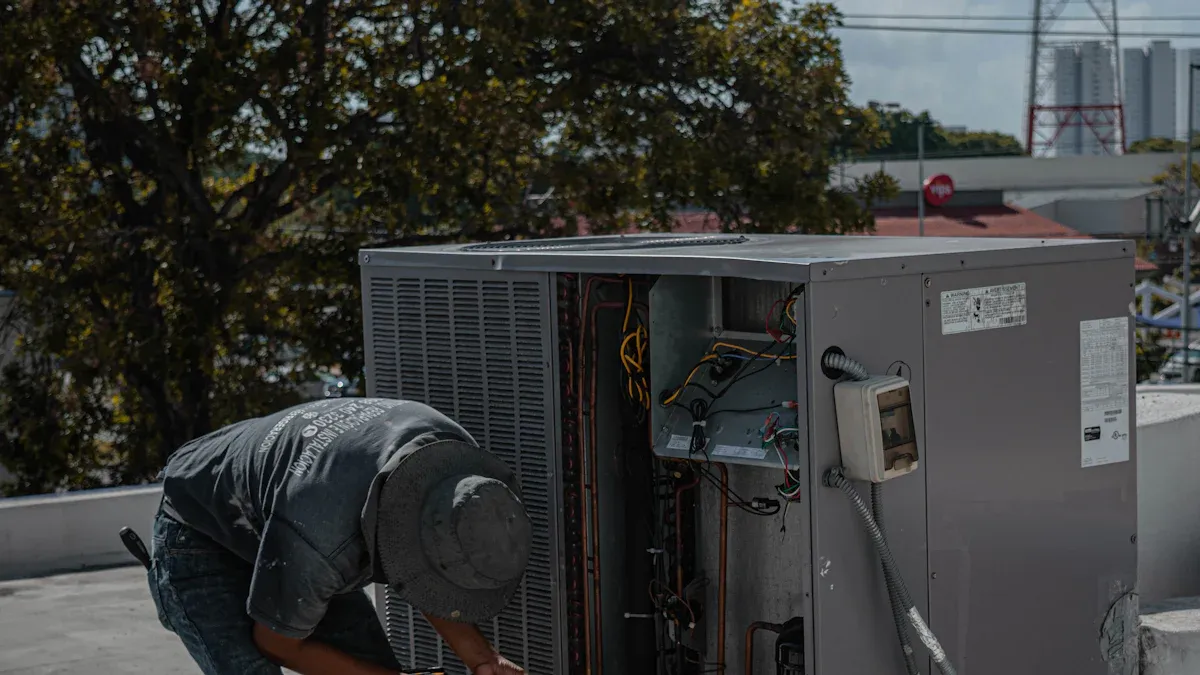
Choosing the right industrial air conditioner helps your business a lot. A good system works better, saves money, and helps the planet. For example:
A hospital in New York got a new HVAC system. It used less energy and saved over $200,000 a year.
New systems use smart technology to save energy and cut pollution. HVAC systems use about 40% of energy in big buildings. Picking the right one is very important. Use this guide to check energy use, cooling power, and upkeep needs for the best choice.
Key Takeaways
Pick an air conditioner with a high SEER rating. It saves energy, money, and helps the planet.
Get the right size air conditioner for your room. A good-sized unit cools well and uses less energy.
Plan your spending wisely. Think about setup, upkeep, and running costs to avoid problems later.
Choose eco-friendly refrigerants to help the environment. Natural ones are better for the Earth and save energy.
Take care of your air conditioner to make it last longer. Clean it often and fix small problems early.
Key Factors in Choosing an Air Conditioner
Energy Efficiency and SEER Ratings
Energy efficiency is very important when picking an air conditioner. Industrial air conditioners use a lot of energy. Choosing one with high efficiency can save money and help the environment. SEER ratings (Seasonal Energy Efficiency Ratio) measure how efficient a system is. A higher SEER rating means the unit uses less energy for the same cooling.
Pick air conditioners with an Energy Star label. These models follow strict energy rules from the Environmental Protection Agency (EPA). They often have smart features like variable-speed compressors. These adjust cooling based on need, making the system work better and last longer.
Focusing on energy efficiency lowers costs and helps the planet.
Cooling Capacity and Space Requirements
Cooling capacity shows how well an air conditioner cools a space. It is measured in BTUs (British Thermal Units). The unit must match your building’s size and needs. A small unit will struggle to cool properly. A large unit may waste energy by turning on and off too much.
To find the right size, think about your building’s size, insulation, and airflow needs. Methods like Manual J and Manual N calculations help figure out cooling needs for different spaces. Tools like ASHRAE standards and simulation software also give accurate cooling estimates.
Choosing the right size ensures better performance and saves energy.
Cost Considerations and Budget Planning
Planning your budget is key when buying an industrial air conditioner. The price of the unit is just one part of the cost. You also need to think about installation, upkeep, and running costs. Preventive maintenance costs about $63 per room each year. It can save up to $132,000 yearly by avoiding big repairs. Reactive maintenance costs more and doesn’t save as much.
Maintenance Type | Cost per Room per Year | Potential Savings per Year |
|---|---|---|
Preventive Maintenance | $63 | $132,000 |
Reactive Maintenance | $96 | N/A |
Energy-efficient systems may cost more at first. But they save money on energy and maintenance over time. Use this guide to plan your budget and get the best value.
Environmental Impact and Refrigerant Choices
Think about the environment when picking an industrial air conditioner. Refrigerants, which cool the air, affect the planet a lot. Some refrigerants cause global warming and harm the climate. For instance, one kilogram of R410a equals two tons of carbon dioxide in greenhouse effects. So, choosing the right refrigerant is key to reducing harm to the environment.
Many systems use synthetic refrigerants like hydrofluorocarbons (HFCs). These don’t hurt the ozone layer but have high global warming potential (GWP). This means they trap heat and worsen climate change. Natural refrigerants, such as ammonia, carbon dioxide, and hydrocarbons, are better for the planet. They have low GWP and don’t damage the ozone layer.
Here’s a simple comparison of refrigerants and their effects:
Synthetic Refrigerants (e.g., HFCs):
High GWP.
Safe for the ozone layer.
Natural Refrigerants (e.g., ammonia, CO2, hydrocarbons):
Low GWP.
Eco-friendly and sustainable.
Natural refrigerants can make your system more energy-efficient. They cool well and lower greenhouse gas emissions. Choosing them saves energy and helps the planet.
Tip: Pick air conditioners with eco-friendly refrigerants and energy-saving features. This helps the system work well and reduces its environmental impact.
Choosing the right refrigerant isn’t just about cooling. It’s about helping the planet and saving energy for the future.
Types of Industrial Air Conditioners
When picking an industrial air conditioner, knowing the types helps. Each type has special features and works best in certain places. Let’s look at the most common ones.
Central Air Conditioning Systems
Central air systems are great for big industrial spaces. They use ducts to spread cool air all over the building. These systems are good for keeping large areas cool and temperatures steady.
Did you know? Central air systems are popular in hot states. They handle extreme heat well and work efficiently.
Many central systems now use advanced technology to save energy. For example, they use eco-friendly refrigerants and variable-speed compressors. Groups like ASHRAE and HRI set rules to make sure these systems perform well.
Feature | Details |
|---|---|
Energy Efficiency | |
Building Models | Predictive tools consider factors like people and humidity to improve cooling. |
Industry Standards | ASHRAE and HRI ensure reliable performance and data accuracy. |
Central air systems are perfect for places needing even cooling, like factories or data centers. But, they can cost more to install than other systems.
Ductless Mini-Split Systems
Ductless systems, also called mini-splits, are flexible options. They work well where adding ducts isn’t possible. These systems have an outdoor unit and indoor units, creating cooling zones.
Tip: Ductless systems are great for old buildings or cooling specific spots without cooling the whole place.
One big benefit is their energy efficiency. They only cool areas you need, saving energy. Their small size also makes them easier to set up and maintain than central systems.
Smart technology has made ductless systems even better. Many now let you control them with smartphone apps. This shows how much people want tech-friendly air conditioners.
Portable Air Conditioners
Portable air conditioners are very flexible. You can move them around to cool different spots. They’re great for temporary cooling or small areas in bigger spaces.
Their cooling power ranges from 5,000 to 20,000 BTUs. This makes them good for small spaces but not for big industrial areas.
Pros:
Easy to move and cool specific rooms.
Simple to set up and maintain.
Cons:
Not powerful enough for large spaces.
Use more energy than bigger systems.
Portable air conditioners work well in workshops, server rooms, or events. They can’t replace central or ductless systems for big cooling needs. But, they’re handy and versatile for smaller jobs.
Evaporative Coolers
Evaporative coolers are a smart, energy-saving way to cool spaces. They don’t work like regular air conditioners. Instead, they use water evaporation to make air cooler. These coolers are great for places with hot, dry weather.
Note: Evaporative coolers work best in dry areas. High humidity makes them less effective.
How They Work
These coolers pull warm air through wet pads. The water in the pads evaporates, cooling the air. Then, the cooler air spreads into the space. This process uses much less energy than regular air conditioners.
Benefits of Evaporative Coolers
Energy Efficiency: They use only 10% of the energy of regular systems.
Eco-Friendly Cooling: Most of their cooling comes from water, not electricity.
Better in Heat: Hot days make them work even better without using extra energy.
Considerations for Industrial Use
Evaporative coolers are perfect for big open areas like warehouses or factories. They keep costs low while cooling well. But, they don’t work well in humid places or where exact temperatures are needed.
Comparing Evaporative Coolers to Other Systems
Feature | Evaporative Coolers | Traditional Air Conditioners |
|---|---|---|
Energy Use | Low (10% of regular systems) | High (90% more energy used) |
Cooling Method | Water evaporation | Vapor compression |
Hot Weather Efficiency | Works better as it gets hotter | Uses more energy in high heat |
If your building is in a dry area, these coolers are a good choice. They save energy and help the environment while cooling effectively.
Tip: Use evaporative coolers with ductless systems for better cooling. This works well in areas where humidity might lower performance.
AC Buying Guide Basics: Sizing and Installation

How to Find the Right Size
Picking the right size air conditioner is very important. A small unit won’t cool well, and a big one wastes energy. The right size keeps your space cool and saves energy.
Here’s how to figure out the right size:
Online tools give quick estimates but may miss details.
Experts can check insulation, airflow, and layout for accuracy.
If you want to calculate it yourself, follow these steps:
Measure the space in square feet.
Multiply that number by 12,000 for BTUs needed.
Add 380 BTUs per person, 1,200 BTUs for each kitchen, and 1,000 BTUs for each window.
Divide the total BTUs by 12,000 to find the tons needed.
These steps help you pick the best air conditioner size for your space.
Why You Need Professional Installation
Getting a professional to install your air conditioner is very important. Bad installation can cause problems like gas leaks, shocks, or even fires. Experts follow safety rules to avoid these dangers.
Most warranties need professional installation to stay valid. If a certified technician doesn’t install it, you might lose repair coverage.
Professionals also make sure the system works its best. They connect, test, and adjust it for top performance. This saves energy and helps the unit last longer.
Hiring a pro ensures your air conditioner is safe and works well. It saves you money and trouble over time.
Maintenance and Longevity of Industrial Air Conditioners
Importance of Regular Maintenance Plans
Regular care keeps your industrial air conditioner working well and lasting longer. Without it, dirt and small problems can grow into big, costly repairs. A clean and cared-for unit cools better and uses less energy, saving money over time.
Studies show that good maintenance plans can make industrial air conditioners last 20-40% longer. Here’s how maintenance affects equipment life:
Maintenance Type | Effect on Equipment Life |
|---|---|
Comprehensive CBM Programs | Adds 20-40% more years |
Having a maintenance plan stops surprise breakdowns and keeps your system running smoothly. It also helps save energy, which lowers costs and is better for the planet.
Tip: Regular check-ups and cleaning catch small problems early.
Tips for Extending the Lifespan of Your Unit
Taking care of your industrial air conditioner is easy with simple steps. These tips help your system last longer and work better:
Clean condenser coils often to stop dirt from lowering cooling power.
Keep evaporator coils clean to avoid overheating and breakdowns.
Fix leaks quickly to save energy and prevent damage.
Clear drains to stop water from harming the unit.
Check ducts for leaks to reduce strain on the system.
Replace old units with newer, energy-saving models when needed.
Use a programmable thermostat to save energy and reduce wear.
Get yearly tune-ups to keep the system efficient and spot issues early.
These steps help your air conditioner stay reliable for many years. Regular care and small upgrades improve cooling, save energy, and cut costs.
Note: A cared-for system lasts longer, works better, and keeps bills lower.
Recommended Brands and Features for 2025
Top Brands to Consider
Picking a trusted brand ensures your air conditioner works well. In 2025, Carrier, Daikin, and Trane are top choices. These brands focus on saving energy and helping the environment. They are great for businesses wanting to cut costs and pollution.
For example, Trane was named the most trusted brand in 2025. This award came from over 8,800 customer reviews. It shows how reliable and popular Trane is. Carrier and Daikin are also known for their smart and eco-friendly systems. They follow strict environmental rules.
The industrial HVAC market is growing fast. From 2025 to 2032, it’s expected to grow by 6.6% each year. By 2032, it could be worth $196.40 billion. This shows how much people want high-quality systems from these brands.
Tip: Learn about these brands to choose the best air conditioner for your needs.
Must-Have Features (e.g., Smart Controls, Noise Reduction, Eco-Friendly Options)
New air conditioners have cool features that make them better. Smart controls let you change settings using apps. About 42% of new units now have this feature. It makes managing your system easier.
Keeping noise low is also important. Over 26% of new models are built to stay quieter than 50 dB. This makes them perfect for quiet places like schools or libraries.
Eco-friendly options are a must. Around 33% of companies now use low-GWP refrigerants. These help the planet by cutting harmful gas emissions while cooling well.
Smart thermostats and AI tools are in 31% of new systems. They save energy and help your air conditioner last longer. These features lower costs and improve performance.
Note: Look for these features to get the best system for your space.
Cost Breakdown for Industrial Air Conditioners
Initial Purchase Costs
Buying an industrial air conditioner costs a lot at first. The price depends on the size, cooling power, and special features. Bigger systems with more BTUs and energy-saving tech cost more. But they save money later by using less energy.
A life-cycle cost analysis (LCCA) helps check total ownership costs. This method looks at the upfront price and long-term costs like maintenance and energy use. Comparing options shows which system gives the best value.
Aspect | Description |
|---|---|
Method | LCCA checks total costs of owning an air conditioner. |
Focus | It includes purchase price, upkeep, and energy expenses. |
Comparison | LCCA compares choices to find the most cost-effective option. |
Spending more on a good system now means better performance and longer use. It’s a smart investment for your business.
Installation Costs
The cost to install an air conditioner depends on the type and setup. Central air systems need ducts, which makes them cost more to install. Ductless mini-split systems are simpler to set up and cost less. Portable air conditioners are the cheapest since they need little installation.
Hiring professionals to install your system is very important. Bad installation can cause leaks or poor cooling. Certified technicians make sure the system works well and meets warranty rules.
Tip: Plan for installation costs in your budget to avoid surprises.
Maintenance and Operational Costs
Taking care of your air conditioner keeps it working well. Maintenance costs are about 15% to 40% of production expenses. Cleaning coils and checking refrigerants stop big problems. Predictive maintenance saves 8% to 12% compared to preventive care and up to 40% compared to fixing breakdowns.
Evidence Description | Value |
|---|---|
Maintenance costs as part of production expenses | 15% – 40% |
Cost of breakdowns vs. regular maintenance | 10 times higher |
Skipping maintenance future cost impact | $1 skipped = $4 later |
Predictive maintenance savings over preventive care | 8% – 12% |
Predictive maintenance savings over reactive care | Up to 40% |
Running costs depend on how efficient the system is. Energy-saving models with eco-friendly refrigerants cut costs and help the planet.
Note: Regular care and energy-efficient systems save money and make your air conditioner last longer.
Picking the best industrial air conditioner needs good planning. Look at energy efficiency, the right size, and the system type. Keeping up with maintenance helps it last longer and saves money. Use tools like expert reviews and industry guides to compare choices. For instance, ductless systems save energy and cool well without needing ducts.
Tip: Use a buying guide to check features and ask experts for help with installation. This makes sure your system works well and cools your space properly.
FAQ
How can I find the right air conditioner size?
Measure your building’s square feet and use BTU formulas. But, hiring an expert is better. They check insulation, airflow, and layout. This avoids wasting energy and ensures proper cooling.
How often should I maintain my industrial air conditioner?
Do maintenance two times a year. Regular care keeps it working well. Clean coils, check refrigerants, and inspect ducts during these visits. This stops breakdowns and helps it last longer.
Are eco-friendly refrigerants a good choice?
Yes, they are better for the planet and follow rules. They also save energy, cutting costs over time. Natural refrigerants like ammonia or CO2 are great for businesses and the environment.
Can I install an industrial air conditioner myself?
No, you need a professional to install it. Experts make sure it’s safe and set up right. They also follow warranty rules. Bad installation can cause leaks or damage the system.
How long does an industrial air conditioner last?
With good care, it can last 15-20 years. Clean it often, fix problems quickly, and use energy-saving features. These steps help it work well and last longer.