

You want the best hotel HVAC system for your hotel. The right system depends on your building size. It also depends on your budget. You must think about guest comfort needs. You should consider how you run daily operations. HVAC is very important for guest happiness. It also affects your monthly energy bills. Here are some facts:
Percentage | Description |
|---|---|
of hotel guests say bad heating, ventilation, and air conditioning would make them not stay at a hotel again | |
73% | of high-end hotel and restaurant guests think ventilation and air conditioning should not be noticed in luxury hotels and restaurants |
HVAC systems can use 50-70% of hotel energy. You need to learn about PTAC units, VTAC units, and VRF systems. You also need to pick which hotel air conditioner fits your hotel’s needs. Make smart choices to keep guests happy and save money.
Hotel HVAC System Types
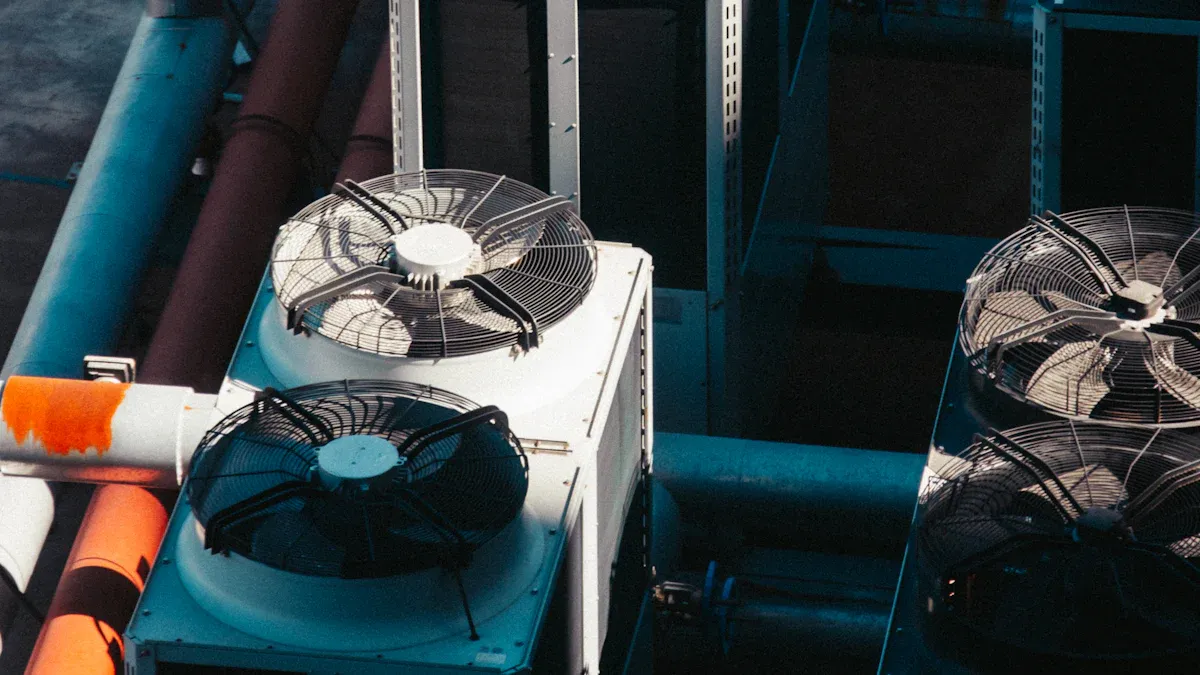
Picking the right hotel HVAC system helps you keep guests happy. It also helps you save money. There are a few choices. Each system is good for different hotel sizes and budgets.
PTAC Units
PTAC units are used a lot in hotels. You find these systems in guest rooms. PTAC means Packaged Terminal Air Conditioner. You put one unit in each room. You do not need to add ducts. PTAC units are cheaper to put in. You can set the temperature in every room. Taking care of them is easy. You just clean the filters and coils. PTAC units are great for small hotels and motels.
Tip: PTAC units are easy to replace and fix. If one breaks, you can change it without bothering other rooms.
VTAC Units
VTAC stands for Vertical Terminal Air Conditioner. These systems are for single rooms or small suites. VTAC units fit in closets or small spots. Bigger hotels need more units. Putting them in is harder than PTAC. You clean the coils and check wires every few months. VTAC units cost more than PTAC but less than big central systems.
Unit Type | Installation Complexity | Maintenance Frequency |
|---|---|---|
PTAC | Low | |
VTAC | Medium | Medium |
VRF Systems
VRF means Variable Refrigerant Flow. You use VRF systems in big hotels and resorts. These systems let you set the temperature in many places. VRF systems save energy. They cost more to put in. You get strong zoning and good part-load efficiency. VRF systems are best for hotels with lots of rooms and high comfort needs.
System Type | Initial Installation Cost | Energy Efficiency |
|---|---|---|
VRF | Strong zoning and part-load efficiency |
Other Options
You can pick other hotel air conditioner systems. Central air conditioners cool many rooms with ducts. These cost more to put in. Through-the-wall air conditioners work in buildings without central AC. You need a pro to put them in. Hotel mini-split units are quiet and save energy. Some systems use new technology to work better. Eco-friendly HVAC systems help you protect the environment.
Primary Use Case | Cost Consideration | |
|---|---|---|
Central Air Conditioners | Best for air conditioning multiple rooms through a duct system. | More expensive due to complex installation. |
Hotel mini-split units | Quiet operation and energy savings for individual rooms. | Moderate cost, easy installation. |
Through-the-Wall Air Conditioners | Suitable for buildings without central AC, installed over windows. | Complex installation, requires professional help. |
You should match your hotel HVAC system to your building size, budget, and what guests need. Every system has good and bad points. You can find the best one by looking at cost, how well it works, and how much care it needs.
Key Factors in Hotel HVAC Selection
Picking the right hotel HVAC system means thinking about many things. Each thing changes how your hotel works and how guests feel. You want to make good choices. These choices should help guests feel comfortable. They should also help you save money. A good system will last for many years.
Guest Comfort & Room Control
Guest comfort is very important. Guests like to change the temperature in their rooms. This makes them feel at home. If guests cannot control the room, they may complain. Many people want to set the heat or cool air how they like. Smart HVAC systems can change settings for each guest. These systems know when someone is in the room. Good temperature control makes guests happy. It can also make your hotel more popular.
Note: Guests notice if a room is too hot or cold. Letting them change the temperature makes their stay better.
You should also care about indoor air quality. PTAC and VTAC systems use UV-C light and MERV 13 filters. These help cut down on dust and germs in the air. Makeup air technology brings in fresh air. This keeps rooms healthy and nice.
Energy Efficiency (SEER, HSPF)
Energy efficiency is important for hotels. Good systems use less energy. This means you pay less for power. It also helps guests who care about the planet. SEER shows how well a system cools. HSPF shows how well it heats.
Rating Type | Average Range | Efficiency Implication |
|---|---|---|
SEER | 13 to 21 | Higher SEER = Greater Efficiency |
HSPF | 8 or higher | Higher HSPF = Greater Heating Efficiency |
A high SEER rating means the system cools rooms with less energy. A high HSPF rating means it heats rooms with less energy. Picking a system with good ratings saves energy and works better. You also help the earth by using less power.
Installation & Upfront Cost
You need to think about how much it costs to put in a new system. Some systems, like PTAC units, are cheaper to install. Others, like VRF systems, cost more at first. But they save more energy and last longer. Think about your budget and how long you will use the system. Spending more now can mean lower bills and fewer fixes later.
PTAC units: Cheaper to put in, easy to swap out.
VTAC units: Medium price, fits in small places.
VRF systems: Cost more at first, good for big hotels, save energy.
Tip: Think about the first price and future savings. A good system saves money over time.
Noise Levels
HVAC noise can bother guests and cause bad reviews. You want a quiet system. It should not wake people up or stop them from relaxing. PTAC units can be loud, from 45 dBA to 61 dBA. VRF systems are much quieter, from 25 dBA to 35 dBA. Fan coil units are also quiet, at 23-30 dBA.
Noise over 30 dB in the day or 25 dB at night can wake people up.
Guests want quiet rooms, especially in fancy hotels.
System Type | Typical Noise Level (dBA) | Guest Impact |
|---|---|---|
PTAC | 46 – 61 | Can be disruptive |
VRF | 25 – 35 | Very quiet, enhances comfort |
Fan Coil | 23 – 30 | Very quiet |
A quiet system helps guests sleep and relax. This can lead to better reviews.
Maintenance Needs
Taking care of your HVAC system keeps it working well. It also stops big problems. You should clean or change air filters. Check the ducts, test the thermostat, and make sure drains work. Doing these things saves money and keeps guests happy.
Maintenance Task | Impact on Operational Costs |
|---|---|
Cleaning and replacing air filters | Prevents costly repairs and improves energy efficiency |
Inspecting and cleaning ductwork | Ensures system efficiency and guest comfort |
Testing thermostat functionality | Maintains optimal temperature control |
Ensuring proper drainage and condensate | Prevents system failures and costly repairs |
Assessing HVAC unit condition | Schedules regular servicing to avoid breakdowns |
Preventative maintenance stops big problems before they start.
Predictive maintenance uses smart tools to find problems early.
Easy systems to care for save time and money.
Note: Good systems with simple care plans stop guest complaints. They also help your hotel run well.
When you look at these main things—guest comfort, energy use, cost, noise, and care—you can pick the best hotel HVAC system. Focus on systems that work well for a long time. This will make guests and your budget happy.
Pros and Cons of Hotel HVAC Options
PTAC Pros & Cons
PTAC units are in lots of hotels. These systems let you change the temperature in each room. You can put them in fast and save money at first. PTAC units are small, so they fit in tight spots. You can pick a good PTAC brand for better heat and reliability.
Here is a table that shows the main advantages and disadvantages of PTAC units:
Advantages | Disadvantages |
|---|---|
Cost-effective installation | Higher energy consumption |
Individual room temperature control | Noise levels |
Compact design | Aesthetic considerations |
Energy efficiency | Maintenance requirements |
PTAC units give good heating and cooling for each room. They are great for small hotels and motels. These units can be noisy. You need to clean and check them often to keep them working well. PTAC units use more energy than some other systems, so you pay more for power. Most PTAC units last 10 to 15 years if you take care of them.
Tip: You can swap out a PTAC unit in one room. This does not bother other rooms. It helps keep guests happy and your hotel running well.
VTAC Pros & Cons
VTAC units spread air better and keep rooms at the same temperature. You put them in closets or small spaces, so rooms look nice. VTAC units use ducts to move air and heat better. These systems are quieter than PTAC units, so guests sleep well.
VTAC units have more BTUs. You can use them in bigger rooms or suites. It takes more time and skill to put in VTAC units. Taking care of them is harder than PTAC units, but you get better comfort and reliability. VTAC units cost more at first, but they work better in large spaces.
VTAC units last about 10 to 15 years if you keep them up. They give good heating and cooling, and guests like the quiet.
Note: VTAC units make rooms comfy and look good. You need to plan for harder installation and regular care.
VRF Pros & Cons
VRF systems save energy and give you advanced control. You can set different temperatures in many places. This keeps guests happy in big hotels. VRF systems save space and are quiet. You get strong heating and cooling, and you can use them in big buildings.
Here is a table that shows the main pros and cons of VRF systems:
Pros | Cons |
|---|---|
Energy efficiency | Installation complexity |
Zoning flexibility | Initial cost |
Scalability | Maintenance requirements |
Quiet operation | Refrigerant regulations and potential environmental impact |
Space-saving design | N/A |
Advanced control systems | N/A |
VRF systems cost more to put in, but you save on energy bills. They last 15 to 25 years if you take care of them. You need skilled workers to put them in and keep them working. You must follow rules for refrigerants to help the environment. VRF systems give the best performance and reliability for big hotels and resorts.
Tip: VRF systems let you control heat and cool in many areas. They are quiet and save energy, but you need to plan for higher costs and regular care.
Hotel HVAC Comparison Table

You want to know how each system is different. A table makes it easy to see the features. You can use this chart to help pick the best hotel HVAC system.
Feature | PTAC Units | VTAC Units | VRF Systems |
|---|---|---|---|
Typical Use | Small hotels, motels | Suites, mid-size | Large hotels, resorts |
Room Control | Individual | Individual | Advanced zoning |
Energy Efficiency | Low to moderate | Moderate | High |
Noise Level | Moderate to high | Low to moderate | Very low |
Installation Cost | Low | Medium | High |
Maintenance | Simple, frequent | Moderate | Skilled, less frequent |
Lifespan (years) | 10–15 | 10–15 | 15–25 |
Guest Comfort | Basic | Good | Excellent |
Aesthetics | Visible unit | Hidden in closet | Discreet, flexible |
Tip: You can change a PTAC unit fast. This means guests can use the room right away.
You should think about saving energy when you pick a system. VRF systems help you save more money over time. Here are some facts:
VRF systems can cut energy bills by 14–30% compared to PTAC units.
In hot cities like Miami, you can save up to 32%.
VRF systems give you better comfort and lower bills. PTAC and VTAC units are good for smaller hotels. You need to think about your money, what guests want, and how big your hotel is before you choose.
Note: Quiet HVAC systems help guests sleep well. VRF systems are the quietest.
Use this table to help you decide. You can find the best system for your hotel and your goals.
Real-World Feedback & Case Studies
When you pick a hotel HVAC system, you want to know how it works in real hotels. Many hotel managers talk about their experiences with PTAC units. Here is what they say: PTAC units let guests change the temperature in their rooms. This makes guests feel good and stops complaints. These units do not cost a lot and use less energy. You save money and guests are happy. Quiet PTAC units help guests sleep better. They also leave good reviews. If a PTAC unit breaks, you can fix or swap it fast. This helps your hotel run well and stay reliable. PTAC heat pumps let guests pick their own temperature. You get fewer calls about room problems. Guests like having control. You see better online reviews and less trouble. HVAC problems are one of the top three guest complaints. PTAC units keep the room at the right temperature and make guests happier.
You can also learn from hotels that use VRF systems. Here are some real examples: A hotel with 45 rooms changed to a Toshiba VRF system. The hotel saved 20% on energy bills. Guests felt more comfortable. The hotel got more good reviews and more bookings. The Bicycle Hotel and Casino put in 183 ductless VRF units. The hotel saved over $64,000 when installing them. Guests liked the quieter rooms and gave better feedback. VRF systems helped hotels use less energy and made guests more comfortable. Hotels got more good reviews and had more people stay.
HVAC systems are very important for guest happiness in hotels. They help keep rooms comfy, clean, and nice. This makes guests give better ratings. New HVAC systems let you control the room temperature exactly. This is a big reason why guests feel good. Saving energy and taking care of the system also helps guests have a better stay.
You can see that picking the right hotel HVAC system helps your hotel work better. It also makes guests feel at home and keeps your business strong.
Recommendations by Hotel Type
Small Hotels & Motels
You need a system that fits your budget. It should also keep guests comfortable. Most small hotels and motels pick PTAC units. These cost less to put in. You can set the temperature in each room. This helps guests feel at home. VTAC units are a good choice if you want quieter rooms. They also save more energy. The table below shows how these systems compare:
HVAC System Type | Cost | Energy Efficiency |
|---|---|---|
PTAC | Most affordable upfront option, popular for budget-conscious projects. | Less energy efficient, individually controlled leading to inconsistent temperature regulation. |
VTAC | Moderately priced, higher than PTAC but lower than VRF. | More energy-efficient than PTAC, offers centralized control for better temperature management. |
VRF | Highest initial cost, complexity and professional installation required. | Most energy-efficient, offers precise temperature control and can heat and cool simultaneously. |
Tip: PTAC units help small hotels save money. They also let guests pick their room temperature.
Mid-Size Hotels
You want a system that is not too expensive. It should also give comfort and save energy. Many mid-size hotels use VRF systems. These systems save more energy and let you control the temperature in different places. VRF systems can heat and cool at the same time. Rooms are quieter and energy bills are lower. PTAC units are cheaper but can be noisy. They may not work for fancy hotels.
VRF systems save energy and let you control zones.
PTAC units cost less but make more noise.
VRF systems help you heat and cool different spaces.
Large Hotels & Resorts
You need to think about comfort, clean air, and easy care. Large hotels and resorts use big air conditioning systems. These can be rooftop units, VRF systems, or chiller and boiler systems. These systems can handle lots of rooms. They also give you advanced control. Rooms stay quiet and air is cleaner. Guests can set their own temperature.
Quiet systems help guests relax.
Good filters keep the air clean.
Guests like to control their room temperature.
Easy care saves money.
High SEER ratings and Energy Star help lower costs.
Big hotels need systems for many rooms and big spaces. Pick a hotel HVAC system that fits these needs. It should also help you save energy.
Boutique & Luxury Hotels
You want to make a special and healthy place for guests. Boutique and luxury hotels use advanced ventilation and air cleaning systems. These systems change the air based on how many people are in the room. They also look at indoor and outdoor air. You can use HEPA purifiers with carbon filters. These clean the air and remove smells.
“Advanced ventilation systems now offer a smarter alternative, adjusting air intake and exhaust dynamically by considering indoor and outdoor conditions, occupancy levels, and HVAC load. This adaptive method enhances IAQ, saves energy, and maintains consistent comfort across different situations.”
“High efficiency particulate air (HEPA) purifiers, equipped with activated carbon filters, can be placed in key zones to capture fine particles, odors, and VOCs.”
“Air quality isn’t just an amenity—it’s a necessity for modern travelers. As wellness tourism continues to evolve, hotels that prioritize air quality will become leaders in guest satisfaction and profitability.”
You should pick systems that are quiet and clean the air well. They should also let you heat and cool rooms as needed. These things help your hotel stand out. They also attract guests who care about health.
You need to pick a hotel HVAC system that fits your hotel size, how much money you have, and what guests want. Think about how easy it is to change, how loud it is, how much energy it uses, and how hard it is to take care of. Checking your system often and cleaning the filters helps it work better. Some problems when upgrading are that it can cost a lot and be hard to add to what you already have.
Challenge | Solution |
|---|---|
Careful planning | |
Integration complexity | Skilled technicians |
Ask a professional to look at your hotel. This helps you pick the best system.