
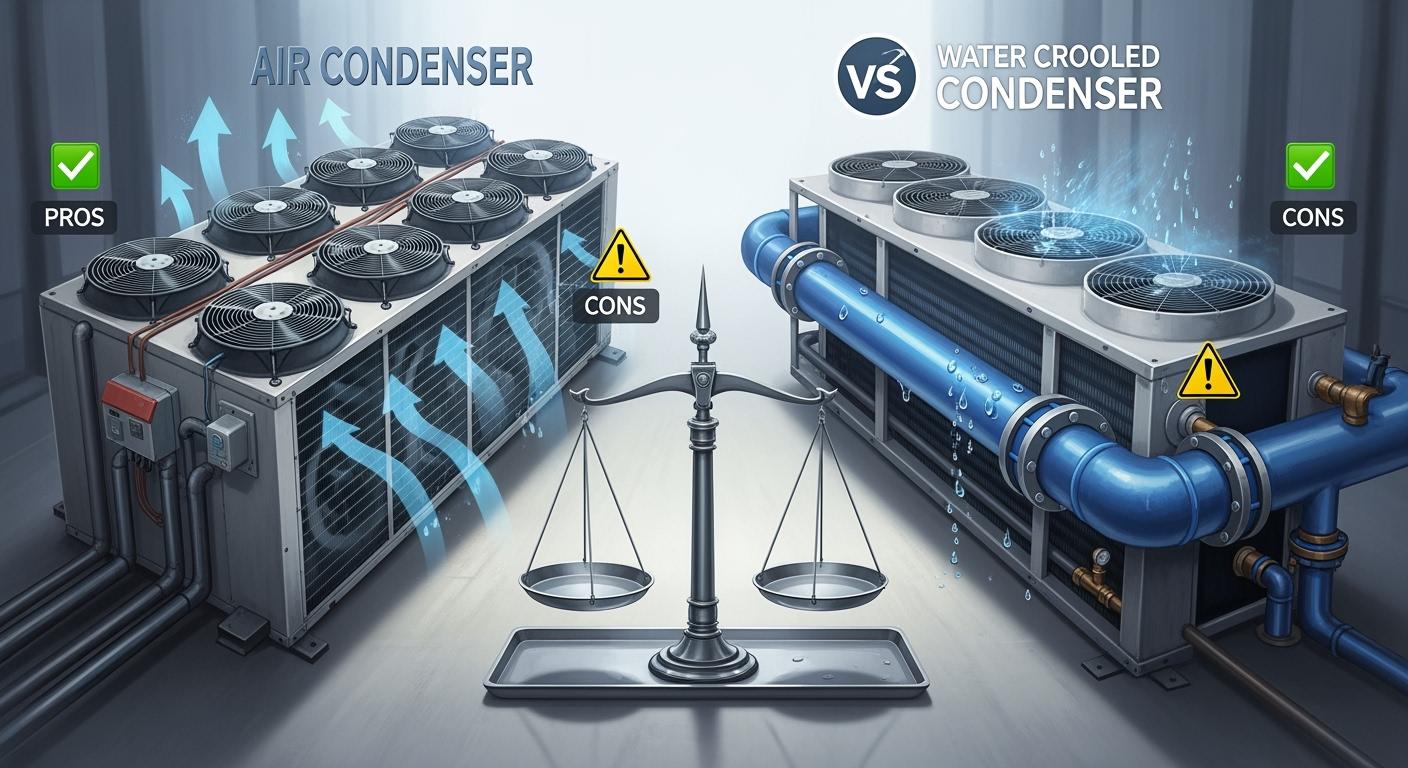
You will see that air-cooled, water-cooled, and evaporative condenser units cool in different ways. Air-cooled units use air to take away heat. Water-cooled units use water to do this job. Evaporative units use both air and water to cool things down. The table below shows where you usually find each type:
Common Applications | |
|---|---|
Air Conditioning Units | Homes, businesses, and factories |
Refrigeration Units | Grocery stores, cold storage, restaurants, food plants |
Heat Pump Units | Homes and some business buildings |
Industrial Condensing Units | Factories, medicine making, food plants |
Commercial Condensing Units | Restaurants, hotels, stores, office buildings |
Residential Condensing Units | Houses, HVAC systems, fridges, freezers |
You pick a condenser unit based on what you need. For big buildings, you might use chillers. Most homes use air-cooled units. How your air conditioner works also changes how much energy it uses:
Single-stage systems use more energy because they turn on and off a lot.
Two-stage systems save energy by running slower most of the time.
Variable-speed systems can use up to 75% less energy than single-stage ones.
Variable-speed systems keep the temperature even.
They are quiet when they run.
They take out more moisture, so you feel cooler and better.
You can pick the best condenser unit by thinking about what you need, how much energy you want to use, and how much work you want to do to keep it running.
Types of Condenser Units

There are three main types of condensers in cooling systems. These are air-cooled, water-cooled, and evaporative. Each one is built differently. Each type works best in certain places.
Air-Cooled Condenser Unit
Air-cooled condenser units use fans to blow air over coils. The air takes heat away from the refrigerant. You see these units in small cold rooms and supermarkets. They are also used where water is hard to find. The design is simple and does not need a water system. You can put them in quickly. They cost less at first.
Tip: Clean air-cooled units often to stop dust and dirt. This keeps air moving well. Check electrical parts and wires often too.
Feature | Air-Cooled Condenser Unit |
|---|---|
Main Application | Small cold rooms, food stores, remote sites |
Efficiency | Lower than water-cooled or evaporative |
Maintenance | Easy, but needs frequent cleaning |
Water-Cooled Condenser Unit
Water-cooled condenser units use water to take away heat. These units work well in big buildings and food plants. They are good for places with steady water. The design is smaller and moves heat better than air-cooled units. These units save more energy, especially when it is hot. Water-cooled systems cost more to set up. But they save money later because they use less energy.
Check water-cooled units for water quality. Add chemicals to stop rust and scale. Watch for leaks too.
Feature | Water-Cooled Condenser Unit |
|---|---|
Main Application | Large cold rooms, food plants, pharma storage |
Efficiency | High, up to 49% energy savings in some climates |
Maintenance | Needs water treatment and checks |
Evaporative Condenser Unit
Evaporative condenser units use both air and water to cool the refrigerant. You find these units in big warehouses and food factories. They are also used where people want to save water and energy. These units work best in hot, dry places. They use less airflow than air-cooled types. In dry areas, they can cut energy use by over 20%.
Look at evaporative units for scale and things growing inside. They need less water treatment than water-cooled units. But they need more than air-cooled ones.
Feature | Evaporative Condenser Unit |
|---|---|
Main Application | Industrial storage, food plants, large warehouses |
Efficiency | Very high in hot-dry climates |
Maintenance | Check for scale and biological growth |
Pick the right condenser by thinking about your space and water supply. Think about how much care you want to give it. Each type has different energy savings and care needs. When you compare them, air-cooled units are easy to care for. Water-cooled units save energy. Evaporative units work best in dry places.
Pros and Cons of Air-Cooled Condenser Unit
When you look at air-cooled condenser units, you see good and bad things. Knowing the pros and cons helps you pick the right unit for your needs.
Advantages of Air-Cooled
There are many good things about air-cooled condenser units:
Energy Efficiency: These units use less electricity than water-cooled systems. This means your energy bills can go down.
Low Maintenance Requirements: You do not need pipes or a steady water supply. You spend less time and money fixing them.
Environmental Sustainability: These units save water because they do not need it to cool. Many air-cooled units use eco-friendly refrigerants, so they help the planet.
Simple Installation: You can put these units in fast. You do not need a big water system.
Flexible Placement: You can put air-cooled units in lots of places, even where water is hard to find.
Tip: If you want a condenser unit that is easy to take care of and does not need much water, air-cooled units are a smart pick.
Disadvantages of Air-Cooled
You should also think about the problems with air-cooled condenser units. The table below shows some common issues:
Disadvantage | Description |
|---|---|
Large footprint | You need a lot of space for heat to leave. The unit takes up more room than other types. |
Performance loss in high heat | The unit does not cool as well on very hot or windy days. |
Higher noise levels | The fans can be loud, especially in quiet places. |
Higher initial cost | You pay more at first than for some water-cooled units. |
You might spend more to run the unit over time. |
You may also have these problems:
Lower cycle efficiency. The unit works at higher pressure, so it does not cool as well as water-cooled types.
Increased fossil fuel use. The unit may need more power, which can cause more air pollution.
Large installation area. You need a big space for the unit and for air to move around it.
Performance drops in extreme weather. High heat and strong winds can make the unit cool less. For example, strong winds can lower power by 10% or more for every 22 mph wind. Sometimes, cooling power dropped by over 1000 MW during hot and windy days.
Note: You should check the space and weather where you live before you pick an air-cooled condenser unit. These things can change how well the unit works.
Pros and Cons of Water-Cooled Condenser Unit
Water-cooled condensers are important in many cooling systems. You see them in big buildings and factories. They are used where strong cooling is needed. These units work well and last a long time. But they need more care and attention than other types.
Advantages of Water-Cooled
Water-cooled condensers have many good points. You find them in hospitals, hotels, and large offices. They work with chillers to cool big spaces.
High Cooling Efficiency: Water-cooled condensers move heat better than air-cooled ones. They keep things cool even when it is hot outside.
Long Lifespan: These units last a long time. Water cools the system gently, so it does not wear out fast.
Quiet Operation: Water-cooled condensers are quiet. You do not hear loud fans or motors.
Space Saving Design: These units do not need much outdoor space. You can put them inside or on rooftops.
Stable Performance: They keep cooling well during heat waves. You get steady cooling all year.
Tip: Pick water-cooled condensers for hot places and big buildings.
Water-cooled condensers handle heavy loads better than air-cooled ones. They keep the temperature steady. This helps protect machines and products. Many managers say these units are reliable if you take care of them.
Disadvantages of Water-Cooled
There are some problems with water-cooled condensers. You should know these before you choose one.
Disadvantage | Description |
|---|---|
Fouling and Scaling | Dirt and minerals build up inside. This makes it harder to move heat and uses more energy. |
Corrosion | Water can hurt metal parts. You might see leaks and less cooling. This can break the system. |
Vacuum Loss | Losing vacuum pressure makes the unit work worse. You might see higher pressure and less cooling. |
Water Flow Imbalance | If water does not flow right, the unit heats up. You may notice changes in temperature. |
Leakage | Seals and pipes can wear out. Water loss makes the unit less efficient and can hurt other parts. |
You must treat the water to stop scaling and corrosion. If you do not, the unit can break and cost a lot to fix. You also need pumps, cooling towers, and water treatment. These make the system cost more and harder to run.
Water-cooled condensers need regular checks. You must look for leaks and test the water. Clean out minerals often. If you skip maintenance, the unit will not work as well and bills can go up.
Type | Maintenance & Reliability |
|---|---|
Air-Cooled | You spend less time on care. You do not need water treatment or towers. Fewer parts mean they break less. Dust can block coils. |
Water-Cooled | You have more parts like towers and pumps. You must treat water to stop problems. You spend more time on care, but the unit lasts longer. |
Note: Water-cooled condensers work best if you have steady water and a team for care. If you want less work, air-cooled units may be better.
Think about water use, care needs, and how hard the system is to run. Water-cooled condensers give strong cooling and last a long time. But you must keep up with cleaning and care. These units are best for places with high cooling needs and skilled workers.
Pros and Cons of Evaporative Condenser Unit
Advantages of Evaporative
Evaporative condenser units cool things well and save energy. People use these units where they want to keep things cold but not use too much power. These units use air, water, and refrigerant together to take away heat. This makes them work really well.
Here is a table that shows the main benefits:
Benefit | Description |
|---|---|
Energy Efficiency | Evaporative condensers use air, water, and refrigerant to remove heat efficiently, saving energy. |
Environmental Impact | They utilize eco-friendly systems, helping to reduce environmental harm and comply with regulations. |
Effective Cooling Mechanism | The process of evaporation combined with air cooling effectively lowers temperatures. |
Improved Performance | Special designs enhance performance and reduce operational costs. |
Increased Coefficient of Performance | Incorporating evaporative condensers can improve performance by up to 211%. |
Energy Savings | They can lead to energy savings of up to 58% by reducing the necessary temperature difference. |
You can find more good things here: You help your cooling system last longer. You can save up to 58% on your energy bills. You get strong cooling, even when it is hot outside.
Tip: If you want to use less energy and help the planet, an evaporative condenser unit is a smart pick.
Disadvantages of Evaporative
Evaporative condenser units also have some problems you should know about. These units need regular care to keep working well. If you do not clean them, you might see problems that make them work worse.
Here is a table that lists the main drawbacks:
Drawback | Description |
|---|---|
Scale Formation | Accumulation of minerals in water leading to decreased efficiency and higher risk of failure. |
Algae Growth | Affects performance and poses health concerns; thrives in moist environments. |
Overheating | Can cause system shutdowns due to poor maintenance or improper installation. |
Leaks | Water and refrigerant leaks due to wear and tear or faulty components. |
Inadequate Air Circulation | Blockages or fan issues affecting performance; requires regular checks. |
Freeze-ups | Cold weather can cause system damage; proper winterization is necessary. |
You might have these problems: Minerals in water can build up and block the system. Algae can grow inside and cause health problems. Cold weather can freeze parts if you do not protect them. Fans and airways can get blocked, so you need to check them often.
Note: You should plan to clean and treat the water often. This helps your evaporative condenser unit last longer and work better.
Air Conditioner Operation Modes
When you pick an air conditioner, you should know how it works. The way your system runs can change how well the condenser unit cools. You can choose single-stage, two-stage, or variable-speed air conditioners. Each one gives you different comfort, savings, and care.
Single-Stage Air Conditioners
Single-stage air conditioners turn on at full power or turn off. They cool fast, but do not change for small temperature shifts. The condenser unit works hard every time you use it. Your energy bills may go up because it turns on and off a lot. You need to clean and check the unit more because it wears out faster.
The controls are easy to use.
You pay less money at first.
You might hear the unit start and stop a lot.
Tip: If you want a simple system for a small room, single-stage air conditioners are a good choice.
Two-Stage Air Conditioners
Two-stage air conditioners give you more control over cooling. The system can run slow or fast. You feel more comfortable because it changes to fit your needs. The condenser unit does not have to work as hard as single-stage types. You save energy and the system lasts longer.
You get steady cooling.
You spend less money on energy.
You do not need as much care as with single-stage air conditioners.
Note: Two-stage air conditioners are good for homes and offices where you want better comfort and lower bills.
Variable-Speed Air Conditioners
Variable-speed air conditioners give you the most control. The system changes speed to match how much cooling you need. You get even temperatures and quiet running. The condenser unit works smoothly and does not turn on and off a lot. You save more energy than with single-stage or two-stage air conditioners.
Variable-speed air conditioners help you lower your energy bills. You might save 25-40% energy compared to single-stage air conditioners. These systems last longer because they do not stop and start all the time. You spend less money on repairs and care. Studies show that variable-speed air conditioners need fewer repairs and cost less to keep working.
You enjoy quiet cooling.
You get the best energy savings.
You need less care and fewer repairs.
Operation Mode | Flexibility | Energy Savings | Maintenance Needs |
|---|---|---|---|
Single-Stage | Low | Low | High |
Two-Stage | Medium | Medium | Medium |
Variable-Speed | High | High | Low |
Tip: If you want the best comfort, top energy savings, and low care, variable-speed air conditioners are the best pick.
Maintenance and Cleaning for Condenser Units
Importance of Regular Maintenance
You help your condenser unit work better and last longer when you keep up with regular maintenance. If you ignore cleaning and checks, you risk lower cooling power and higher energy bills. You also shorten the life of your system. When you check for leaks and clean coils, you stop problems before they grow.
Tip: Make a schedule for inspections and stick to it. You will catch issues early and save money.
Look at the table below. It shows how regular care affects how long your unit lasts:
Maintenance Status | |
|---|---|
Neglected | 10 |
Regularly Maintained | 15 to 20 |
If you keep up with maintenance, you can increase system longevity by up to 50%. You also avoid common faults like refrigerant leaks and blocked airflow. These problems can lower your cooling efficiency by up to 10% and raise your energy use by 26%.
Fault Type | COP Reduction (%) | Increased Energy Consumption (%) | Fault Duration (weeks) |
|---|---|---|---|
Refrigerant Leakage | 4–10 | 4–26 | 6.5 to 15 |
Degraded Condenser Airflow | 4–7 | 15–17 | 8 to 8.5 |
Ease of Cleaning by Type
You will find that cleaning needs change depending on the type of condenser unit you have. Air-cooled, water-cooled, and evaporative units each have their own care steps.
Air-Cooled Units: You clean these units by removing dust and debris from the coils and fans. You do not need to handle water treatment. Most people find these units easy to clean.
Water-Cooled Units: You must check for scale and rust inside the pipes. You need to treat the water and inspect for leaks. Cleaning takes more time and skill.
Evaporative Units: You look for mineral buildup and algae. You need to clean both the water system and the air parts. These units need more attention than air-cooled types.
You should follow these maintenance intervals for all types:
Inspect every 3 months for oil stains and leaks.
Repeat all checks twice a year.
Do a full inspection at least once a year. The frequency may change if your water or air is dirty.
Maintenance Frequency | Lifespan Increase (%) |
|---|---|
Annual | 20% – 30% |
Quarterly | Up to 50% |
🧰 Regular cleaning and inspections help your condenser unit run smoothly and save energy.
Comparison Table: Key Pros and Cons
It can be tough to remember everything about each condenser unit. A summary table shows the main points quickly. You can look at this table to compare air-cooled, water-cooled, and evaporative condenser units. This helps you choose the right one.
Tip: Check this table when you want to find a condenser unit that fits your needs, budget, and how much care you can give.
Summary Table
Feature | Air-Cooled Condenser | Water-Cooled Condenser | Evaporative Condenser |
|---|---|---|---|
Energy Efficiency | Moderate | High | Very High (in dry climates) |
Installation Cost | Low to Medium | High | Medium |
Maintenance | Easy, frequent cleaning | Needs water treatment | Needs cleaning, water care |
Water Use | None | High | Low to Medium |
Noise Level | Can be loud | Quiet | Moderate |
Space Needed | Large outdoor area | Small indoor/outdoor area | Medium |
Best For | Homes, small businesses | Large buildings, factories | Warehouses, dry climates |
Lifespan | 10–15 years | 15–20 years | 12–18 years |
Main Drawback | Less efficient in heat | Needs steady water supply | Can get scale/algae |
Air-cooled units are good if you want easy care and do not have much water.
Water-cooled units cool well and last long, but you must treat the water.
Evaporative units save energy in dry places, but you need to check for scale and algae.
This table helps you pick the best condenser unit for your space, weather, and money.
Choosing the Right Condenser Unit
Application and Climate
Pick a condenser unit that fits your space and weather. First, look at how big your building is. Check if it has good insulation. See how high the ceilings are. These things tell you how much cooling you need. You can use the ACCA Manual J to help figure out what HVAC system works for your climate. Central air conditioning is best for hot and humid places. Heat pumps save energy in areas that are not too hot or cold. Cold places need strong heaters like gas furnaces. If you live near the coast, pick a system that does not rust easily. Tropical places do well with high-efficiency units that change speed.
Climate Zone | Key Features | |
|---|---|---|
Hot/Humid | Central Air Conditioning | High SEER, steady cooling |
Moderate | Heat Pumps | Energy savings, dual function |
Cold | Gas Furnace/Boiler | High AFUE, strong heating |
Coastal | Corrosion-Resistant | Durable, salt protection |
Tropical | High-Efficiency HVAC | Variable speed, dehumidification |
Tip: Pick a condenser unit that matches your weather. This helps you stay comfortable and save money.
Budget and Installation
Think about how much money you want to spend now and later. Air-cooled units cost less to buy and put in. Water-cooled and evaporative units cost more at first. They can save you money over time. Look at how long each type lasts and how much repairs cost. Mini-split systems cost more but last longer. Window AC units cost less but may break more often.
System Type | Upfront Cost | Install Cost | Lifespan | Repair Cost |
|---|---|---|---|---|
Window AC | $150–$450 | $0–$40 | 3–7 years | High |
Mini-Split | $1,200–$4,000 | 12–20 years | High | |
Amana TTW | $850–$1,700 | $250–$1,500 | 10–15 years | Low |
Note: Spending more at first can mean lower bills and fewer repairs later.
Maintenance Capabilities
Pick a condenser unit that you can keep clean and working. Air-cooled units are easy to clean. You just wipe the coils and fans. Water-cooled units need water treatment and leak checks. Evaporative units need you to watch for scale and algae. Commercial and rooftop units need regular checks. Split systems need cleaning inside and outside. Chiller systems need water treatment and tube cleaning.
Air-cooled: Easy to clean, takes less time.
Water-cooled: Needs more care, water checks, lasts longer.
Evaporative: Watch for buildup, clean often.
🧰 If you want less work, pick an air-cooled condenser unit. If you have a team, water-cooled or evaporative units can save more energy.
Think about your weather, your money, and how much care you can give. This helps you save money and keeps your system working well for a long time.
You have lots of choices for condenser units. Each kind has good and bad sides. The table below shows the main ideas:
Type | Pros | Cons |
|---|---|---|
Air-Cooled | No water use, simple, low maintenance | Less efficient in heat, more noise, more space |
Water-Cooled | High efficiency, lower temperatures | Needs water, higher cost, more maintenance |
Air-cooled units are best for dry places or where water is hard to get. Water-cooled units are good for big buildings that need a lot of cooling. Always think about how your system works, how much care you can give, and how much money you want to spend before you choose.