

You might notice a significant difference when comparing R-454B and R-410A flammability ratings. R-454B flammability is classified as mildly flammable and falls under the A2L group, while R-410A is non-flammable and belongs to the A1 group. Understanding R-454B flammability is important for making safe decisions at home or in the workplace. If you work with HVAC systems, being aware of R-454B flammability and its characteristics will help you adjust your daily tasks and follow the necessary safety procedures.
R-454B vs R-410A: Key Safety Differences
Quick Comparison Overview
It is important to know how r-454b and r-410a are different. The biggest difference is flammability. R-454b can catch fire more easily than r-410a. R-454b is in the a2l safety group. This means it is not very toxic and only a little flammable. R-410a is in the a1 group. It does not catch fire and is not toxic.
Here is a simple table to help you compare these refrigerants:
Refrigerant | Safety Classification | Flammability | Toxicity | Handling Needs |
|---|---|---|---|---|
R-454B | A2L | Mildly flammable | Low (Class A) | Special handling, ventilation |
R-410A | A1 | Non-flammable | Low (Class A) | Standard handling |
R-454b needs more careful handling than r-410a. You should wear safety gear and make sure there is good airflow. R-410a does not need these extra steps.
Main Flammability Features
Flammability changes how you work with these refrigerants. R-454b can catch fire if certain things happen. It is less flammable than propane. You need to follow special safety rules with r-454b. Use tools that do not make sparks. Check for leaks often. Keep the area fresh with air. R-410a does not have a fire risk. You can use normal safety steps with it.
Both r-454b and r-410a are not very toxic. Breathing a little bit is not very dangerous. They do not hurt the ozone layer.
Tip: Always look at the label before you start working. R-454b tanks have clear warnings about fire risk.
Here are the most important safety differences:
R-454b can catch fire and needs special care.
R-410a does not catch fire and is easier to use.
R-454b’s a2l group means you need extra safety steps.
R-410a does not need these extra steps.
If you change from r-410a to r-454b, you may need new parts. You might have to switch solenoids and safety valves. You also need to get rid of old refrigerants the right way.
Knowing these facts helps you stay safe at home or work. You can choose the right refrigerant and handle it safely.
What Is R-454B?
R-454B Properties
You may wonder what makes r-454b different from other refrigerants. R-454b is a blend of two chemicals: R-32 and R-1234yf. You find 68.9% R-32 and 31.1% R-1234yf in its composition. This blend gives r-454b special properties that help protect the environment and improve efficiency in HVAC systems.
Here is a table that shows how r-454b compares to r-410a:
Property | R-454B | R-410A |
|---|---|---|
GWP | 466 | 1,890–2,100 |
Blend Type | Zeotropic (R-32 + R-1234yf) | Near-azeotropic (R-32 + R-125) |
Flammability | A2L (mildly flammable) | A1 (non-flammable) |
You see that r-454b has a much lower global warming potential (GWP) than r-410a. This means you help reduce greenhouse gas emissions when you choose r-454b. You also get similar or better efficiency, so you do not lose performance. R-454b is designed to fit into many existing systems, so you do not need to spend a lot on upgrades.
Note: R-454b is a zeotropic blend. You need to handle it carefully to keep its properties stable.
R 454B Flammability Explained
R 454b flammability is one of the most important things you need to know. R-454b is classified as A2L, which means it is mildly flammable. You should not ignore this feature. R 454b flammability is lower than propane, but you still need to follow safety rules.
Here is a table that shows the lower flammability limit (LFL) for r-454b and other refrigerants:
Refrigerant | Lower Flammability Limit (LFL) |
|---|---|
R-32 | 14.4% by volume |
R-454B | |
R-1234yf | 6.2% by volume |
You see that r 454b flammability is higher than R-1234yf but lower than R-32. You need to keep good airflow and avoid sparks when you work with r-454b. Always check for leaks and use the right safety gear. R 454b flammability means you must stay alert during installation and maintenance.
You help protect yourself and others when you understand r 454b flammability. You make smart choices for your home and workplace. R-454b offers a balance between safety and environmental benefits, but you must respect its mildly flammable nature.
What Is R-410A?
R-410A Properties
You often see r-410a in modern air conditioning and heat pump systems. This refrigerant replaced older types because it does not harm the ozone layer. R-410a is a blend of two chemicals. You can see the breakdown in the table below:
Component | Chemical Formula | Percentage |
|---|---|---|
R32 | CH2F2 | 50% |
R125 | CF3CHF2 | 50% |
Both parts work together to create r-410a’s unique properties. R32 by itself is mildly flammable, but when you mix it with R125, the blend becomes non-flammable. R-410a stays stable under normal conditions. You do not need to worry about explosions or fire hazards when you use it in your home or workplace.
You also get strong cooling performance with r-410a. It absorbs heat quickly and helps your system run efficiently. R-410a works at higher pressures than older refrigerants, so you need equipment designed for it. You should always check that your system is compatible before you add r-410a.
R-410A Safety Profile
R-410a stands out for its safety features. You can see why in the table below:
Feature | Description |
|---|---|
Classification | R-410A is classified as A1 (non-flammable) according to ISO 817 & ASHRAE 34. |
Component R-32 | R-32 is mildly flammable (A2L). |
Component R-125 | R-125 is an A1 class substance that suppresses the flammability of R-32. |
You do not face fire risks with r-410a. The A1 rating means it is non-flammable and non-explosive. You also get low toxicity, so you do not need special breathing protection for short exposures. You can handle r-410a with standard safety gear. You do not need extra ventilation or spark-proof tools.
Tip: Always follow manufacturer instructions when you work with r-410a. Proper handling keeps you safe and helps your system last longer.
You can trust r-410a for reliable and safe operation. You do not need to take extra steps for fire prevention. You only need to follow basic safety rules, such as checking for leaks and using approved equipment. R-410a gives you peace of mind in your daily work.
Flammability Ratings and Classifications
ASHRAE A2L and A1 Explained
It is important to know how ASHRAE rates refrigerants. This system uses letters and numbers to show safety. The letter “A” means the refrigerant is less toxic. The number and letter after “A” tell you how easily it can catch fire.
Here is a table that shows the main differences:
Refrigerant Class | Flammability Characteristics | Toxicity Level |
|---|---|---|
A1 | Non-flammable | Lower toxicity |
A2L | Mildly flammable | Lower toxicity |
A1 refrigerants do not catch fire. A2L refrigerants can catch fire but only a little. Both types are not very toxic. You do not need to worry much about breathing them in small amounts.
ASHRAE helps you compare different refrigerants. You can use this system to pick the best one for your home or business. Here are the main things to remember:
A2L refrigerants can catch fire a little.
A1 refrigerants do not catch fire.
Both have low toxicity compared to other types.
Mildly Flammable: What It Means for R-454B
You might wonder what “mildly flammable” means for R-454B. This means R-454B can catch fire, but only if certain things happen. It is not as risky as highly flammable refrigerants like propane. You still need to follow special safety steps.
When you use R-454B in your HVAC system, you must be careful. Here is a table that shows some important safety steps:
Safety Measure | Description |
|---|---|
Leak Detection Sensors | Needed to find leaks and lower fire risk. |
Circulation Fan Activation | Turns on the fan to spread out the refrigerant and keep it from building up. |
De-energizing Equipment | Shuts down electric parts to lower the chance of fire. |
You need these safety tools when you work with R-454B. You also need training to handle mildly flammable refrigerants. R-454B is made to replace R-410A, so you see it more in new systems.
Here are some tips for working with R-454B:
Always check for leaks before you start.
Make sure the area has good airflow.
Use tools that do not make sparks.
Note: Mildly flammable refrigerants like R-454B need extra care, but they help lower greenhouse gas emissions.
You can keep your home or business safe by following these steps. You also help the environment when you choose R-454B.
Practical Safety for Homeowners and Technicians
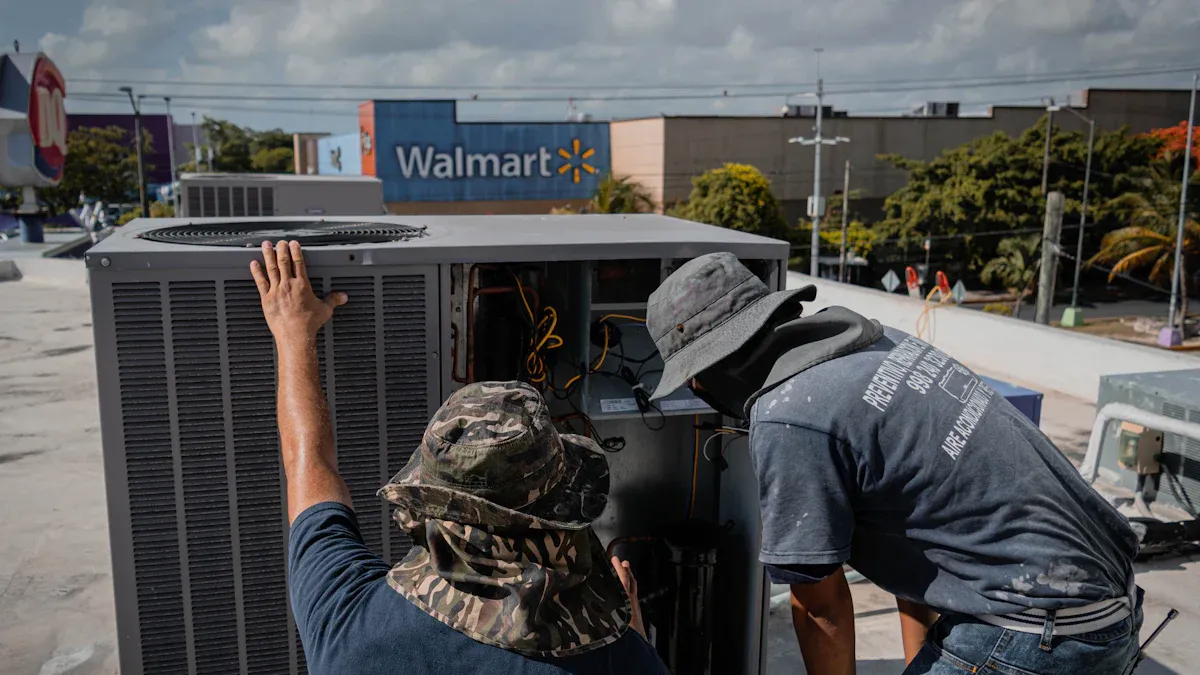
Installation and Handling of R-454B
You need to be careful when you use r-454b. This refrigerant can catch fire, so you must follow safety rules. Here is a checklist to help you stay safe:
Watch for leaks when you recover refrigerant.
Turn on a fan to keep air moving indoors.
Use recovery cylinders with left-handed threads and a red band or top for A2L refrigerants.
Read the Safety Data Sheet to learn about dangers and pick the right protective gear.
Keep your work area safe and under control.
Do not use fire to check for leaks; use an electronic sniffer or soap bubbles.
Take out refrigerant before you fix anything.
Use nitrogen to clear out leftover refrigerant and empty the system.
Run nitrogen through pipes while brazing to stop carbon from building up.
Test lines with pressure and vacuum to make sure they are sealed and dry.
Tip: Check your tools and equipment before you begin. Being ready helps you follow safety steps and avoid problems.
Servicing R-410A vs R-454B
You will see some changes when you work with r-454b instead of r-410a. R-454b needs new tools and ways to do things. You must use extra leak sensors for r-454b. These sensors help you find leaks fast and keep your area safe. The steps for r-454b are like other systems, but you need to watch out for fire.
R-454b needs new tools and ways to work.
You need more leak sensors for r-454b.
Maintenance steps for r-454b are mostly the same as other systems.
You can use normal safety steps for r-410a. This refrigerant does not need special sensors or tools. Just check for leaks and wear basic safety gear.
Identifying Refrigerant Cylinders
You need to spot refrigerant cylinders the right way to avoid mistakes. The industry uses colors and labels to help you. Here is a table that shows how to tell r-454b and r-410a cylinders apart:
Refrigerant | Chemical Composition | Color Code |
|---|---|---|
R-410A | Difluoromethane, Pentafluoroethane | Rose |
R-454B | R-32, R-1234yf | Red band |
Look for a red band or top on r-454b cylinders. R-410a cylinders are rose colored. Always read the label before you use any refrigerant. This step helps you follow safety rules and stops accidents.
Note: Picking the right cylinder keeps you safe and helps you use the correct refrigerant for your system.
Regulations and Industry Trends
Safety Codes for R-454B and R-410A
You must follow safety rules when using refrigerants. R-454B and R-410A have different rules because of fire risk. R-454B is A2L, so it can catch fire a little. You need spark-proof tools and special leak sensors for R-454B. New HVAC systems with R-454B have better seals and leak detectors.
Always check local codes and know ventilation needs. Building codes now ask for extra steps when you install R-454B. These changes help keep you safe and protect your things.
Refrigerant | Safety Classification | |
|---|---|---|
R-454B | A2L (slightly flammable) | ASHRAE 15/34, local regulations |
R-410A | Not classified as flammable | N/A |
Tip: Look up the newest safety rules before you work on any HVAC system.
Future of Mildly Flammable Refrigerants
Big changes are coming to the HVAC world soon. The rules say you must use R-454B starting January 1, 2025. This is because R-410A has high global warming potential. R-454B is better for the planet and meets new safety rules.
Companies are making new systems for low-gwp refrigerants. You will see more systems using R-454B and similar types. A2L refrigerants will become much more common. By April 2025, most new systems will use these refrigerants.
Year | R-454B Adoption Rate | |
|---|---|---|
2024 | < 5% | N/A |
April 2025 | 51% | Leading choice |
May 2025 | 60% | N/A |
Choosing low-gwp refrigerants helps the earth. New rules and safety steps support this change. You will save money on repairs and get better energy use soon.
Note: Switching to low-gwp refrigerants like R-454B helps the world and lowers greenhouse gases.
Action Steps for Safe Use
Choosing Between R-454B and R-410A
When you pick a refrigerant for your HVAC system, you need to think about more than just the price. R-454B and R-410A each have their own strengths. R-454B has a lower global warming potential. This makes it a good choice if you want to use eco-friendly refrigerants and support green building goals. R-454B systems also use less energy and help you save money on your utility bills over time.
You may want to choose R-454B if:
You are installing new equipment.
You care about the environment.
You want to future-proof your investment.
You want to control long-term costs.
You may want to choose R-410A if:
You need the highest level of fire safety.
You plan to use the system for a short time.
You have a tight budget right now.
R-454B systems might cost more at first, but they often save you money in the long run because they use energy more efficiently.
Tip: Always check if your local rules allow the use of R-454B before you decide.
Upgrading or Servicing Your System
If you plan to upgrade or service your HVAC system, you need to know that R-454B is not a drop-in replacement for R-410A. You cannot just swap the refrigerants. R-454B systems need special parts, like compressors and filter driers, that are rated for this refrigerant. If you try to use R-454B in a system made for R-410A, you could cause leaks or even damage the equipment.
When you work with R-454B, you must add extra safety features. These include labels that warn about flammability and leak detection systems. You may also need to redesign some parts of your system to handle the new refrigerant safely.
Always use the right parts for the refrigerant you choose.
Never mix R-454B into an R-410A system.
Make sure your technician knows how to handle mildly flammable refrigerants.
Note: Upgrading to R-454B helps you meet new rules and prepares your home for the future.
You can spot big differences between R-454B and R-410A. R-410A does not catch fire. It is safe for places like hospitals. R-454B can catch fire a little. You need to be more careful with it.
Refrigerant | Flammability | Safety Considerations |
|---|---|---|
R-410A | Non-flammable | Good for high-safety areas |
R-454B | Mildly flammable | Avoid flames, keep air moving |
Always follow safety rules when you work. Put on gloves and safety glasses. Stand cylinders up straight. Use leak sensors to check for problems. Look for damage before you start. You can take classes like A2L Refrigerant Safety Training to learn more. Keep learning and ask experts if you have questions.
FAQ
What does A2L mean for R-454B?
A2L means R-454B is mildly flammable and has low toxicity. You must follow special safety steps when you handle it. Always check for leaks and use proper ventilation.
Can you use R-454B in older R-410A systems?
You cannot use R-454B in systems made for R-410A. R-454B needs special parts and safety features. Mixing refrigerants can damage your equipment and cause leaks.
Why is R-454B considered environmentally friendly?
R-454B has a much lower global warming potential than R-410A. You help reduce greenhouse gases when you choose this refrigerant. Many new systems use R-454B to meet green building standards.
How do you identify R-454B cylinders?
You can spot R-454B cylinders by looking for a red band or top. Always read the label before you use any refrigerant. This step helps you avoid mistakes and stay safe.
Do you need extra training to work with R-454B?
You need extra training to handle R-454B safely. Many companies offer A2L safety courses. You learn how to spot leaks, use the right tools, and follow fire prevention steps.